
Mysterious 450-foot ‘blue hole’ off Florida has researchers looking for signs of life
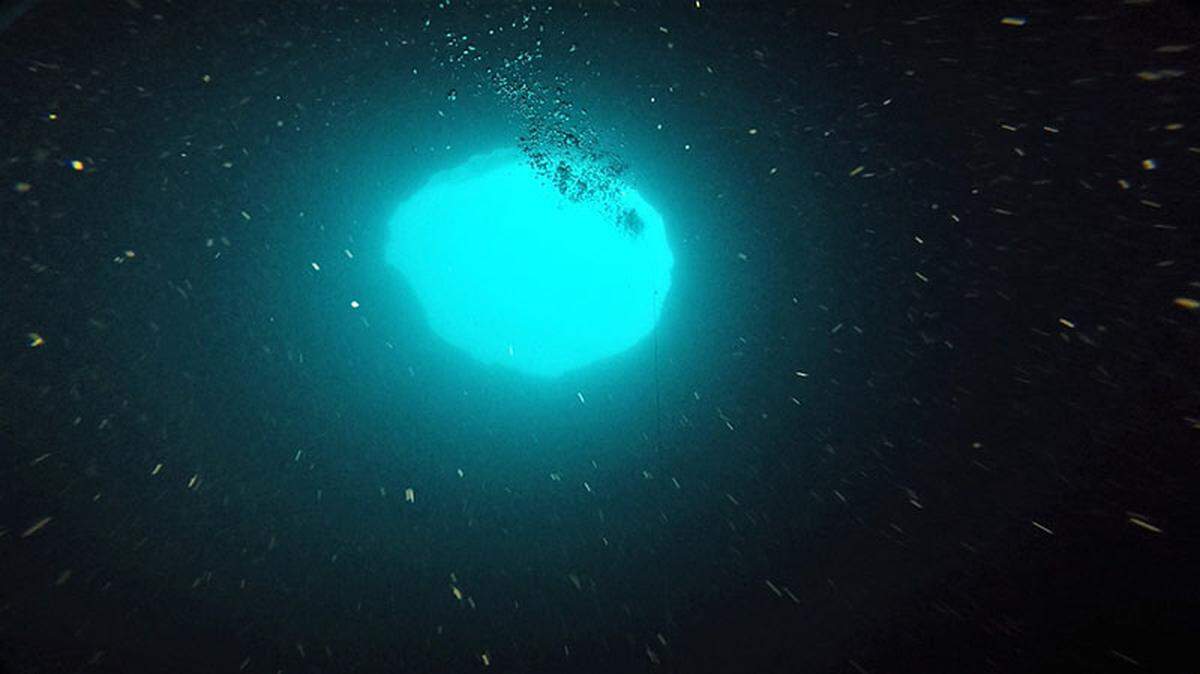
Tales of the ocean swallowing places are as ancient as the myth of Atlantis, but there is an element of truth in the science, according to a NOAA-backed expedition set for Florida’s Gulf Coast.
The ocean does open up and consume areas of sea floor.
However, these are basically sink holes, similar to those that gobble suburban homes in Florida, NOAA says.
When it happens in the ocean, it’s called a “blue hole” and what’s inside them is largely a mystery, NOAA reports.
Scientists have no idea how many “blue holes” exist or where they are most likely to be found, NOAA says.
Even something as simple as getting into them is tough, experts say.
“The opening of a blue hole can be several hundred feet underwater, and for many holes, the opening is too small for an automated submersible. In fact, the first reports of blue holes did not come from scientists or researchers, but actually came from fishermen and recreational divers,” NOAA writes.
The year-long expedition begins in August at a blue hole known as Green Banana, 50 miles southwest of Sarasota, Florida. The entrance of the hole is 155 beneath the surface and experts believe Green Banana is 450 feet deep. The team will include scientists from Mote Marine Laboratory, Florida Atlantic University, Georgia Institute of Technology and the U.S. Geological Society, NOAA says.
“Blue holes and caverns are “scattered across Florida’s Gulf continental shelf” and most are known for hosting “a high diversity of abundance of plants and animals,” NOAA reports.
A “blue hole” 30 miles off Sarasota (known as “Amberjack Hole’) was explored in 2019. The team found it to be an “oasis in an otherwise barren seafloor.” That hole is 113 feet below the surface and was found to be 350 feet deep, NOAA says.
Among the things discovered at the bottom: Two intact — but dead — smalltooth sawfish, an endangered species, NOAA says. One of the sharks, a 12-foot-long male, was collected for study, NOAA reports.
“Blue holes are diverse biological communities full of marine life, including corals, sponges, mollusks, sea turtles, sharks,” NOAA reported.
“The seawater chemistry in the holes is unique and appears to interact with groundwater. ...Scientists are hoping to learn ... whether these submersed sinkholes are connected to Florida’s groundwater.”
This story was originally published July 20, 2020 at 8:16 AM with the headline "Mysterious 450-foot ‘blue hole’ off Florida has researchers looking for signs of life."