‘Life-threatening’ disease mostly affecting kids could peak this fall, CDC warns
Parents and doctors should be on the lookout for symptoms of an uncommon but serious neurological disease affecting mostly children this fall as the nation’s leading health agency warns of a potential outbreak.
The Centers for Disease Control and Prevention said cases of acute flaccid myelitis (AFM) could peak between August and November, the time when enteroviruses that cause the condition usually spread.
Delays in hospitalization for AFM “can be serious,” the CDC says, because it can progress rapidly over hours or days, leading to permanent paralysis or life-threatening respiratory failure in otherwise healthy patients, according to a CDC email sent to press.
And with the novel coronavirus overwhelming hospitals as it continues to spread across the country, the agency warns of many unknowns.
“AFM is a medical emergency and patients should seek immediate medical care, even in areas with high COVID-19 activity. It is not known how the COVID-19 pandemic and the social distancing measures may affect the circulation of viruses that can cause AFM, or if COVID-19 will impact the health care system’s ability to promptly recognize and respond to AFM,” the CDC said. “If social distancing measures decrease circulation of enteroviruses this year, AFM cases may be fewer than expected or the outbreak may be delayed.”
The CDC released a new report that revealed the third and largest peak of AFM happened in 2018 when 238 cases of mostly children sprung from 42 states; the disease has peaked in the fall every two years since 2014.
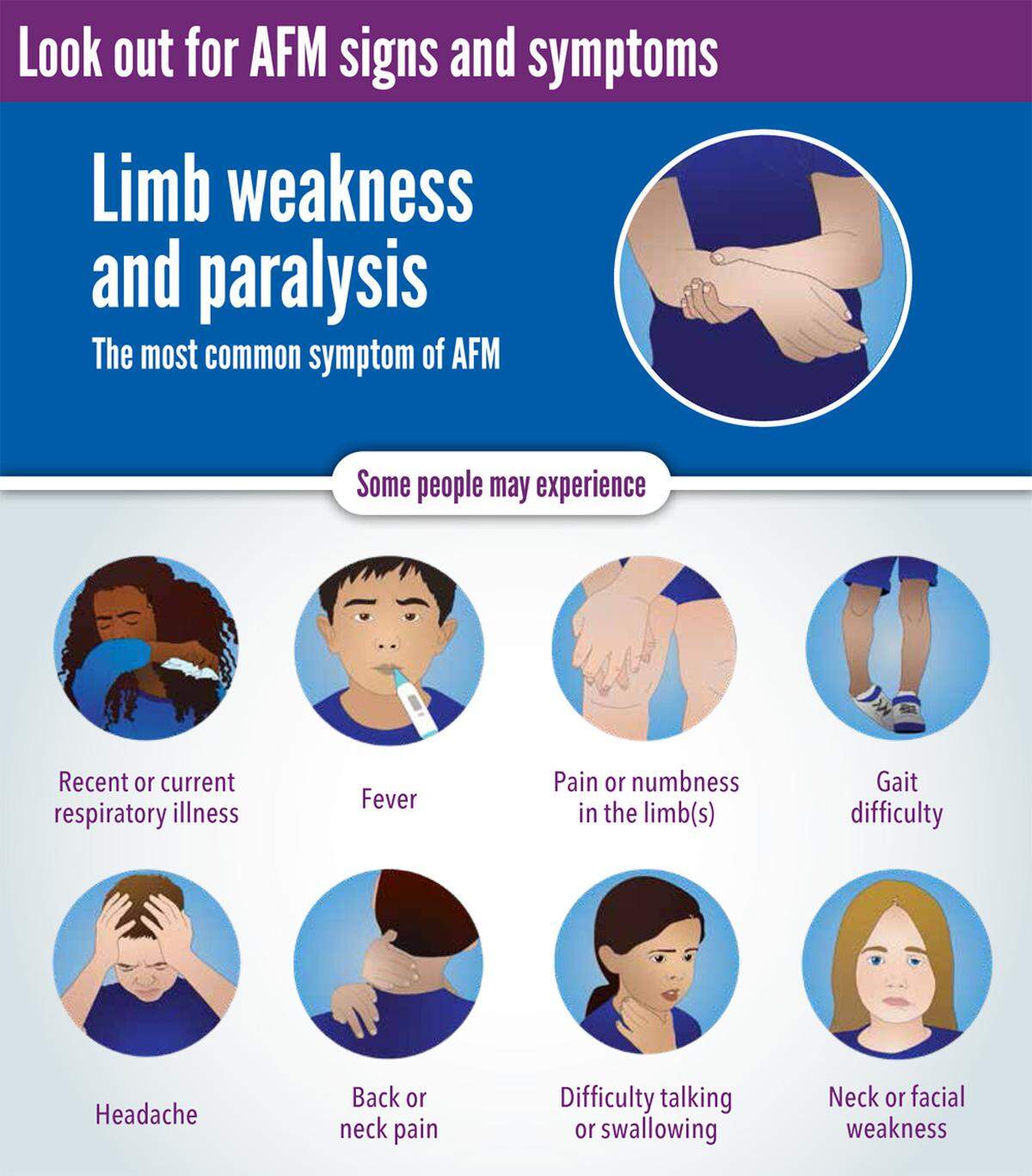
Most patients had a fever or respiratory illness about six days before they started feeling weakness in their limbs, the most common symptom of the condition. Others can experience droopy eyelids, difficulty swallowing and pain in the neck and back, the CDC says.
The agency said 98% of patients in 2018 were hospitalized, while 1 in 4 needed mechanical ventilation to help them breathe. Many patients were not hospitalized until two or three days after limb weakness began, according to the CDC.
“This could indicate delays in recognition and presents an opportunity for improvement,” the agency said.
Parents and doctors should suspect AFM if children present with “sudden limb weakness, especially during August through November,” the CDC said. “Recent respiratory illness or fever and the presence of neck or back pain or any neurologic symptom should heighten their concern.”
Laboratory tests and MRIs of the brain and spinal cord can help diagnose the disease in patients.
This story was originally published August 4, 2020 at 10:47 AM with the headline "‘Life-threatening’ disease mostly affecting kids could peak this fall, CDC warns."