
Watch shape-shifting whalefish swim off the coast of California in rare sighting
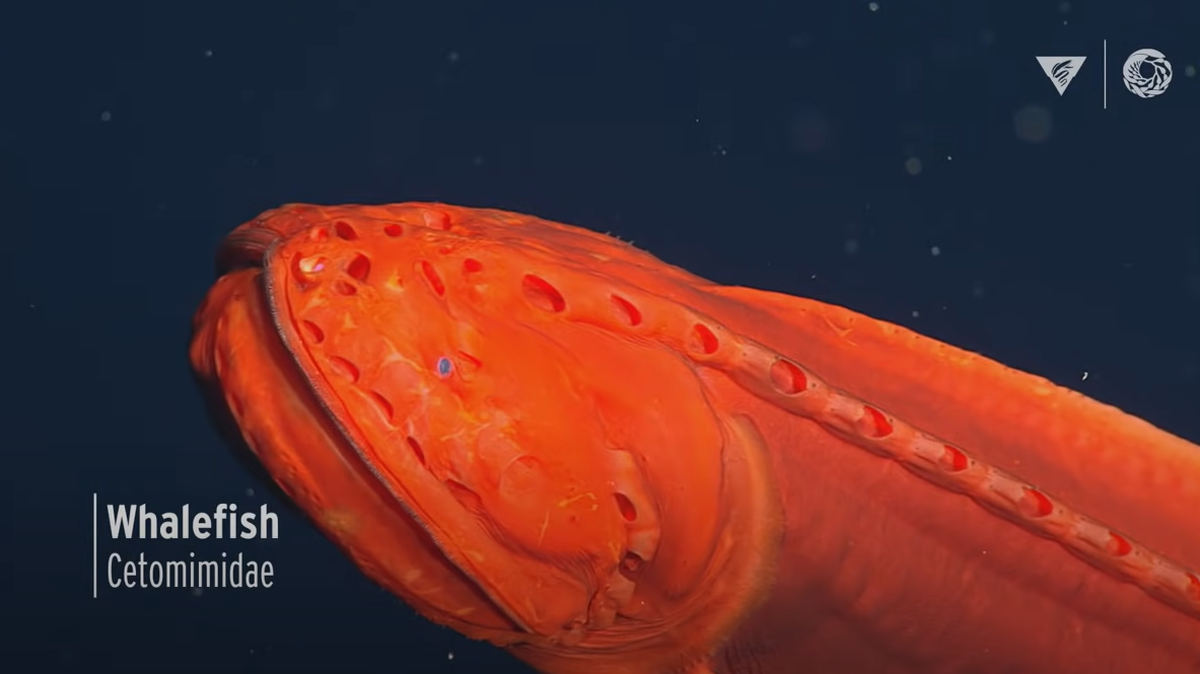
It’s not every day scientists encounter shape-shifting whalefish off the coast of California.
In fact they’ve only spotted them 18 times in the last 34 years of deep-sea exploration, according to the Monterey Bay Aquarium Research Institute.
Steven Haddock, the institute’s senior scientist and marine biologist, and his team piloting a remote submarine spotted a bright orange female whalefish 2,013 meters deep offshore of Monterey Bay last week, the research institute reported.
“Whalefish have rarely been seen alive in the deep, so many mysteries remain regarding these remarkable fish,” the institute tweeted. “With each deep-sea dive, we uncover more mysteries and solve others.”
The creatures were found in “the midnight zone,” the largest living area lying between the ocean’s sunlit layers and the deep seafloor, is home to Earth’s largest ecosystems, the institute said.
Whalefish, first discovered by two Smithsonian Institution scientists in 1895, take three dramatically different forms across their lifespan and were first thought to belong to other fish families, according to the Smithsonian Ocean team.
There are three members of the Cetomimidae family: Tapetails, Bignose, and whalefish, the Smithsonian said.
Tapetails are the young fish, or larvae, according to the museum. “They use their upturned mouths to gorge on small shellfish.” Next are the bignose, who are the males and “feed off their huge livers and use their large nasal organs to sniff for females.”
Lastly are the whalefish, which Monterey Bay Aquarium Research Institute spotted. These female fish “use their gaping mouths to capture large prey,” the Smithsonian said.
When tapetails grow up, two very different forms take shape: bignose or whalefish, according to the Smithsonian.
Scales cover every part of a bignose’s body and their mouths shrink so much that their jawbones “waste away and their noses balloon upward,’‘ Live Science reported. They don’t eat, so their intestines, esophagus, and stomach shrinks and disappears.
Their chest cavity is then “filled by their sexual organs and a gigantic liver as an energy store,” Live Science continued. The creatures fill themselves with tiny crustaceans to give them enough energy to survive.
Females take a much different shape as they age, the news outlet said. They grow to the size of a miniature baleen whale and have “water pressure-detecting lateral lines along their flanks” to help them see through the ocean’s vast darkness, Live Science reported.
Some whalefish will change to a shade of orange, making them almost invisible in the darkness.
This story was originally published August 18, 2021 at 4:27 PM with the headline "Watch shape-shifting whalefish swim off the coast of California in rare sighting."
.png)