Beetles have more sex when it’s hot — and it’s killing pine trees in CA, study finds
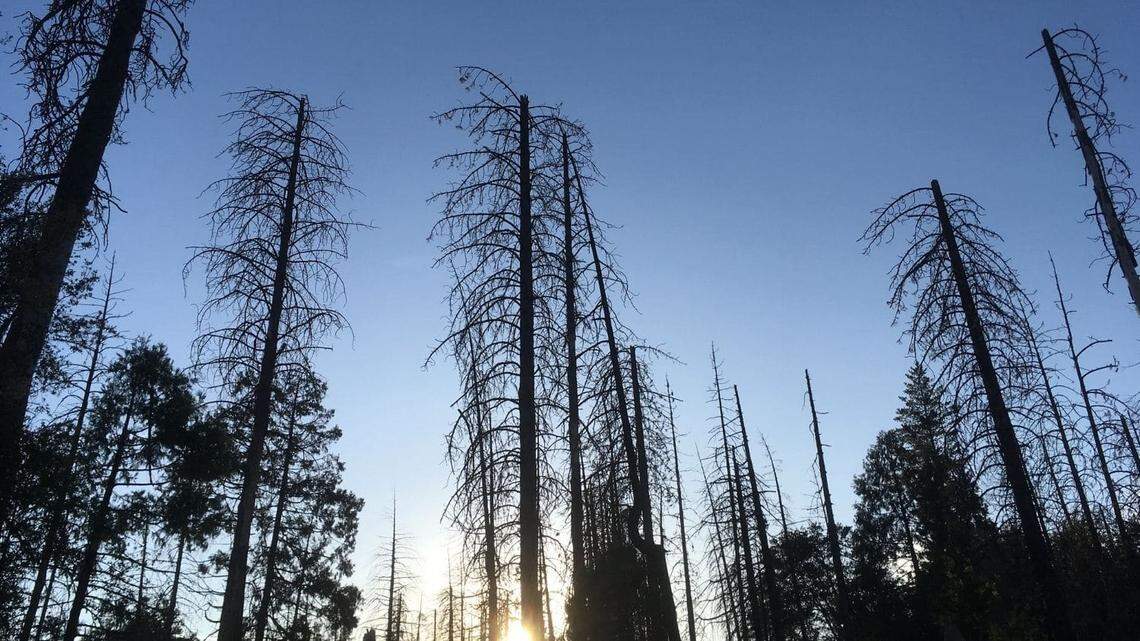
Hot temperatures usually make people tired and lazy, but for the western bark beetle, the heat just makes them want to have a lot of sex — and that’s bad news for giant pine trees scattered across the West Coast.
During California’s 2012-2016 drought, abnormally high temperatures stripped ponderosa pine trees, also known as yellow pines, of available water, forcing them to pause photosynthesis to conserve energy.
The trees’ attempt at survival also made them weak, providing the perfect environment for hungry — and aroused — beetles to chew through their bark and lay eggs within them that block the flow of nutrients.
The deadly domino effect led to a nearly 30% increase in pine tree death during the state’s five-year drought, thanks to the high temperatures that sped the beetles’ life cycle by about a half generation, according to a study published Oct. 28 in the journal Global Change Biology involving several research institutions in North Carolina, California, New Mexico, Utah and elsewhere.
And “even a slight increase in generations can increase tree mortality considerably,” lead study author Zachary Robbins, a Ph.D. candidate in the department of forestry and environmental resources at North Carolina State University, said in a news release.
The new findings add to what U.S. Forest Service researchers found in 2019; nearly 90% of giant ponderosa pine trees died as a result of the drought throughout the central and southern Sierra Nevada mountain range in California.
“These beetles primarily live in trees that are weakened or dying, but when weather events occur, they start spreading across the landscape, and multiplying rapidly,” Robbins said in the release. “The beetles can develop more quickly when it’s warmer. Also, lower temperatures in winter keep the populations in check. They die when winters are cold, but as temperatures warm, that may occur less often.”
Experts say the “serpentine… sinuous, winding gallery” of beetle munching tracks are a tell-tale sign of an attack. The insects lay their eggs in these carved pathways as they eat more bark.
It’s a grand feat for the beetles that are smaller than an average pill. Ponderosa pines are usually about 90 to 130 feet tall and about 2 feet wide. The tallest tree of this kind was recorded at 232 feet, and another with a width of nearly 9 feet has also been recorded.
They are found from southern Canada down to Mexico on the West coast and from Nebraska to Oklahoma. In California, ponderosa pine trees stand in the Coast Ranges, Klamath, Cascades and Sierra Nevada down to San Diego.
Global warming may contribute to more deadly beetle events
Researchers say the deadly beetle events will likely become more common as global warming continues to increase temperatures that fuel drought conditions.
The team found each degree of warming increased pine tree mortality by 20% by boosting beetle populations, Robbins told McClatchy News. A separate study conducted by one of the co-authors of the new research showed rising temperatures alone increased tree death by 15% to 20% because of drought stress.
In all, each degree increase in temperature could coincide with a 35% to 40% jump in the number of pine trees killed if the two processes occurred independently, Robbins said. “We are currently working to study this interaction more.”
“This has huge implications for how we manage forests — not just in California, but everywhere,” study co-author Robert Scheller, professor of forestry and environmental resources at North Carolina State University, said in the release. “With climate change, it’s not just wildfires and weather events, but also how changing climate conditions can impact insects, fungi and other biological agents of tree mortality.”
The team developed a computer model that simulated the beetles’ life cycle and attack behavior, as well as the number and size of ponderosa pine trees and their likelihood of death under drought conditions. They then analyzed how the beetles and trees would interact under “contemporary” temperatures (2001-2018) and historical ones (1895-1945).
“We estimated that this mortality event would have occurred during the drought,” Robbins said in the release, “but it would have been less severe under historic temperatures.”
Researchers say their findings raise questions about the future of forests and the roles they play in mitigating climate change.
“These old trees are large stores of carbon that could be released back into the atmosphere either slowly as they decompose, or rapidly through wildfire,” Robbins said in the release. “As you have new species replacing them that might be more fire prone, that can be a big deal in terms of how much carbon we’re storing in these forests versus what we’re releasing back into the atmosphere.”
This story was originally published November 3, 2021 at 11:20 AM with the headline "Beetles have more sex when it’s hot — and it’s killing pine trees in CA, study finds."