Fossil of vomited-up amphibians offers ‘rare glimpse’ into ancient life, Utah park says
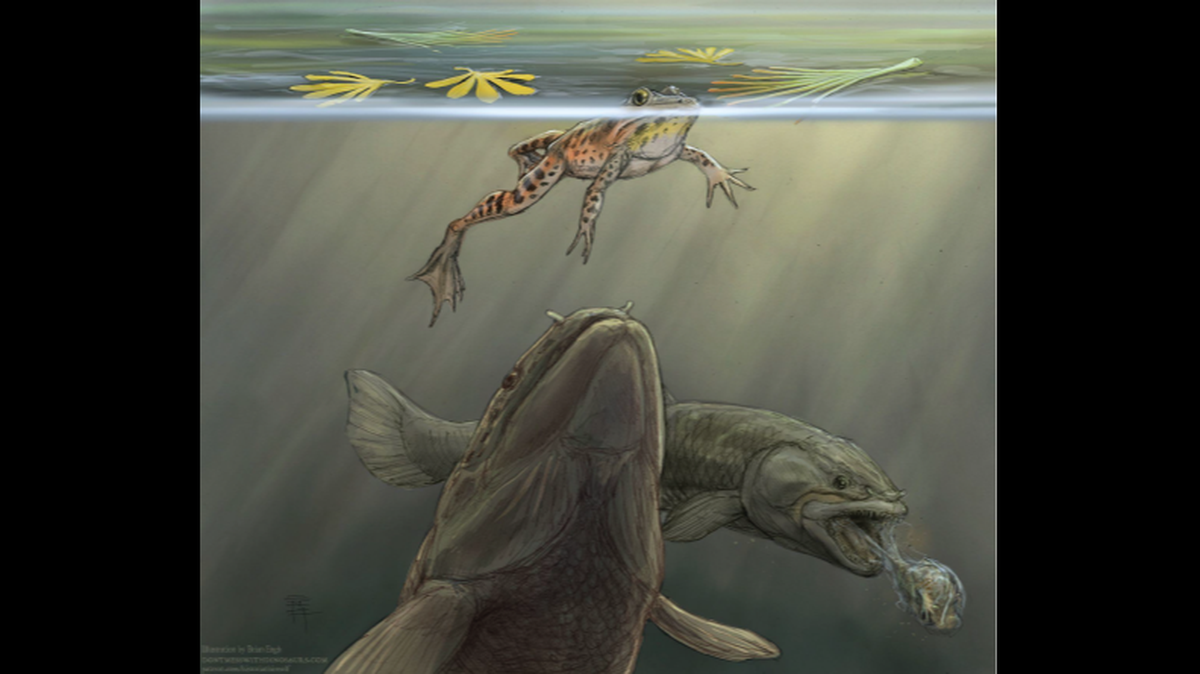
Paleontologists found the fossil of multiple amphibians that were likely vomited by a fish, perhaps as it was fleeing a predator 150 million years ago, Utah officials said.
The fossil was found by paleontologists from the Utah Division State Parks, the Utah Geological Survey and the Flying Heritage & Combat Armor Museum in rocks of the Morrison Formation in southern Utah, according to a Sept. 13 news release from Utah State Parks.
“This fossil gives us a rare glimpse into the interactions of the animals in ancient ecosystems,” John Foster, curator for Utah Field House of Natural History State Park Museum, said. “There were three animals that we still have around today, interacting in ways also known today among those animals — prey eaten by predators and predators perhaps chased by other predators.”
This, he said, “shows how similar some ancient ecosystems were” to those of today.
Paleontologists think it is likely that the fossil was from a startled bowfin fish that vomited “a recent meal of tadpoles and a salamander” while escaping a predator, Utah State Parks said.
While “fish, frogs and salamanders have been found in the Morrison Formation since the late 1800s,” what makes this find so unique is that it “documents a predator’s meal” and its need to vomit that meal, according to Utah State Parks.
“That is a first in the Jurassic rocks of North America,” Utah State Parks said.
The vomited “amphibian bones in the pile are tiny,” some just measuring 0.12 inches long, according to Utah State Parks.
The fossil indicates there were at least two frogs present, with one possibly being a tadpole, along with “at least one salamander,” Utah State Parks said.
“We can’t be sure, but among the animals of interest here, the current best match, and the one known to be at the scene, is the bowfin fish,” Foster said in the news release. “Although we can’t rule out other predators, a bowfin is our current suspect, so to speak.”
Though the Morrison Formation is known for its dinosaurs, it also has a “diverse assemblage of other animals,” Utah State Parks said, including frogs, salamanders and fish.
Paleontologists hope to continue to search the site — which “produced the giant water bug relative Morrisonnepa” two years ago — where the vomited fossils were found, according to Utah State Parks.
“We must now carefully dissect the site in search of more tiny wonders among the foliage,” Jim Kirkland of the Utah Geological Survey said.
This story was originally published September 13, 2022 at 3:05 PM with the headline "Fossil of vomited-up amphibians offers ‘rare glimpse’ into ancient life, Utah park says."