
Supreme Court upholds birthright citizenship in blow to Trump immigration agenda
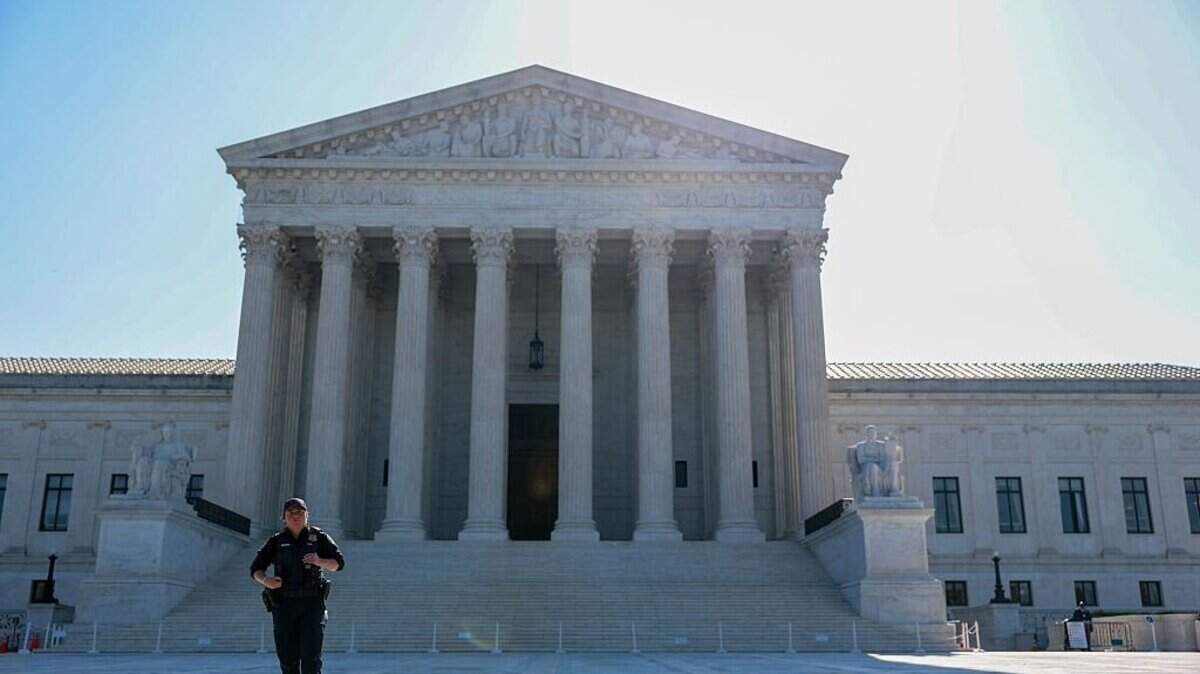
The U.S. Supreme Court on Tuesday upheld the longstanding, constitutionally guaranteed right of nearly all babies born on American soil to automatically be citizens regardless of where their parents are from or what their immigration status is.
In a 6-3 decision, the justices said President Donald Trump’s executive order to restrict birthright citizenship to the children of American citizens and green-card holders is unlawful. The court also upheld that the 14th Amendment guarantees citizenship for all except in the narrowest of cases, like the children of diplomats and invading soldiers.
“Citizenship, then and now, was the right to have rights — to freely participate in our political community. The Framers of the Fourteenth Amendment extended that promise to ‘every free-born person in this land.’ We keep that promise today,” Chief Justice John Roberts wrote.
The ruling is one of the most significant blows to Trump since returning to office. The president has focused his agenda on drastically reducing legal and illegal immigration. Nearly 1 in 10 babies born in 2023 were born to undocumented parents or parents in the U.S. on temporary visas, according to the Pew Research Center.
Doing away with birthright citizenship was a cornerstone of Trump’s immigration policies. Had the justices ruled in Trump’s favor, it would have left babies born to undocumented immigrants, professionals and students on temporary visas vulnerable to deportation in South Florida and nationwide. Over half of Miami-Dade County’s population is foreign-born and many of its native-born Americans are the children of immigrants.
In a social media post Tuesday, Trump wrote that the Supreme Court upholding birthright citizenship was “too bad for our country.” He called on Congress to legislate on the issue to end birthright citizenship, which he called “expensive and unfair.” However, federal laws created by Congress must be consistent with the Constitution, which the high court ruled guarantees birthright citizenship.
Florida Gov. Ron DeSantis said a constitutional amendment or a future court would be needed to overrule the ruling, calling it “a major defeat.”
Meanwhile, immigrant rights and civil rights groups, as well as some South Florida officials, celebrated the decision. U.S. Rep. Frederica Wilson, who represents parts of Miami-Dade and Broward Counties, said in a statement that the decision brought relief to “countless families.” U.S. Rep. Maria Elvira Salazar, a Republican from Miami, said that she agreed with the ruling, but said that “immigration policy should not be done through executive order or court decisions” and called on Congress to fix the “broken immigration system.”
The American Civil LIberties Union, one of the groups that challenged Trump’s order called it “major victory.
“The court’s decision reaffirms a fundamental American promise — if you are born here, you are a citizen,” said ACLU National Legal Director Cecillia Wang, who argued the case in front of the Supreme Court.
In the decision, Roberts intertwined U.S. history with the reasoning of the court, starting with English common law during colonial times. He alluded to the infamous Dred Scott decision — in which the Supreme Court ruled in 1857 that Black, enslaved Americans were not U.S. citizens — and the Civil War.
“The Court had overruled the common law, but the people—eventually—would overrule the Court,” wrote Roberts. “It took more than a decade—and the addition of names such as Antietam, Gettysburg, and Chancellorsville to our national canon.”
In the ruling, Roberts said that there is “scant evidence” for the government’s “drastically revisionist view” of the 14th Amendment and who it applies to.
“If Congress intended to limit American citizenship to the children of those domiciled in the United States, nothing in the succinct language of the Citizenship Clause conveyed that design. Words appearing frequently in the Executive Order— ‘mother,’ ‘father,’ ‘lawful,’ ‘temporary’— are absent from the Clause. For a simple reason: they did not matter,” he wrote.
Roberts also alluded to the previous Supreme Court case that upheld birthright citizenship, in the 1898 case of Wong Kim Ark, a San Francisco-born laborer with Chinese parents who sued the government when he wasn’t allowed in back into the country after authorities said he was not an American. Roberts said that for the justices who dissented from the majority ruling Tuesday, the 1898 ruling was “essentially irrelevant.”
Justices Elena Kagan, Sonia Sotomayor, Ketanji Brown Jackson and Amy Coney Barrett joined Roberts in ruling that the 14th Amendment guarantees birthright citizenship. Justice Brett Kavanaugh concurred in the judgment against the administration, but dissented in part, saying in his own opinion that the Trump order does not violate the Constitution but does violate federal law. “Congress could otherwise enact new legislation establishing exceptions to birthright citizenship for children born to foreign citizens unlawfully or temporarily in the country,” Kavanaugh wrote.
READ MORE: Trump wants to limit birthright citizenship through executive action. Can he do that?
On his first day in office, Trump directed government agencies to stop issuing documents that prove citizenship, like passport and birth certificates, to the babies of temporary visa holders and undocumented immigrants. The president asserted that the 14th Amendment did not apply to these children because it was created only to protect the right to citizenship of formerly enslaved Americans and their descendants.
READ MORE: Supreme Court allows Trump to end birthright citizenship in some parts of the country
A tsunami of lawsuits ensued, filed by 22 states, as well as organizations and individuals, who argued the order violated the Constitution. Three federal judges in Maryland, Massachussets, and Washington struck down the Trump order nationwide in preliminary orders. The Trump administration then went to the high court and asked in an emergency request to limit federal judges’ power to issue orders that apply to the whole country, saying they exceeded judicial authority. The court granted the emergency request last summer, shaping federal litigations on immigration policy and beyond. But it wasn’t until Tuesday that they ruled on birthright citizenship.
READ MORE: Supreme Court ruling on birthright citizenship may affect Florida babies in July
Justice Clarence Thomas wrote Tuesday’s dissent. Justices Samuel Alito and Neil Gorsuch joined him. Thomas wrote that Trump’s executive order was consistent with the “original public meaning of the Citizenship Clause.”.
in the 19th century, Thomas wrote, Black Americans were entitled to citizenship because “they had no other homeland, owed no allegiance to any foreign power, and were subject to no other authority.” But, he continued “the same could not be said for the children of foreign temporary visitors,” whose parents had roots and ties to their home countries.
“The Court adds to the sad history of the Fourteenth Amendment, which was designed and understood to secure equal rights for the freed blacks but has instead been repurposed for political projects that the Reconstruction Congress did not support,” he wrote.
In an opinion concurring with the majority ruling, Jackson and Sotomayor slammed Thomas’ reasoning for being inconsistent with his legal scholarship and prior judicial reasoning. “Despite his longstanding endorsement of a ‘colorblind’ Constitution, Justice Thomas now surprisingly suggests that the Citizenship Clause was a race-conscious remedial measure,” the justices wrote.
“Consensus about the Fourteenth Amendment’s central motivation does not justify JUSTICE THOMAS’s myopic treatment of it. The Amendment caused a paradigm shift in the trajectory of our Nation; the teacher who scolds a student for bullying a classmate hopes the student learns the broader lesson of treating everyone with kindness, not just that one kid,” they wrote.
This story was originally published June 30, 2026 at 7:41 AM with the headline "Supreme Court upholds birthright citizenship in blow to Trump immigration agenda."