Blue moon to shine soon over California. Here’s when and how to watch
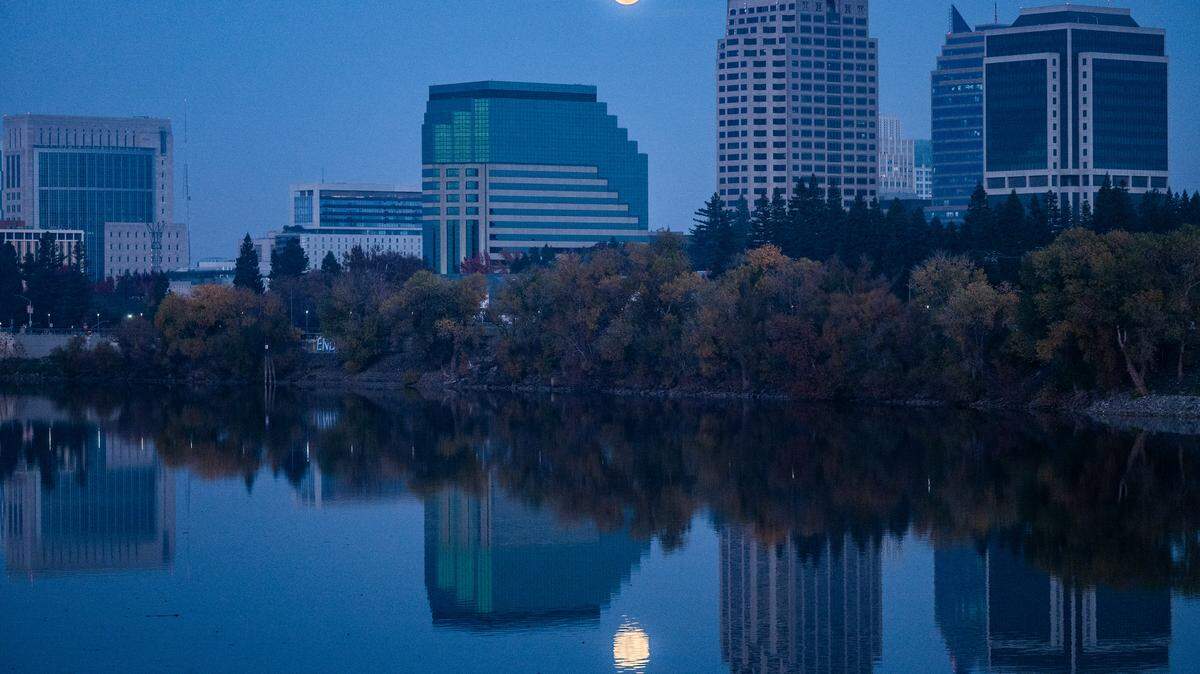
California sky watchers will soon see a rare astronomical event — a blue micromoon.
The fifth full moon of 2026 reached peak illumination on Friday, May 1.
Now stargazers across the Golden State will be treated to the second full moon of the month.
Here’s when to watch:
What is a blue moon?
Typically, every month only has one full moon, with a full lunar cycle lasting 29.5 days on average, Astronomy magazine said.
However, because months vary in length, two full moons can sometimes be seen in the same month.
Blue moons occur about every two and a half years, according to the Old Farmer’s Almanac.
The origins of the name “blue moon” are uncertain, but they have nothing to do with its color, according to Mass Audubon.
Instead, the term may indicate “an element of absurdity or impossibility,” the nature conservation group said.
When’s the best time to watch the blue moon?
The blue moon will reach peak illumination at 1:45 a.m. on Sunday, May 31, according to online clock Time and Date.
What is a micromoon?
The blue moon at the end of May will be a micromoon, appearing “slightly smaller and dimmer than the average full moon,” Smithsonian magazine said.
The moon may look a bit smaller in the sky on Sunday, but it won’t actually change in size.
Since the moon doesn’t orbit in a perfect circle, its distance from Earth changes at different points — from closer up to farther away.
A micromoon is a “full moon or new moon that occurs at or near the moon’s farthest point from Earth in its orbit, called the apogee,” the publication said.
Where are the best places to stargaze?
For the best views of stars and other celestial sights, get away from city lights.
The ideal stargazing locations offer “unobstructed views of the horizon,” National Geographic said. “Mountains, moorlands, deserts and remote islands are good choices, thanks to their isolation, clear conditions and lack of light pollution.”
This story was originally published May 29, 2026 at 5:00 AM with the headline "Blue moon to shine soon over California. Here’s when and how to watch."