
Spevak: How Dr. King’s message of peace still rings true today
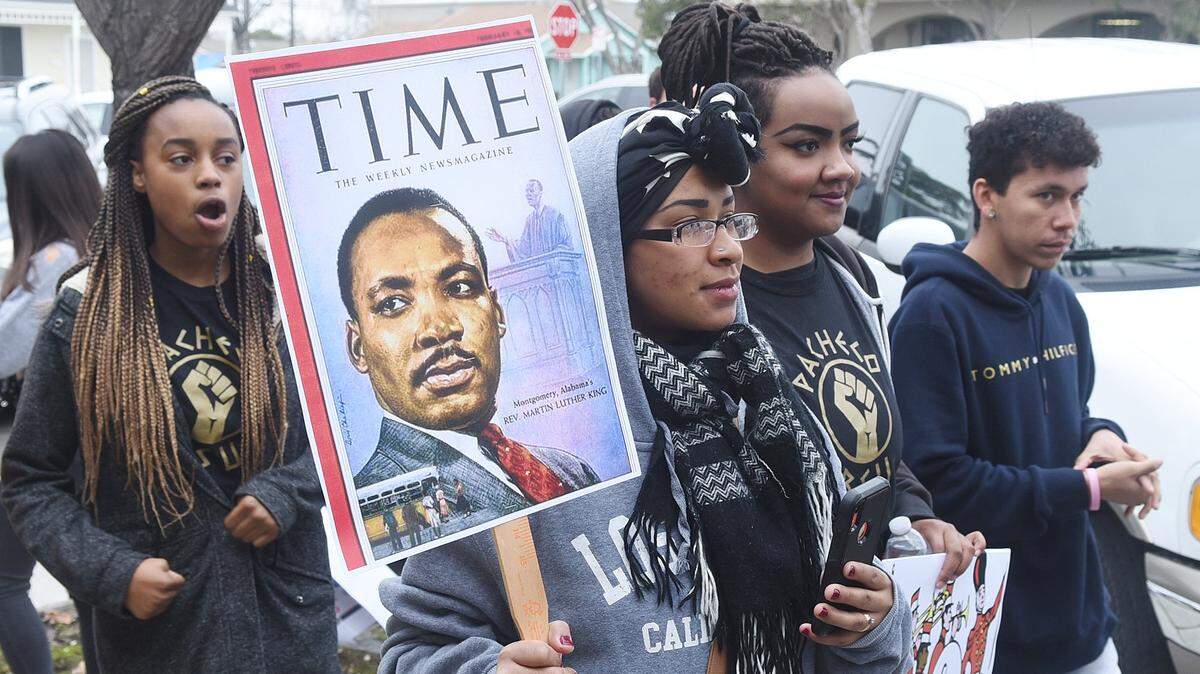
During the past several weeks, when I’ve seen my country torn apart by passionate demonstrations that have at times included violence and destruction, I’ve turned for advice to a person I admire.
He died many years ago, but his words still inspire me.
I have long respected the Rev. Dr. Martin Luther King, Jr. for his dedication to non-violence, a central part of Christ’s teaching, as well as his advocacy of peaceful and often passionate civil disobedience when necessary, as advocated by Old Testament prophets.
I have also respected and appreciated his writings. I grew up in the Chicago area, where I witnessed intense discrimination and de facto segregation. While living in the Chicago area, I was close to peaceful demonstrations and violent responses.
My heart was broken to see people suffer, including blacks victimized by injustice and many victimized by violence and looting.
During those times I turned to Dr. King’s writings, especially his “Letter from a Birmingham Jail,” a masterful essay.
Years later I included that essay in my English composition course at the Los Banos Campus of Merced College, the same course in which I also had students read the Declaration of Independence.
In the “Letter,” which he wrote in longhand in 1963 while confined in the city jail of Birmingham, Alabama, the Reverend King responded to local clergymen who criticized him for nonviolent demonstrations in that city, which resulted in violence, mainly from Birmingham policemen and their attack dogs.
Dr. King’s words then still apply today, 57 years later. I want to thank my good friend, Seoul Holloway, for reminding me of this.
It’s unfortunate that many of same conditions King experienced still exist today and still make his 1963 essay relevant.
In his letter King writes, “You deplore the demonstrations that are presently taking place in Birmingham. But I am sorry that your statement did not express a similar concern for the conditions that brought the demonstrations into being.”’
To fully grapple with what’s happening today, we Americans must do both, as King did in 1963: deplore the violence that has occurred since May 25, when a Black man was needlessly killed by a Minneapolis policeman, as well as express concern for the conditions that brought the demonstrations across the country into being.
Let me digress at this point to say how encouraged I was that the demonstrations for social justice which took place in Los Banos on June 2, while passionate, began and remained nonviolent.
I give credit to the demonstration’s organizers and participants as well as to Los Banos Mayor Mike Villalta and the Los Banos Police Department, headed by Chief Gary Brizzee. Chief Brizzee’s officers were on the scene to protect all concerned—the people and property of Los Banos as well as the protesters themselves.
During the 49 years I’ve lived in Los Banos, I’ve known many local police officers who, living by the police motto of “To Serve and Protect,” did their best to serve and protect everyone in the community and to live up to the American principle we affirm in the Pledge of Allegiance, “with liberty and justice for all.”
I cannot assert that all Los Banos police officers during the past five decades followed this motto and principle in all situations, but from my observation the vast majority have continually tried and regularly succeeded.
I’ve seen Los Banos police officers meet with community members of all backgrounds— Black, white, Hispanic, Asian, Native American — to listen to their concerns and try to create a community where the police are evenhanded in their enforcement of the law.
Chief Brizzee is one example. I have known Gary since he was a kid growing up in Los Banos, and I’ve seen him grow and develop as a person. From my perspective he and his officers are determined to protect life and property but are also determined to serve, not just some, but all people in the community.
Pundits who say people must decide between supporting African-Americans and supporting police officers are misguided. From my experience Los Banos is a community which doesn’t have a division between “black” and “blue.”
At the same time, I don’t think anyone is required to support all Black people (or people of any other race) or all police officers. Anyone who breaks the law or anyone who uses the law nefariously to oppress others needs to be identified and prosecuted appropriately.
Returning to the Reverend King, I want to emphasize he was a man of hope, someone who, because of his faith, never gave up hope in the future, despite enduring experiences that would have brought most people to despair.
He exemplified his optimism in an historic speech when he proclaimed, “I have a dream.”
But his dream, his hope wasn’t naive. Better conditions, better times, he understood, don’t inevitably happen. As he wrote in the Birmingham letter, “We must come to see that human progress never rolls in on wheels of inevitability.
“It comes through the tireless efforts and persistent work of men willing to be coworkers with God,” King explained, “and without this hard work time itself becomes an ally of the forces of social stagnation.”
I hope all Los Banos residents, and other Americans, dedicate themselves to working tirelessly and persistently to achieve for all Americans everywhere — regardless of skin color, economic condition or ethnic background —the goal of “liberty and justice for all,” which we affirm each time we pledge allegiance to our country.