
San Joaquin Valley’s health will depend on research, partnerships — and funding
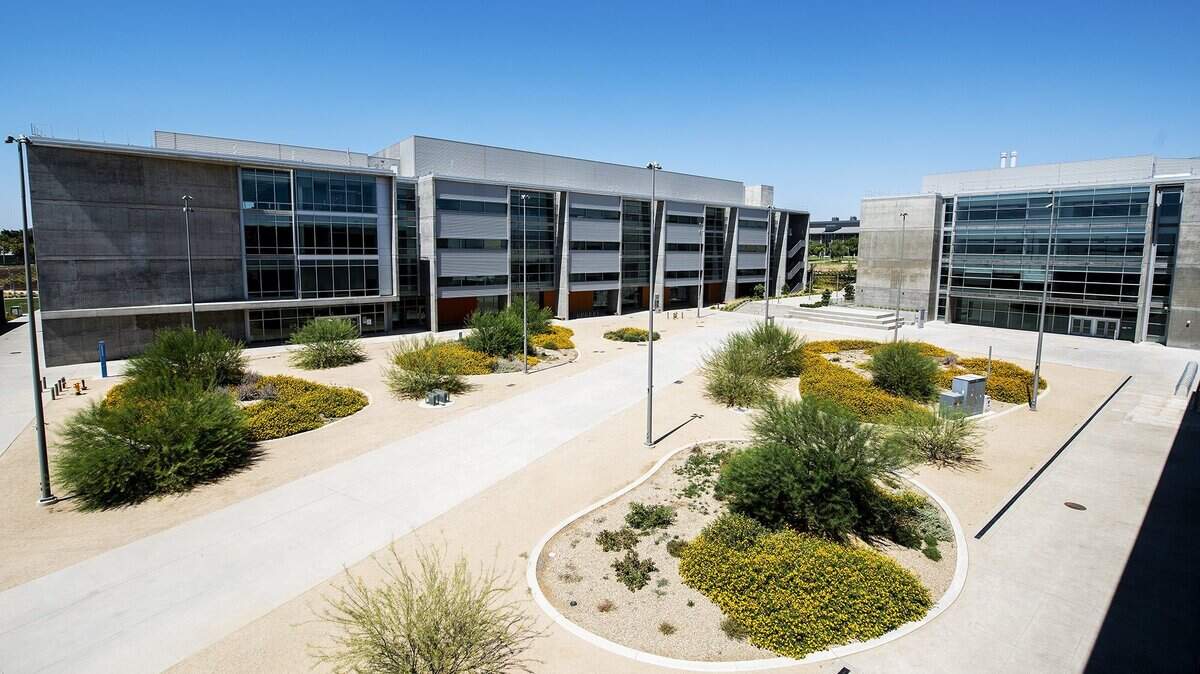
In any other year, we would still be celebrating UC Merced’s recent litany of institutional milestones. Among them: completing the award-winning Merced 2020 Project; reaching the top 100 universities in the U.S. News & World Report national rankings and rising into the top 40 public institutions; surpassing 9,000 total students for the first time; and securing millions in funding from the UC Board of Regents to plan the building that will house the university’s next major undertaking.
Fittingly, that next building will be devoted largely to health research and medical education. While the COVID-19 pandemic has made our celebrations more subdued, it has also brought to light the acute challenges we have long faced in the San Joaquin Valley when it comes to health care, and UC Merced researchers will play a major role in addressing those challenges.
Regardless of the circumstances we face — in fact, because of them — we remain undeterred and laser-focused on improving the health and well-being of our region in any way we can. There is no single cure for the challenges we face here in the Valley. We need better infrastructure, more and better trained doctors, more residency positions, additional research on health issues specific to the region, and greater access to specialists and telehealth options.
UC Merced is proud to be a part of the Valley community and has a vested interest in the health of our region. While we recognize there are great challenges, we also know that this campus was placed here to help with those challenges. Indeed, this is precisely the role and benefit of having a world-class research university in the Valley, to study and address the most significant problems globally, and then bring that knowledge and understanding to bear on regional crises and challenges.
UC Merced faculty have already contributed much in the way of research into COVID-19 and critical needs like mental health, psychology and other health fields, such as how environmental challenges disparately impact the health of people of color in the Valley, along with groundbreaking work in areas like Valley fever, nutrition, lifestyle impacts on health and early childhood development.
Our university advises undergraduate students interested in careers in health and medicine, and we offer degree programs that prepare students from across the Valley for the work force and for graduate programs.
At the same time, UC Merced has developed key relationships, particularly our strong partnership for medical education with UCSF-Fresno, and has made continual, substantial progress toward improving the health and well-being of the Valley through research and medical education.
In 2011, the University of California established the San Joaquin Valley Program in Medical Education (SJV-PRIME), a regional UC partnership to train future physicians with strong ties to the Valley to be outstanding patient-care providers, health care leaders and patient advocates, especially for underserved communities in the area. These efforts have led to a medical education and research partnership between UC Merced, UCSF-Fresno and UCSF, and collaborations with clinical partners that include Mercy Medical Center, Valley Children’s Hospital and Kaweah Delta Hospital.
The UC Merced Office of the Provost and our medical education program are piloting an MCAT preparation program for students planning to take the medical school exam this academic year, combining student empowerment, academics, study skills and career-long mentoring.
The university is developing “Lead Pre-Health: A Leadership Training for Future Healthcare Professions,” to launch in early 2021 through a collaboration between the Medical Education and the Office of Leadership, Service and Career. Training themes include medical leadership, systems thinking in medical practice, situational and emergency leadership, and medical leadership in the 21st century.
And a new public-private partnership — Accountability, Coordination and Telehealth in the Valley to Achieve Transformation and Equality (ACTIVATE) — will engage faculty and investigators across the UC system to support Livingston Community Health in bringing telehealth services to underserved rural residents in Merced County.
The ultimate goal of establishing a medical school in the Valley can only be achieved through a deliberate, strategic series of steps and initiatives, many of which are already underway thanks to powerful advocates. The UC Regents’ support of our new building on campus will add critically needed space to expand medical education, our Health Sciences Research Institute, and the departments of Psychological Sciences, Public Health and Cognitive Sciences. And we are grateful to Assembly Member Adam Gray, in particular, for his longstanding and tireless activism on behalf of medical education in the Valley.
Permanent funding sources are needed in order to truly lay the foundation for an accredited medical school in the Valley, to which we all aspire. But we and our partners will continue to do everything we can to improve health in the Valley and create a brighter future for our region.