
Finding hope, faith and happiness in depressing times, through the art of Vincent van Gogh
As 2022 unfolds, finding hope may be one of our biggest challenges. News of a continuing pandemic, political contention and earth’s warming climate can easily lead to depression or despair.
One source of hope is art, which I believe is also closely connected to faith. Art can bring hope to the faithful and the non-religious alike, and stoke a faith in a better future. A recent book reinforced this belief. “Learning from Henri Nouwen and Vincent van Gogh,” the book shows through the art and words of van Gogh how much art is related to faith and hope.
The artistic sketches and paintings of van Gogh, author Carol Berry wrote, invite us “to see beyond the obvious – with a greater awareness of the relevance everything around us has in the fabric of our lives.”
Spiritual writers like Henri Nouwen, Berry added, and artists like van Gogh (whom Nouwen admired) both “teach us to look more deeply into the reality of our experiences and see therein the presence of the divine.”
The presence of the divine (however a person may want to define “divine”) can provide the hope we need during discouraging times. Sensing the divine these days may be a challenge for some. Lately, the number of people who don’t turn to religion has increased. Research polls reveal that each year more Americans state that they have no religion. They are often referred to as “nones,” since the answer they give to the question, “What religion do you belong to?” is “none.”
Some might think that “nones” would be susceptible to despair in tough times, but that is not necessarily the case. As the Czech priest Tomas Halik wrote, sometimes many nonreligious individuals can be “allies” to religious people “on the path of deepening faith and in revealing transcendence.”
Van Gogh in his art, Berry contended, provides a sense of faith and hope that is available to all viewers, whether they consider themselves religious or not. She goes beyond the stereotype many people have of van Gogh as a troubled and erratic man who produced eccentric art. Berry pointed out that van Gogh was a compassionate person who immersed himself in the everyday life of ordinary people, especially the poor and destitute. He himself went through extensive periods of despondency.
Through it all van Gogh came to see that ordinary things in life – trees, flowers, wheat fields, stars and the sun – if observed carefully, can reveal transcendence and provide hope. He was particularly drawn to light from the sun, the stars, or even a single lamp in a small room. This light can pierce the darkness and create not only hope but joy and peace.
Van Gogh, according to Berry, also believed that art can communicate something most religions profess, that “our lives are intertwined and that we share a common human bond with one another.”
Berry’s book is short, only 128 pages, and is easily accessible to almost every reader. It provides many examples of van Gogh’s work, including black-and-white sketches and vibrantly colorful paintings. Carol Berry worked on this book for 20 years, ever since the Nouwen’s estate gave her the notes of his lectures in a course he taught at Yale University on van Gogh. Berry herself took that course 40 years ago.
The executor told Berry to write about van Gogh, especially as seen through the lectures of Nouwen, who died in 1996. Berry took this assignment to heart. She not only looked at all of van Gogh’s art but read all of his letters, especially letters to his brother Theo, who was his main psychological and financial supporter throughout his life.
Berry even traveled through Holland (where van Gogh was born), Belgium and France, where van Gogh lived and worked. The more she thought of it, the more she wanted to write a short biography of van Gogh that would present, as her subtitle put it, “A Portrait of the Compassionate Life.”
Van Gogh, as Berry sees it, exemplified compassion (a central point of most religions) in his life as well as his art. He lived among struggling miners and farmers and at one point took into his home a pregnant woman and her child because they were living on the streets.
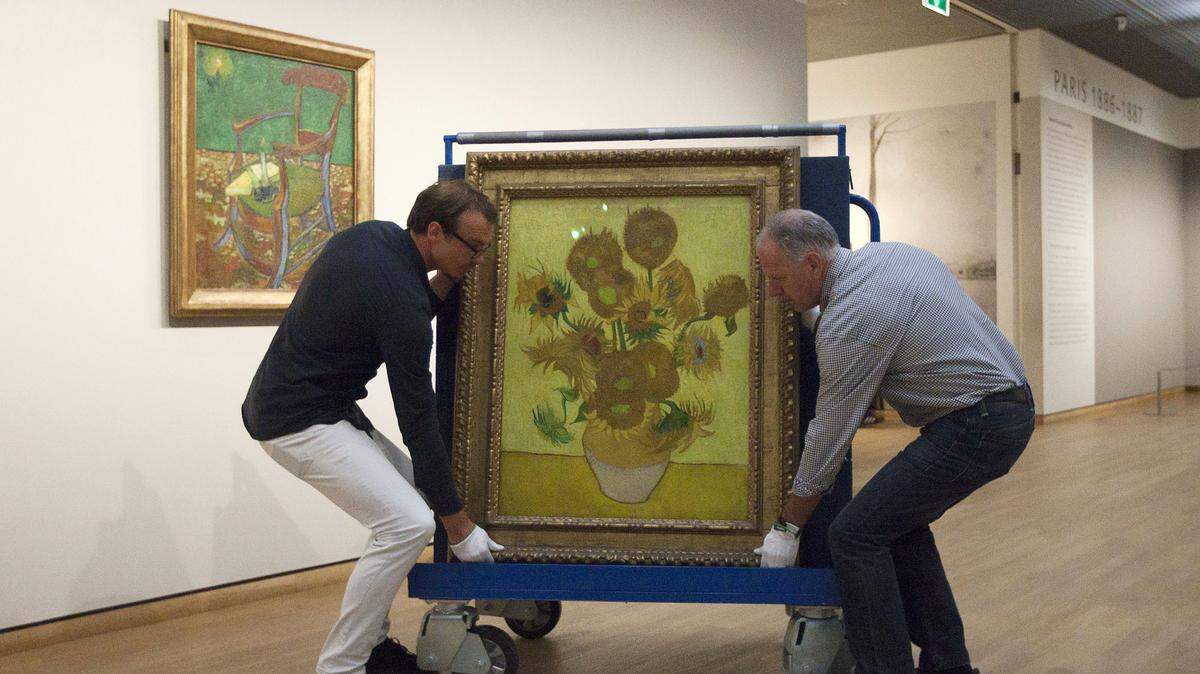
Van Gogh did many pencil and charcoal sketches of these people as he felt closer and closer to them. Living with them in desperate straits often led him to depression but gradually to hope, primarily through his connection to nature, especially the landscapes surrounding him. Olive trees, wheat fields and sunflowers appealed to him, and, increasingly as he grew older, the sun became his inspiration.
I encourage anyone who feels that life seems depressing to read Berry’s book or simply look at a sketch or painting by van Gogh. Moreover (Berry, van Gogh, and Nouwen would concur), we can all find consolation and hope in other works of art and especially in nature, including the trees and flowers in and around our neighborhoods. But we must do more than glance at them.
We need to look carefully at a tree, leaf, flower, sunrise or sunset and see “beyond the obvious,” as Berry wrote, “with a greater awareness of the relevance everything has in the fabric of our lives.”
In doing so, I contend, we can find, even in depressing times, not only hope but also peace and joy.
John Spevak wrote this for the Los Banos Enterprise. His email is john.spevak@gmail.com.
This story was originally published January 28, 2022 at 5:00 AM.