
Spevak: Careful listening is a skill needed for today
Listening may be the most important skill we teach children—a strong statement but the main point of a recently published book, “Listen Wise.”
As a parent and educator, I’ve long believed in the importance of careful listening. This book supports my belief with both evidence and experience.
The author of the book is Monica Brady-Myerov, a reporter for several broadcasting groups, including National Public Radio. She discovered the importance of listening carefully while talking with people all over the world and reporting their stories on radio.
Later in her life, when one of her daughters was thought to have a problem reading in third grade, Brady-Myerov realized one way to improve the child’s reading skills was to draw on her daughter’s skills as a listener.
Working with her daughter’s teacher and focusing on the close relationship of reading to listening, Brady-Myerov helped her daughter improve her reading ability significantly.
Brady-Myerov was so motivated by this experience she founded an online platform called “Listenwise.” She incorporated current research on the importance and value of listening well. This includes not only attentive listening to other persons but also careful listening to stories presented over the radio and through the internet via podcasts.
She then wrote “Listening Wise: Teach Students to Be Better Listeners.” She directed the book mainly to teachers, from pre-school to high school, and she includes many teaching techniques to improve listening skills. She also realized parents could benefit from what she wrote.
Audio by itself often has a greater impact than video, Brady-Myerov asserts. It requires students to notice more carefully the effect of vocal expression and intonation, often barely noticed in a movie or television show.
Brady-Myerov bases the importance of listening in every person’s life primarily on her research. Hearing, as she points out, may be the most important of the five senses. It is always “turned on,” even when we sleep. A noise, like a shutter flapping or a baby crying, can awaken us instantly.
The most impactful sound for humans, from infancy to old age, is another person’s voice. Attentive listening is important for toddlers, elementary and middle school students, high school students, college students and adults in the workplace.
So much of learning in school takes place when students listen to teachers explaining ideas and concepts. Likewise, employees learn how to do their job successfully by listening to their supervisors. Persons who don’t listen well usually don’t succeed.
In her book Brady-Myerov offers many suggestions showing how teachers, from pre-school to high school, can develop listening skills in their students. She asks teachers, for example, to model good listening themselves and to encourage their students to listen carefully to each other.
She also encourages engaging students in discussion, prompting them to thoughtfully respond after carefully listening to other students.
She gives an example of a middle school teacher presenting the topic of bullying — beginning with students listening to her questions and directions, listening to one another’s experiences related to bullying and then listening to an audio of a teenager talking about the times he was once a bully and then was bullied himself.
Brady-Myerov also gives tips to parents for helping their children become better listeners, including
Modeling good listening by paying close attention to their children talking about their experiences;
Reading to their kids, so their children can absorb the soothing and energizing sounds of a parent’s voice;
Establishing dinner-time communication rituals, during which parents and children around a table talk and listen.
She suggests four questions for family members to ask and answer during dinner:
How was your day?
Tell me one thing that happened that was good.
Tell me one thing that happened that was bad.
What did you do that was nice for someone else?
The first question gets a conversation going and can be answered briefly. The next three questions require thoughtful answers which reveal much about what’s going on in a person’s mind.
As I was writing this column, I came across another reason why listening is important, a project called “One Small Step.”
The project was started by Dave Isay, who several years ago started Storycorps, which allows ordinary people around the country to record important aspects of their life. These recordings are then sent to the Library of Congress for posterity.
“One Small Step,” according to Isay’s website, “brings people with different political views together to engage in 50-minute conversation–not about politics, but about who we are as people.” The conversation is recorded and saved.
“One Small Step” is based on the theory that “a meaningful interaction between people with opposing views can help turn ‘thems’ into ‘us-es.’” This interaction requires carefully listening to one another.
Americans need to counteract what Isay calls the “Hate Industrial Complex” with an approach that brings people together rather than driving them apart. I couldn’t agree more.
Even though “One Small Step” won’t be coming to California soon, Californians can start practicing this approach now by one individual listening carefully to another person with differing perspectives. The point of the conversation is to talk, not about politics or religion, but about the many things the two people have in common.
I recommend the ideas of both Brady-Myerov and Isay. Today, more than ever — for individuals, families and communities — listening is a skill that needs to be nurtured and treasured.
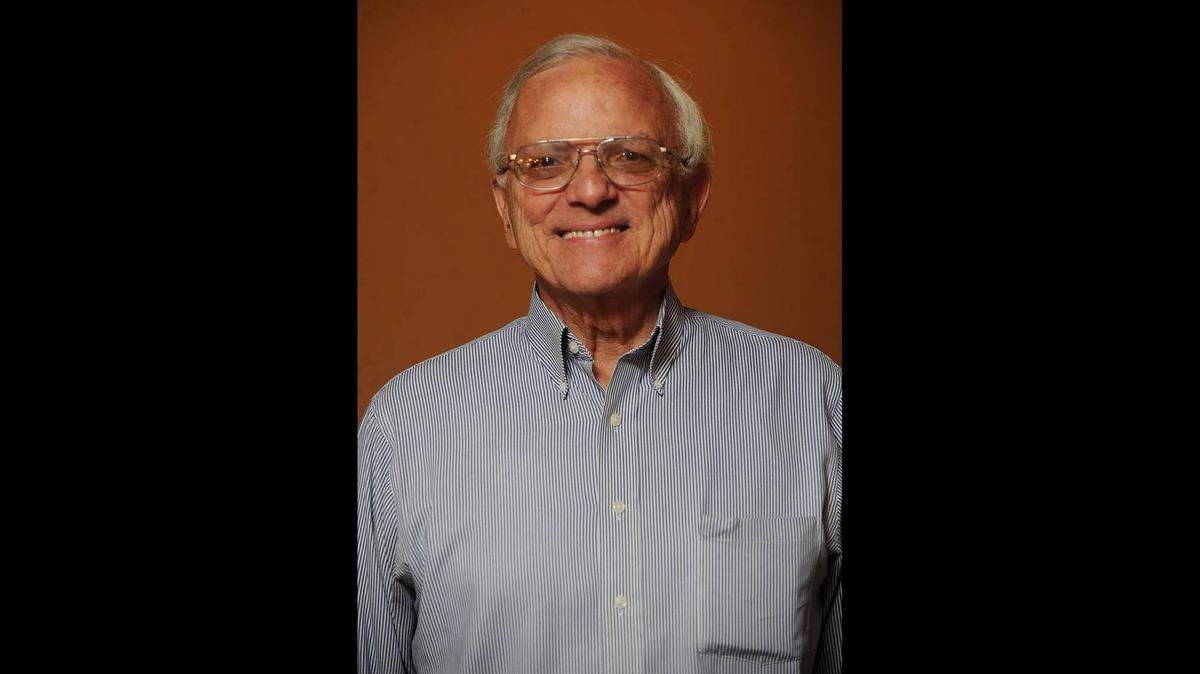
John Spevak wrote this for the Los Banos Enterprise. His email is john.spevak@gmail.com.