
Can Trump revoke citizenship for millions? Not likely. Plus, it’s unconstitutional | Opinion
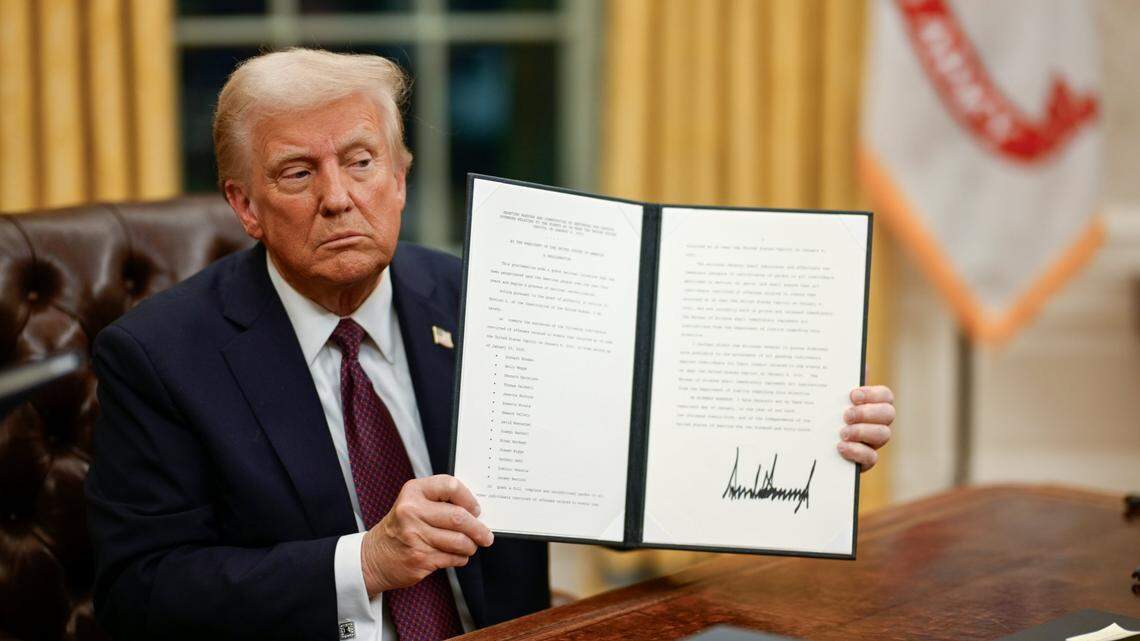
President Donald Trump’s planned effort to revoke citizenship from millions of people who were born in the United States is clearly unconstitutional. Yesterday, Trump made an executive action to end “birthright citizenship,” which provides that anyone born in the U.S. is a citizen regardless of the immigration status of their parents.
For this action to actually work, however, he must amend the Constitution — or at least get the Supreme Court to overrule its 117-year old precedent. Neither is likely to happen. And it certainly cannot be done, as Trump asserted, by an executive order.
The new president is expected to issue an executive order informing federal agencies that “under the correct interpretation of the law” the children of undocumented immigrants do not automatically become citizenship by being born in this country. It is anticipated that this executive order will then direct federal agencies that issue citizenship documents, like the Department of State or the Department of Homeland Security, to refuse to provide documentation to the children of unauthorized immigrants in an effort to deny them American citizenship altogether.
This is blatantly unconstitutional. Section 1 of the Fourteenth Amendment provides that “all persons born or naturalized in the United States, and subject to the jurisdiction thereof, are citizens.”
From the time of the Declaration of Independence and the adoption of the Constitution, it has always been assumed that individuals born in the U.S. were American citizens. Then, in Dred Scott v. Sandford, in 1856, the Supreme Court held that enslaved individuals are property of their owners and that they are not United States citizens, even if they had been born in the United States. The first sentence of the Fourteenth Amendment, adopted after the Civil War in 1868, was intended to explicitly overrule Dred Scott v. Sandford and to ensure that all individuals born in this country are U.S. citizens.
Both supporters and opponents of the Fourteenth Amendment shared the understanding that it would automatically grant citizenship to all persons born in the U.S., except children of foreign ministers and invading armies.
Trump, and those who support his position, point to language that says citizenship is conveyed to those born or naturalized if they are “subject to the jurisdiction thereof.” But this had a clearly intended meaning that had nothing to do with the children of undocumented immigrants. The specific focus was on excluding children born to ambassadors who were serving in the U.S. from automatic citizenship. Because of diplomatic immunity, they are generally immune from prosecution under American laws, and thus not “within the jurisdiction of the United States.” Also, at the time of the ratification of the Fourteenth Amendment, this was thought to include Indians who were governed by a separate sovereign.
Above all, it is clear that this provision was not about immigrants who entered the country unlawfully. In 1868, there were no restrictions on immigration into the United States, so it could not be said that any person was “illegally” present.
Contrary to Trump’s assertion, many countries of the world follow this same approach and accord citizenship to anyone born there. Trump has said the U.S. is the only country with this “stupid” policy. This simply is not true: At least 33 other countries follow the same approach and accord citizenship to all who are born there.
This is also not a new interpretation of the language of the Fourteenth Amendment: In 1898, in United States v. Wong Kim Ark, the Supreme Court was explicit that those who are born within the United States are automatically American citizens — even if their parents are citizens of other countries. The court said that in light of English common law, which had included virtually all native-born children as citizens, all who are born in this country are citizens of the United States. It also said that only those who were born to foreign rulers or diplomats, born on foreign public ships or born to enemy forces engaged in hostile occupation of this country’s territory are excluded from citizenship if born in the U.S.
This decision is binding precedent on lower federal courts, so they should be expected to strike down any Trump actions to the contrary. The hope must be that even the Supreme Court, which has been willing to overrule important precedents, will adhere to the text of Section 1 of the Fourteenth Amendment and say no to Trump.
This story was originally published January 22, 2025 at 7:14 AM with the headline "Can Trump revoke citizenship for millions? Not likely. Plus, it’s unconstitutional | Opinion."