
How UFW founder César Chávez continues to inspire farm workers in California | Opinion
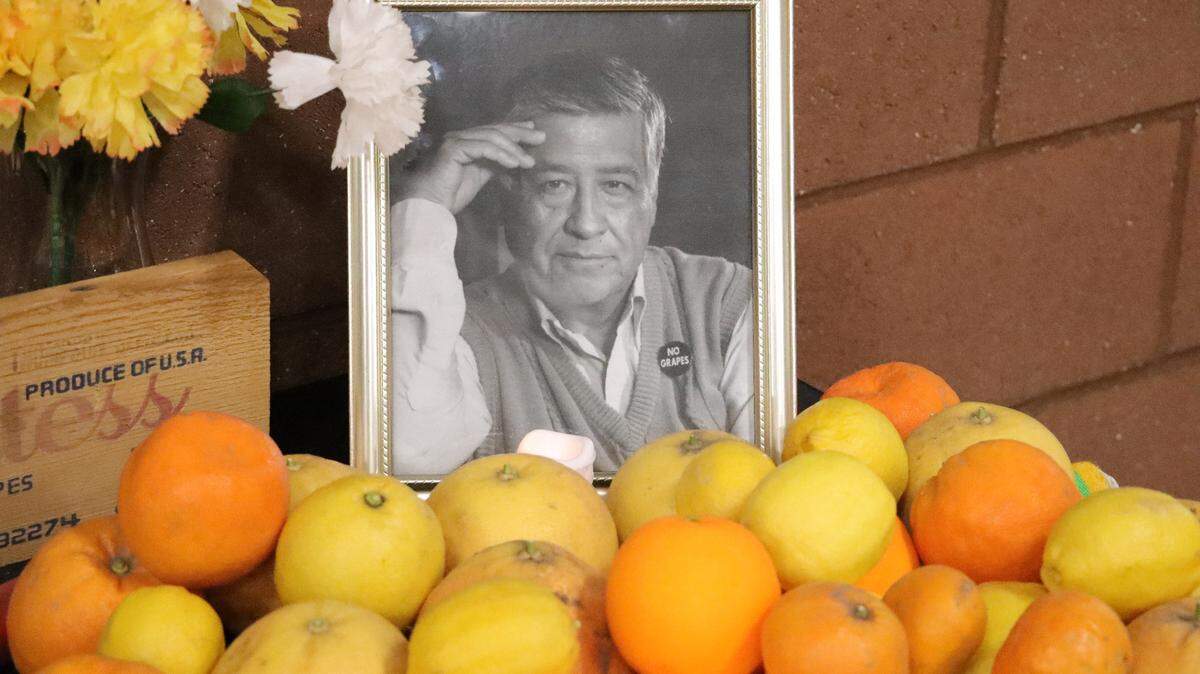
When my family migrated from New México to California in the late 1960s, César E. Chávez was in the midst of his crusade to gain labor rights for the farm workers who made fortunes for grape growers in the heart of the San Joaquín Valley.
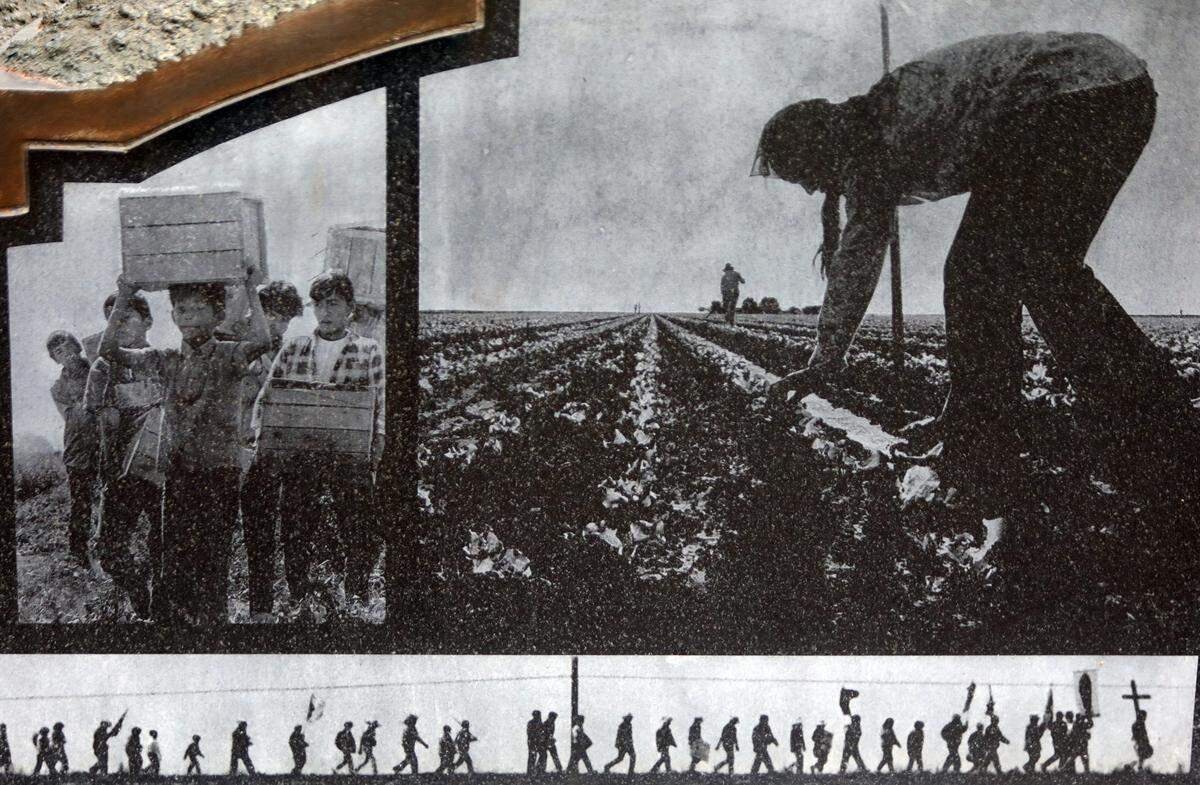
It was the summer following our family’s fruitless — and, thankfully, short — venture of trying to pick grapes that I watched from our newly built, three-bedroom home in Earlimart as a band of United Farm Worker supporters marched down East Cannon Ave. on a Sunday afternoon.
My stepfather, John R. Shockley, had his own impression of the UFW: “Stay away from them. They’re communists,” he cautioned us. By then, we were no longer trying to pick grapes, which we discovered demanded skilled laborers.
Of course, Chávez founded the union in Delano in 1962 and motivated farm workers to strike, boycott and lobby for better working conditions.
My sophomore year at Delano High School, I met Paul Chávez, César’s son, in a journalism class. The children of farmers and farm workers worked on the student newspaper, The Live Wire. Pandols, Zenenoviches and Hronises got along with Garibays, Chávezes and Estradas. The classrooms isolated the children of farmers and farm laborers from the labor war that raged outside.
The last time I spoke with César E. Chávez was in the fall of 1992 as he was leaving a meeting with union workers in Fresno.
I shook his hand and — even though I knew he threw out a Vida en el Valle reporter from a dinner in San José a few years earlier because of a grudge he held against The Fresno Bee — asked him for a sit-down interview.
He agreed, and I said I would get in touch. His mother, Juana Estrada Chávez, lived to be 99 years old. I figured I had time to arrange that interview.
A few months later, Chávez died in Yuma, Arizona, following a long day of legal proceedings in a battle with a lettuce grower. He was 66.
Who was César Chávez?
I’ve spent the better part of a 47-year career as a journalist covering Chávez and his farm worker movement. Who was he? What inspired him? How could a soft-speaking, 5 feet 8½ inches tall man bring table grape growers to their knees and sign a historic labor agreement in 1970?
I remember former UFW organizer Eliseo Medina speaking at Forty Acres in Delano during the 40th anniversary of the grape boycott. He was 19 and imagined Chávez as physically tall and powerful. That vanished the second he stepped into a church meeting and discovered the man was short in stature and spoke softly.
“This man won’t make it,” thought Medina, who went on to become secretary-treasurer of the powerful Service Employees International Union. After hearing Chávez, Medina ran home to break open his piggy bank to pay three months’ union fees.
Then there is Ray Seibert, a trustee with the Madera Unified School District. In 2004, he was the only board member to vote against naming a new elementary school after Chávez. I asked him to explain his vote.
“Because I look at him as a union thug. He used to hire people to go beat up farm workers. I know this for a fact,” he said. “I know the stepson of a guy that used to work for him that told me they used to go out and do that; so I can’t support a man that will go out and do that to people that I care about.”
The UFW has denied such accusations, saying it has embraced a nonviolent movement tailored after that of Mahatma Ghandi.
Inspiring an immigrant
Books by Miriam Pawel — “The Crusades of Cesar Chavez” and “The Union of Their Dreams” — provide some insight into the man whose name graces streets, schools, parks and a U.S. Naval cargo ship. His birthday is a holiday in California and Arizona.
Like the current Trump vs. anti-Trump battle, neither side will give in on whether Chávez was good or evil.
I prefer to think of the impact Chávez has had on a community that has often been overlooked and silent. They are the farm workers who were essential workers during the pandemic, yet still continue their crusade for better working conditions.
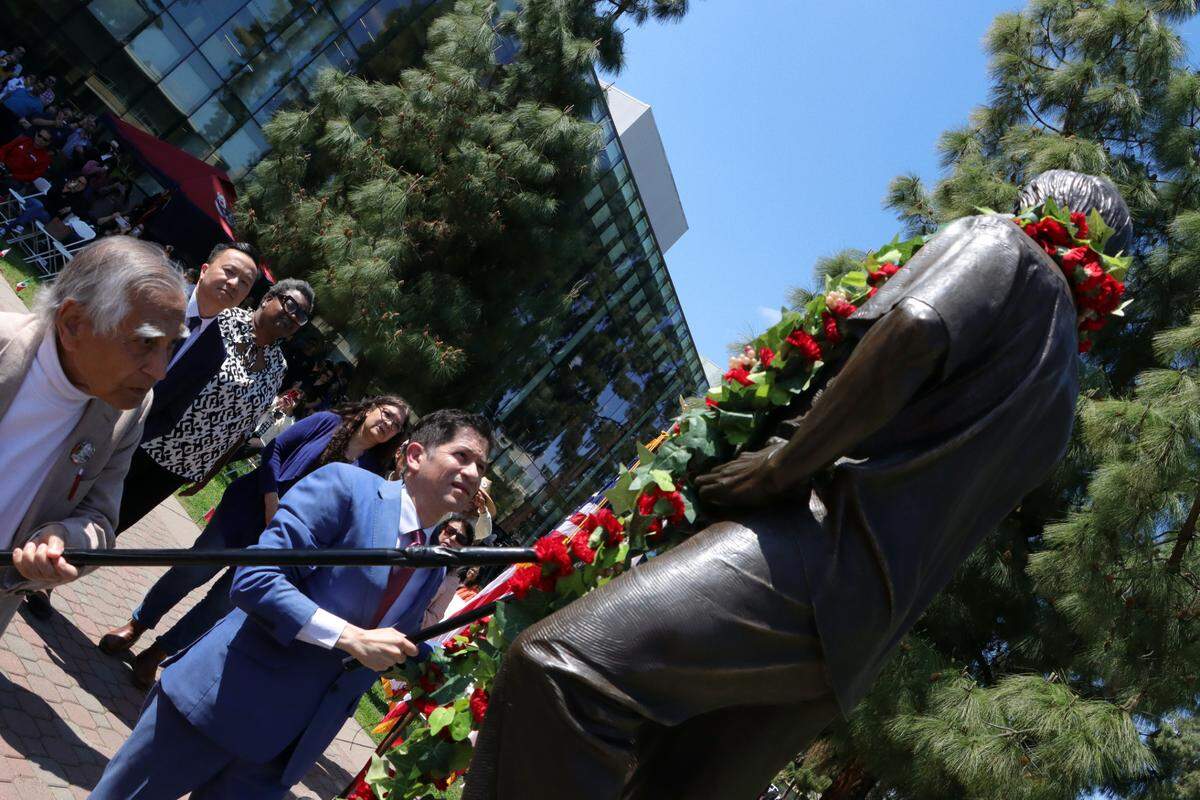
Carolina Sánchez, a 38-year-old immigrant mother of seven from Querétaro, México, was among several thousand people who marched Monday three miles from Delano Memorial Park to the UFW’s historic Forty Acres compound on what would have been Chávez’s 98th birthday.
She helped negotiate a UFW contract with a blueberry farm in Delano that employs 800. “Before, I worked Monday through Sunday,” she said about the result of a three-day strike. “Now, I work Monday through Friday. Fewer hours, but I earn more!”
She is living the American dream. Her oldest daughter attends Long Beach State in hopes of becoming a teacher. “In the fields, you hear that the universities are only for the children of the rich and of the ranchers,” Sánchez said. “But, my daughter, daughter of immigrants, is achieving her dream, the American dream.”
Her oldest son will join the National Guard and “help protect this country.” She is proud of the educational achievements of her children, and doesn’t want them to know firsthand what it is like to toil in the fields.
Chávez’ legacy should be judged by how his dream and his movement inspired people like Sánchez, who never met the man, to fight for better working conditions.
This story was originally published April 2, 2025 at 12:00 PM with the headline "How UFW founder César Chávez continues to inspire farm workers in California | Opinion."