
What Americans can learn from the longtime playbook of U.S. imperialism abroad | Opinion
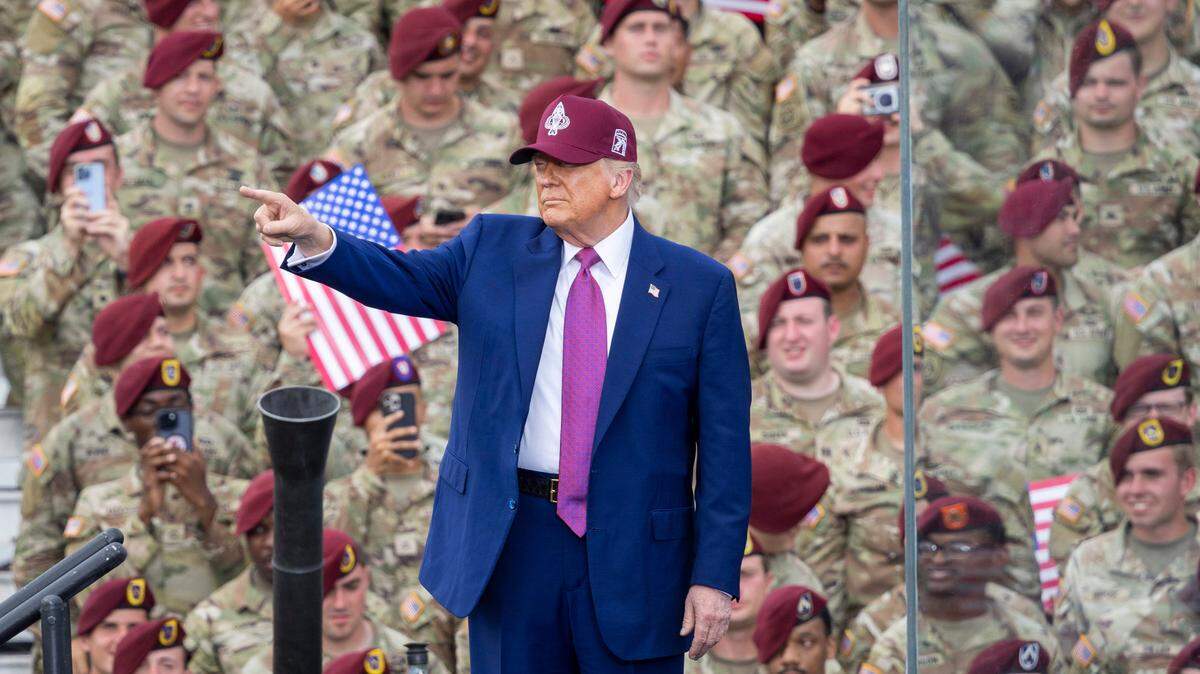
Over recent weeks, many Americans have expressed shock and outrage at President Donald Trump’s deployment of thousands of National Guard troops to repress Californian protesters. As footage was released of U.S. Sen. Alex Padilla being wrestled to the floor and handcuffed outside of a press conference with Homeland Security Secretary Kristi Noem, tensions continued to rise.
These infringements on state sovereignty and performative violence against elected officials are largely unprecedented on U.S. soil. When we look at the history of U.S. intervention in Latin America, however, we see that infringement on sovereignty is a classic imperialist strategy.
Over the course of the 20th century, the U.S. government either orchestrated or backed dozens of regime changes in neighboring Latin American countries. Increasingly, by the 1940s, and especially with the beginning of the Cold War, the U.S. supported Latin American armies that would go on to repress social mobilizations, activism and civil liberties, violating the human rights of Latin American citizens.
The U.S. encouraged Latin American armies to root out “internal enemies” at all costs, in the name of defending the “free world” or “Western civilization.” Historians often refer to this ongoing strategy as the “National Security Doctrine” of the Cold War. Make no mistake, however, this doctrine was never about protecting democracy and freedom in the countries where the U.S. carried out or sponsored regime change.
Take the case of Guatemala: In the early 1950s, that country was in a period of democratic opening after a half century of authoritarian rule. In 1952, democratically elected President Jacobo Árbenz passed a hugely popular agrarian reform law with the goal of benefiting historically dispossessed rural populations. But because the reform threatened the interests of a U.S. agro-industrial giant — the United Fruit Company (known today as Chiquita) — this corporation pressured Washington to intervene. And intervene America did.
In a covert operation called “PBSuccess,” the Central Intelligence Agency launched a campaign to sew misinformation designed to create the illusion of internal opposition against the Árbenz government. (Árbenz, like his agrarian reform bill, was hugely popular). The C.I.A. went on to arm, fund and train a small mercenary force of 480 Guatemalan soldiers who had assembled in neighboring Honduras. In 1954, the mercenaries invaded, and because the U.S. had threatened to invade if the mercenaries were not successful, the Guatemalan National Army refused to fight. This was the culmination of an intense period of psychological warfare carried out by the CIA as part of Operation PBSuccess.
Árbenz’s government fell, and decades of brutal authoritarian repression followed, including a genocide of Indigenous Guatemalan Mayans that lasted from 1960-96, wherein some 200,000 people were killed or disappeared through systematic state terror.
Guatemala is just one of many cases of U.S. intervention in the sovereignty of its Latin American neighbors. The Trump administration’s recent mobilization of U.S. troops to former military bases along the Panama Canal is a 21st century continuation of this pattern, and it has eerie parallels to the current situation in California.
Campaigns of misinformation, the repression of civilian mobilizations and threats about internal enemies abound. Americans should be concerned about power grabs abroad, like the one taking place right now in Panama. We should keep a close watch on how the situation unfolds there, and seek out news on current events in Panama despite the under-reporting in U.S. media on this situation.
The more the Trump administration is able to get away with elsewhere, the more emboldened they may become at home.
Just recently, Defense Secretary Pete Hegseth appeared at a congressional hearing and spoke about Pentagon “contingency plans” related to foreign invasions. When questioned by Rep. Adam Smith, D-Wash., about whether the Pentagon had a plan to invade Panama and Greenland, Hegseth said “Panama is key terrain that we are focused on … Our job at the Defense Department is to have plans.” When Rep. Mike Turner, R-Ohio, pressed Hegseth to clarify his position on planning for a foreign invasion, Hegseth responded that “the Pentagon has plans for any number of contingencies.”
As scholars with decades of experience doing research in Panama and teaching about the history of U.S.-Panama relations, watching this back and forth was chilling. Do members of the Trump administration have similar strategies planned for states that don’t fall in line with their political agenda? Only time will tell.
But, in Panama, people aren’t sitting around waiting to see what Trump’s next move will be. They are organizing.
Since April, a series of massive protests has rocked the country. Coalitions are forming among students, Indigenous communities, farm workers, environmentalists and labor unions representing teachers, the medical profession and construction workers. People are working together and expressing their outrage not only about recent capitulation of national sovereignty to the U.S., but also about other issues, like the rollback of environmental protections, attacks on universities, the weakening of the social safety net, the re-opening of international mining concessions judged unconstitutional, the layoffs of thousands of workers and the arrests of labor leaders.
A similar, coordinated resistance movement in America has been slow to build, despite the fact that Trump policies are producing many of the same problems. However, the recent, national “No Kings” protests across the country show that may be starting to change.
At this precarious time in U.S. history, it’s worth taking a moment to cast our gaze toward our Latin American neighbors to the south. Those of us interested in resisting U.S. tyranny at home should learn from — and act in solidarity with — those who have long experienced it abroad. The fate of this hemisphere depends upon it.
This story was originally published June 25, 2025 at 5:00 AM with the headline "What Americans can learn from the longtime playbook of U.S. imperialism abroad | Opinion."