
Helping California’s most needy homeless means removing barriers to care | Opinion
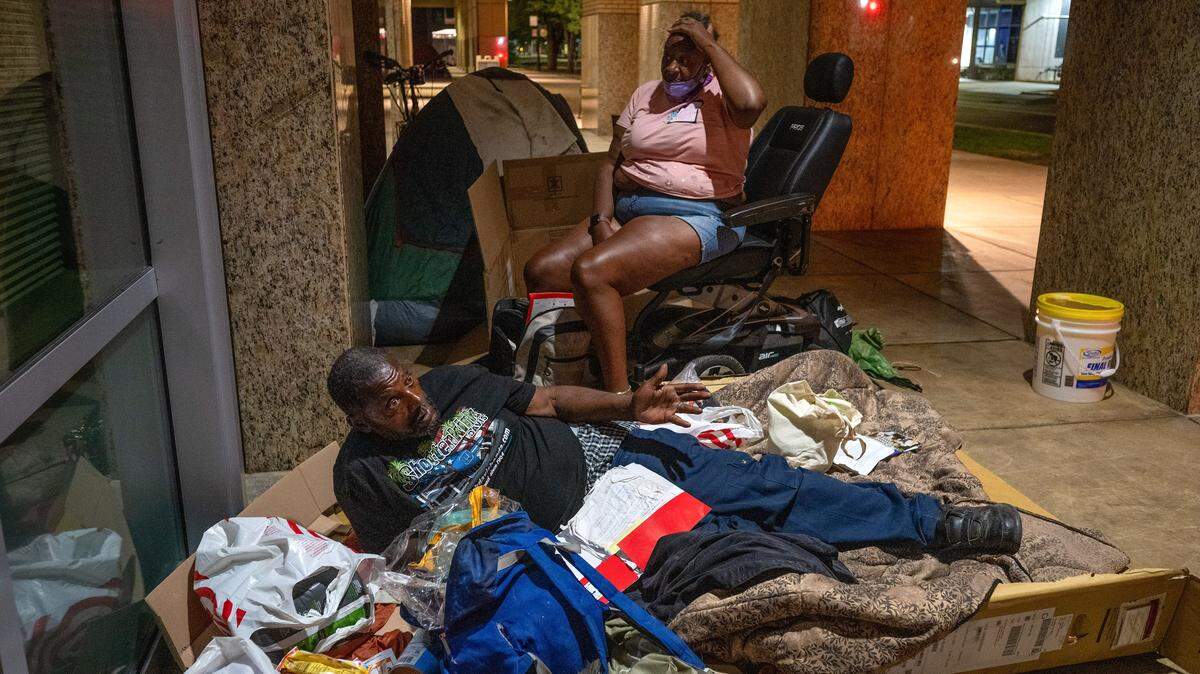
When Californians see someone who is living on the street and suffering from severe mental illness or substance abuse, the most obvious reaction is, “Why isn’t that person getting help”?
The old excuse that people don’t want help is no longer true – over the last five years, California has passed new laws that allow families and law enforcement to require that people accept help when offered.
So why are we still seeing people languishing on our streets? The answer is both simple and confounding.
Neither the state nor counties have any standard to ensure that people who possess the greatest need are assured the most intensive care they require. Who actually receives the highest levels of care is random and too often arbitrary.
That must change.
Groundbreaking legislation, Assembly Bill 348, by Maggy Krell, D-Sacramento, provides a state standard to ensure people who are chronically homeless with serious mental illnesses are prioritized for our most intensive ‘whatever it takes’ programs that are proven to reduce homelessness, incarceration, and hospitalizations. AB 348 has cleared the legislature and now needs the signature of Gov. Gavin Newsom.
Removing barriers to care
These programs are called Full Service Partnerships (FSPs). These partnerships, primarily administered by counties, are the gateway to comprehensively addressing the challenges of Californians with severe mental health challenges.
FSPs go beyond traditional mental health treatment by providing wraparound services, housing, and long-term support for people with serious mental illness. They aim to get people off the streets and into stable housing, with the intensive services and support they often need to stay housed.
Entering these partnerships is currently too difficult. A provider who is caring for a homeless individual, for example, typically has to fill out detailed application papers in pursuit of enrollment. All this paperwork simply acts as a barrier that thwarts progress.
AB 348 solves this by enabling providers to immediately enroll the neediest people—those who are chronically homeless and mentally ill—into FSP’s without waiting months for county approval.
FSPs work. A 2023 evaluation from the Mental Health Services Oversight and Accountability Commission (MHSOAC) showed a 41% reduction in psychiatric hospitalizations, an 82% reduction in jail days, and an 80% reduction in days spent unhoused after a client joins an FSP program.
Getting care to the most needy
These partnerships are a cornerstone of the Newsom Administration’s approach to homelessness. In his landmark 2024 initiative to expand mental health treatment and access in California that I supported, Proposition 1, Newsom required to allocate 35% of their Behavioral Services Act funding to FSPs.
But here is the rub. While Proposition 1 was a big step forward, nothing in the act requires that people who are chronically homeless and severely mentally ill be prioritized for FSPs. If counties and providers prioritized the people most obviously in need of urgent intervention, this might not be cause for concern.
Tragically, the opposite is true.
Only 25% of all FSP slots presently go to unhoused adults. Meanwhile, adults with schizophrenia, bipolar disorder, or other serious mental illnesses, many of whom are homeless, endure an average of five involuntary psychiatric hospitalizations before finally accessing FSP care.
It’s not that people receiving FSPs are not in need. But looking outside at the sick people living unsheltered on our sidewalks and riverbanks, it’s evident that the sicker the person, too often the less likely they are to receive help.
The Governor loudly complains about the lack of real accountability in our behavioral health system. He rightfully bemoans the fact that despite significant investments in behavioral health and homelessness programs, our streets have too many encampments, a disservice to the people living in such conditions and the surrounding affected communities.
The Governor’s vision will not succeed unless the people languishing on our streets are the top priority for FSPs.
The state’s guidance on serving the people on our streets is not enough. We need an actual statewide standard for who gets admitted to care. AB 348 provides that standard and has broad bipartisan support, passing almost unanimously in both legislative chambers.
California will not solve homelessness until our sickest, most vulnerable people are the first to receive care. By signing Assembly Bill 348, Newsom can turn that principle into practice and leave a legacy of compassion and true accountability.
Darrell Steinberg is the former mayor of Sacramento and founder of the Steinberg Institute.
This story was originally published September 16, 2025 at 5:00 AM with the headline "Helping California’s most needy homeless means removing barriers to care | Opinion."