
What it means to honor and celebrate California Native American Day | Opinion
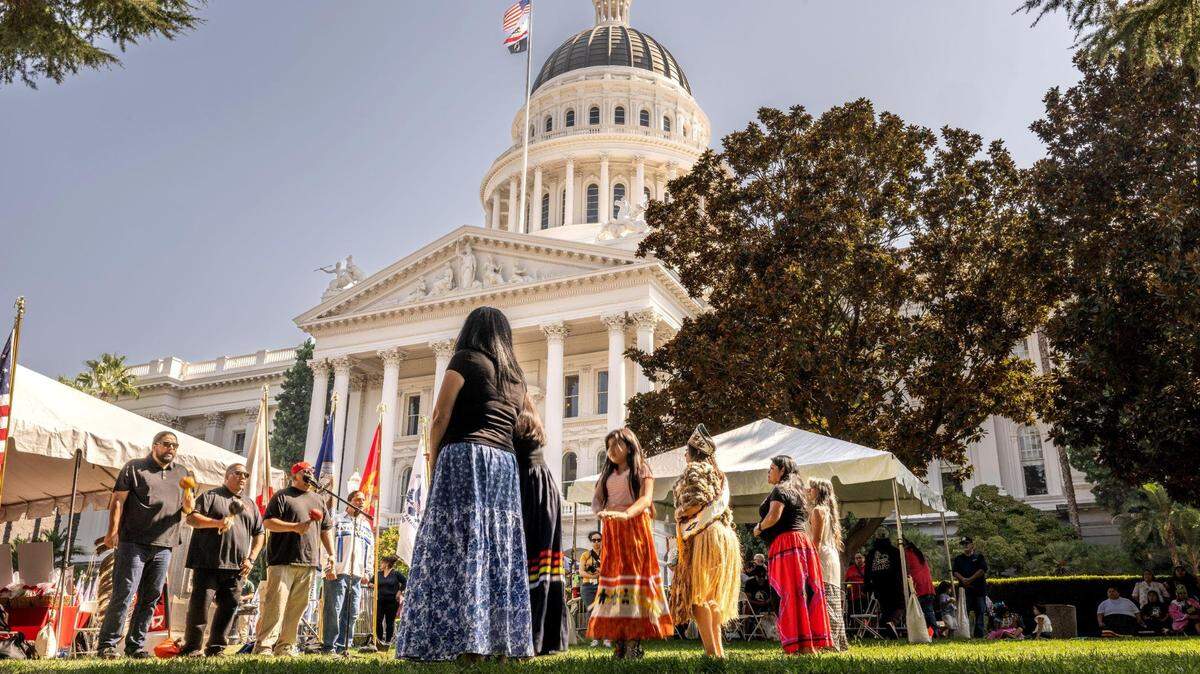
Today, on California Native American Day, tribes celebrate in communities across California and gather at the state Capitol to honor their diversity and unity. But this day is about more than observing cultural performances, watching youngsters learn about vibrant cultures and hearing languages that were almost wiped out along with the people who spoke them.
Long before California statehood in 1850, Europeans such as the Spanish and Russians were among the first to claim the territory that would become the 31st state. Those from other lands — explorers, missionaries and fortune seekers — were all too frequently set on removing, annihilating or subjugating the original occupants.
California’s first governor, Peter Burnett, called for a war of extermination and paid for militias to slaughter Native Americans, underwritten by the Legislature and reimbursed by the federal government.
Other efforts were aimed at further erasing tribal identity: Punishing those who spoke Native languages and practiced cultural traditions. Most traumatic of all was the forced separation of children from their families. Children were forcibly abducted and placed in boarding schools for assimilation. There, the use of their languages, traditional clothing and cultural and spiritual ways of life were all cruelly prohibited.
These demonstrations of inhumanity and racism and this horrendous and dehumanizing oppression could not erase Native American’s cultural identity. Instead, a tradition was forged among Native peoples of resistance to cultural erasure and a dedication to preserve languages, songs and traditions.
This year’s theme for the annual observance of California Native American Day is “Walking in Their Footsteps: Carrying Forward the Legacy of Strength and Sovereignty.”
In August, while lawmakers were still in session, a celebration on the Assembly floor kicked off Native American Day. The California Legislative Native American Caucus also honored a second annual group of Native American leaders — adults and youth — who exemplify the theme of the 2025 celebration.
Honorees included youth from the Fresno County city of Clovis who staunchly defended their right to wear traditional tribal regalia and emblems during high school graduation ceremonies and the first Native American woman admitted to the California State Bar who was a fierce defender of Native young people.
Also honored was a strong advocate for combatting the Missing and Murdered Indigenous People Crisis, a prominent tribal leader and educator for whom a new school in the San Jacinto Unified School District was named as well as a long serving tribal chairman regarded as a “leader among leaders” who ceaselessly worked to ensure economic sustainability for his tribe and others.
These women and men, from different tribes and reflecting varying experiences, contributed to their communities and worked to preserve the deeply held values of Native American tribes. Far from having been erased, these pioneering individuals and our observance of California Native American Day remind us of what I was taught by my parents as a child: The three things no one can take from you and that keep you strong are your spirituality, your education and your culture.
Today, please take a moment to reflect on the contributions of California Native Americans, their diversity and how their examples of resilience and strength can benefit everyone in this state.
Assemblymember James C. Ramos represents the 45th District in San Bernardino County. He is the first and only California Native American elected to the Legislature in California’s 175 years of statehood.
This story was originally published September 26, 2025 at 5:00 AM with the headline "What it means to honor and celebrate California Native American Day | Opinion."