
If Trump ignores a court order and deploys National Guard, what’s next? | Opinion
What if President Donald Trump chooses to ignore the federal district court’s order blocking the use of national guard troops in Portland? It is not hyperbole to say that such presidential defiance of a court order would be the end of our constitutional democracy as we have known it.
If court orders can be defied, then the president can violate the Constitution and any law with impunity knowing that there are unlikely to be any meaningful consequences. That means the president could then do anything — including locking up critics — knowing that the courts are powerless to stop it.
No longer would we be a country under the rule of law. We would be a nation under the rule of Donald Trump, who could do anything and defy any court that tried to stop him.
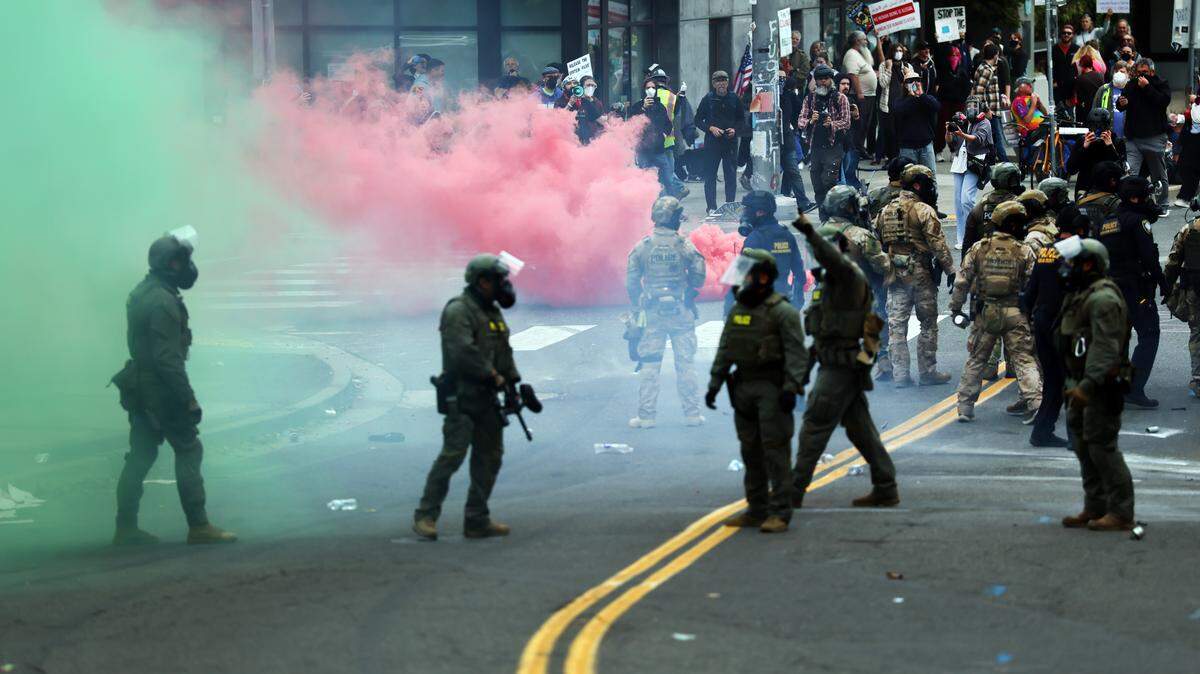
The immediate context for this possible constitutional crisis is Trump’s choice to call out the national guard and use the military in American cities. Over the weekend, Federal District Court Judge Karin Immergut found that Trump’s federalizing the Oregon national guard violated the Constitution. She then went further and found that there was no factual or legal basis for the presence of federal troops in Portland. Federal law prohibits the military from being used for domestic law enforcement, and, as Immergut pointed out, that is exactly what Trump expressed as his purported goal in sending in troops to Portland.
We should expect that Trump will comply with this ruling — though he will certainly appeal it. Assuming the ruling stands, the expectation should be that Trump will obey and not defy the court’s orders. Throughout American history, presidents have complied with court orders even when they vehemently object to them.
But there is understandably fear that Trump could disobey the courts. Several months ago, Trump quoted Napoleon Bonaparte on X, writing “He who saves his Country does not violate any Law.” There could not be a more clearer statement that Trump sees himself as above the law.
A week earlier, Vice President JD Vance posted a message on X, declaring that “Judges aren’t allowed to control the executive’s legitimate power.” This follows many statements by Vance that the president need not comply with adverse court rulings.
The possibility of Trump defying Immergut’s orders is heightened by the statements of White House Deputy Chief of Staff Stephen Miller, who posted: “A district court judge has no conceivable authority, whatsoever, to restrict the president and commander-in-chief from dispatching members of the U.S. military to defend federal lives and property.” He also wrote: “Today’s judicial ruling is one of the most egregious and thunderous violations of constitutional order we have ever seen — and is yet the latest example of unceasing efforts to nullify the 2024 election by fiat.”
All of this requires asking: What happens if Trump orders the military to ignore the court’s orders? Quite importantly, Trump himself would face no legal consequences for doing so. The Supreme Court has ruled that a president has absolute immunity from both civil liability and criminal prosecution for official acts taken in office.
In theory, those who carry out an order from Trump to violate the court’s ruling could be held in contempt. However, if these individuals were held in criminal contempt of court, Trump can pardon them. There is also civil contempt, where a person is jailed or fined until the court order is followed. But civil contempt is enforced by the U.S. marshals, who are part of the Department of Justice and thus under the control of Attorney General Pam Bondi (and therefore ultimately Trump).
Therefore, the only remedy if the president defies court orders would be for a majority of the House of Representatives to vote articles of impeachment and for two-thirds of the Senate to vote to remove him from office. This seems inconceivable given the Republicans control of Congress, and Trump surely knows it is highly unlikely to happen.
This exposes a fundamental reality about the American constitutional system: It depends on the good faith of those who govern us, including their good faith to follow court orders. If the president does not act out of good faith and chooses to instead ignore court orders — and if Congress does not use its impeachment power — then there really is no check. The president could do literally anything, however abusive or illegal or unconstitutional, ignoring the court orders that try to stop him.
If ever that happens — and we all must fervently hope it never does — then we will have a president who no longer is constrained by the Constitution or any law. There is a word for that: dictator.
Erwin Chemerinsky is dean and professor of law at the UC Berkeley School of Law.
This story was originally published October 7, 2025 at 11:31 AM with the headline "If Trump ignores a court order and deploys National Guard, what’s next? | Opinion."