
Trump’s passport gender policy only exists to harm trans people | Opinion
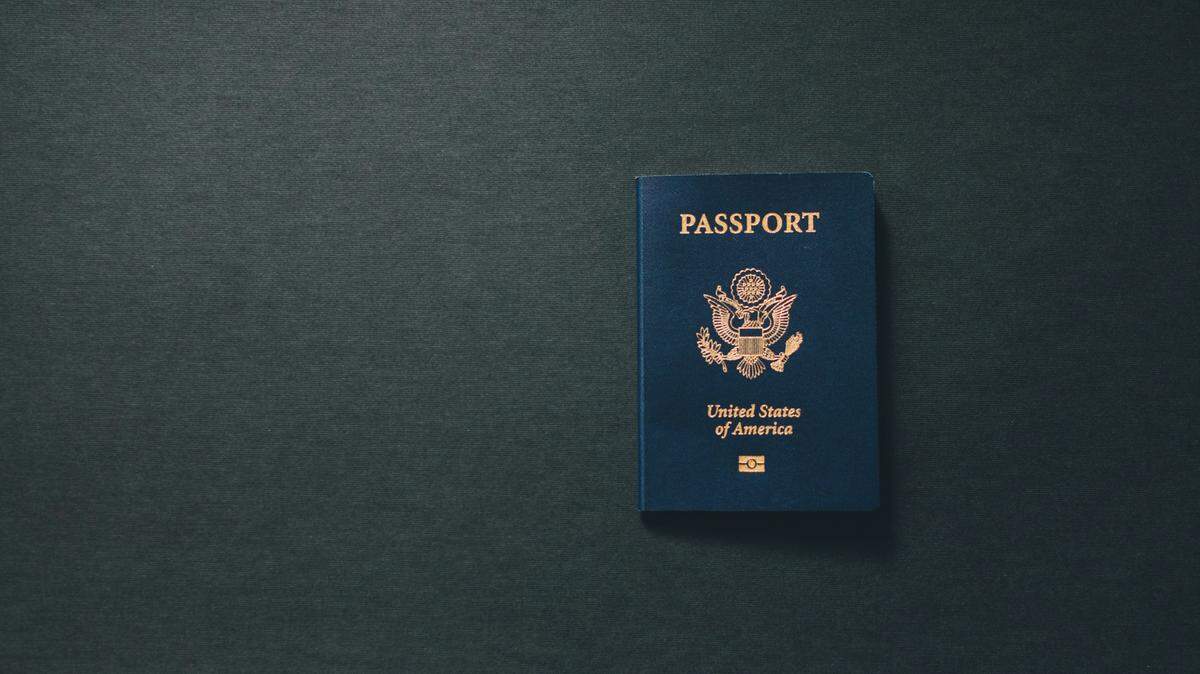
The Supreme Court’s ruling allowing the Trump administration to require that passports reflect a person’s sex at birth is both mean-spirited and wrong as a matter of law. On Thursday, Nov. 6, in another 6-3 action on its shadow docket, the conservative justices again reversed lower court rulings and sadly served as a rubber stamp to approve an executive order from President Donald Trump.
On Jan. 20, Trump issued Executive Order No. 14168, characterizing transgender identities as “false” and “corrosive” to American society. The order asserted that “the policy of the United States” is “to recognize two sexes, male and female,” which it defined based on the sex assigned “at conception.” And the order directed the Secretary of State to require that any new government-issued identification documents reflect the holder’s “biological” sex.
For 33 years, however, individuals have been able to obtain passports that reflect their gender identity. In 2021, the State Department allowed applicants to self-select the sex marker that matched their gender identity.
This executive order is deeply offensive in that it denies the reality that there are transgender, intersex and non-binary individuals. The U.S. president is decreeing that the federal government will not recognize the identity and very existence of a significant number of people.
The purpose of a passport is to identify the individual at the time it is presented. It therefore makes sense to have it accurately represent the person’s gender identity today. It only causes needless confusion when a transgender individual presents with a different gender than the sex listed on the passport. Also, the lower court found that it can subject transgender individuals to harassment and violence in some countries.
There is truly no reason for the government to want a passport to reflect a person’s sex at birth other than to further the Trump administration’s effort to deny the existence of transgender, intersex and non-binary individuals.
The federal district court, in a 55-page opinion, explained why this denies equal protection of the law, and the federal court of appeals upheld this. I would have thought that this was an easy case for the Supreme Court and one of the few instances in which even the conservative justices would have said “No” to the Trump administration.
Instead, in a very short order, the court concluded that “the government is likely to succeed on the merits.” It declared: “Displaying passport holders’ sex at birth no more offends equal protection principles than displaying their country of birth — in both cases, the government is merely attesting to a historical fact without subjecting anyone to differential treatment.”
Justice Ketanji Brown Jackson wrote a blistering dissent, joined by Justices Sonia Sotomayor and Elena Kagan.
As a matter of equal protection law, the court’s order is clearly wrong. The State Department policy obviously discriminates against transgender, intersex and non-binary individuals by denying them the ability to have a passport that accurately reflects their gender.
In fact, just five years ago, in Bostock v. Clayton County, Georgia, the Supreme Court held that discrimination based on gender identify is sex discrimination. One of the plaintiffs in that case was a transgender woman who was fired after transitioning. The court, in an opinion by Justice Neil Gorsuch, found that this was sex discrimination which violated federal law Title VII, which prohibits employment discrimination.
The court explained that, if the plaintiff were a man, she would still have her job. And that, by definition, is sex discrimination. Likewise, a transgender man cannot have a passport that accurately reflects his gender identity, but if he were a woman he could do so.
The Trump policy on passports serves no legitimate purpose. It is inexplicable how the government’s interests are furthered in having passports that do not reflect a person’s current gender identity. Equal protection, as the Supreme Court long has ruled, requires that the government have a purpose other than harming a group of people.
The court’s decision was wrong in another way, as well: When a trial court issues a preliminary injunction, an appellate court — including the Supreme Court — can only overturn it if there is a showing that the party will suffer irreparable harm without relief and that this outweighs the benefits from the preliminary injunction.
But what is the irreparable harm to the government if its new policy on passports is temporarily enjoined?
Jackson made exactly this point in her dissent, explaining that the government “offers no evidence that it will suffer any harm if it is temporarily enjoined from doing so, while the plaintiffs will be subject to imminent, concrete injury if the policy goes into effect.”
The Trump policy is nothing but an effort to further its ideology at the expense of a group of individuals who long have been the victims of discrimination. It undermines, not furthers, the goal of passports being accurate to facilitate identification.
This should have been a simple case for the Supreme Court, but it failed, yet again, to say “No” to a Trump administration action that violated the Constitution.
Erwin Chemerinsky is dean and professor of law at the UC Berkeley School of Law.
This story was originally published November 11, 2025 at 6:00 AM with the headline "Trump’s passport gender policy only exists to harm trans people | Opinion."