
We can do more to protect California raptors from rat poisons | Opinion
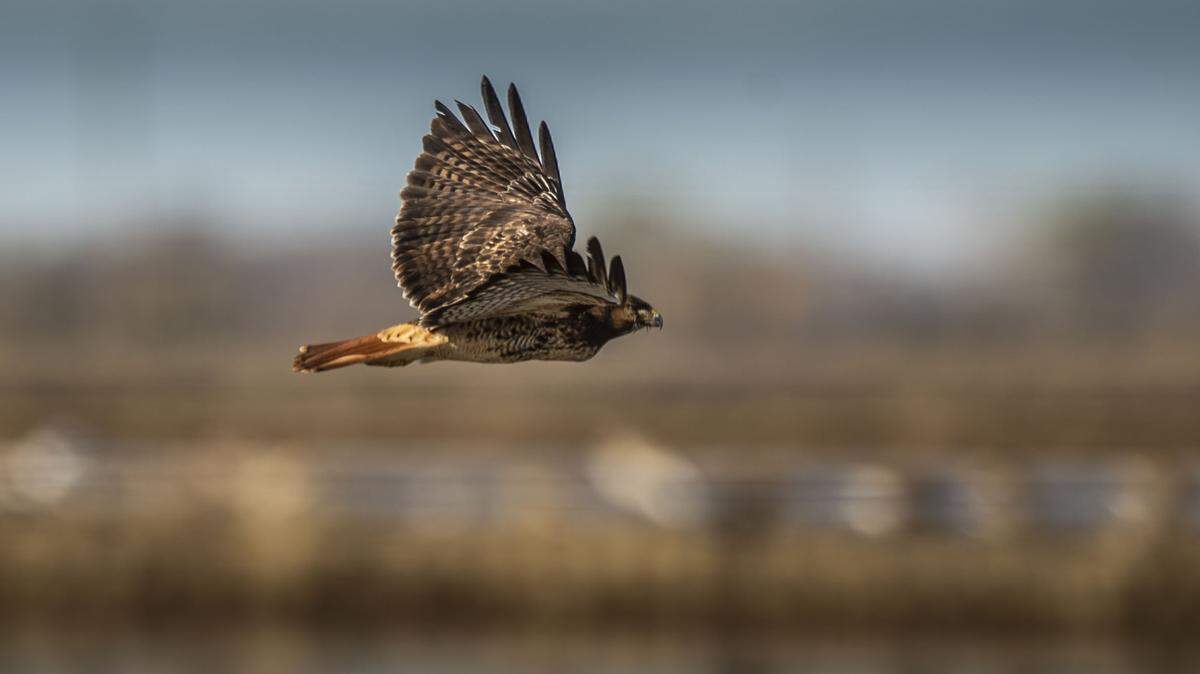
California boasts a great diversity of birds of prey, from avocado-sized pygmy owls to soaring golden eagles with six- to seven-foot wingspans. Our state’s dramatic topography and nearly 800-mile length draws raptor migrants from all over the western continent in every season of the year. And somehow, we are home to year-round red-tailed hawks and great horned owls that may not move more than a few dozen miles in a lifetime.
Although rural families have long appreciated birds of prey for their beauty and their free pest-control “services,” urban residents are also thrilled by the hawks and owls in their midst. Many raptors have adapted to city life over recent decades. Given a little open space here, a green belt or a row of leafy street trees there, species such as Cooper’s and red-shouldered hawks can be successful nesters in the middle of a cityscape. The same is true for red-tailed and Swainson’s hawks at the edge of open fields or agricultural lands.
American kestrels and barn owls can nest in palm trees as well as in buildings or nest boxes in urban zones, providing excellent mouse and gopher controls for schools, playing fields and even orchards and vineyards. Move a bit farther out into grasslands, crop fields and baylands, and white-tailed kites and Northern harriers become the rodent predators of choice.
But raptors are also vulnerable sentinels for the health of our ecosystems. They are at risk in California as well as in many places around the world. Despite having passed groundbreaking legislation in California over the past five years to lessen one of the most ubiquitous threats to raptors — rat poisons — the state’s Department of Pesticide Regulation is now proposing to weaken these laws.
Assembly Bills 1788, 1322 and 2552, signed into law by Gov. Gavin Newsom, aimed to reduce the rampant and widespread use of rodenticide — highly toxic poisons that also affect animals like mountain lions, bobcats and foxes in addition to raptors. However, these laws did not go far enough, leaving loopholes for agricultural and other users that were a result of political pressure, not science.
Numerous more sustainable means of rodent control — including rodent fertility control, waste reduction, deterrents, sound barriers and highly successful physical methods of exclusion from buildings — are available to agricultural and urban users.
According to the latest monitoring report from the California Department of Fish and Wildlife, raptors continue to be exposed to these poisons. While some die directly as a result of ingesting anticoagulant rodent poisons, others suffer over weeks and months from sublethal impacts of the poisons, which can affect the immune system, ability to thermoregulate, reproductive success and overall fitness.
A rodenticide-weakened hawk, owl or mammal can also be more susceptible to collisions with cars, power lines or windows.
Raptors not only provide predation pressure on rats, they also connect us with the wild — even in cities. Why not give these birds the best shot at sustainable populations by keeping rat poisons out of the environment and their bodies?
Now is not the time for California to relax the pioneering wildlife protection regulations it passed in recent years. Instead, we should do more to protect these beneficial birds by closing the loopholes that are proving deadly.
Lisa Owens Viani is the director of Raptors Are The Solution (RATS), a Berkeley-based project of Earth Island Institute. Allen Fish is a science advisor to RATS, a former lecturer at UC Davis and director emeritus of the Golden Gate Raptor Observatory.
This story was originally published December 16, 2025 at 6:00 AM with the headline "We can do more to protect California raptors from rat poisons | Opinion."