
Should the California Coastal Commission bend the knee to Elon Musk? Absolutely not | Opinion
Most people don’t say “no” to Elon Musk. The California Coastal Commission is an exception.
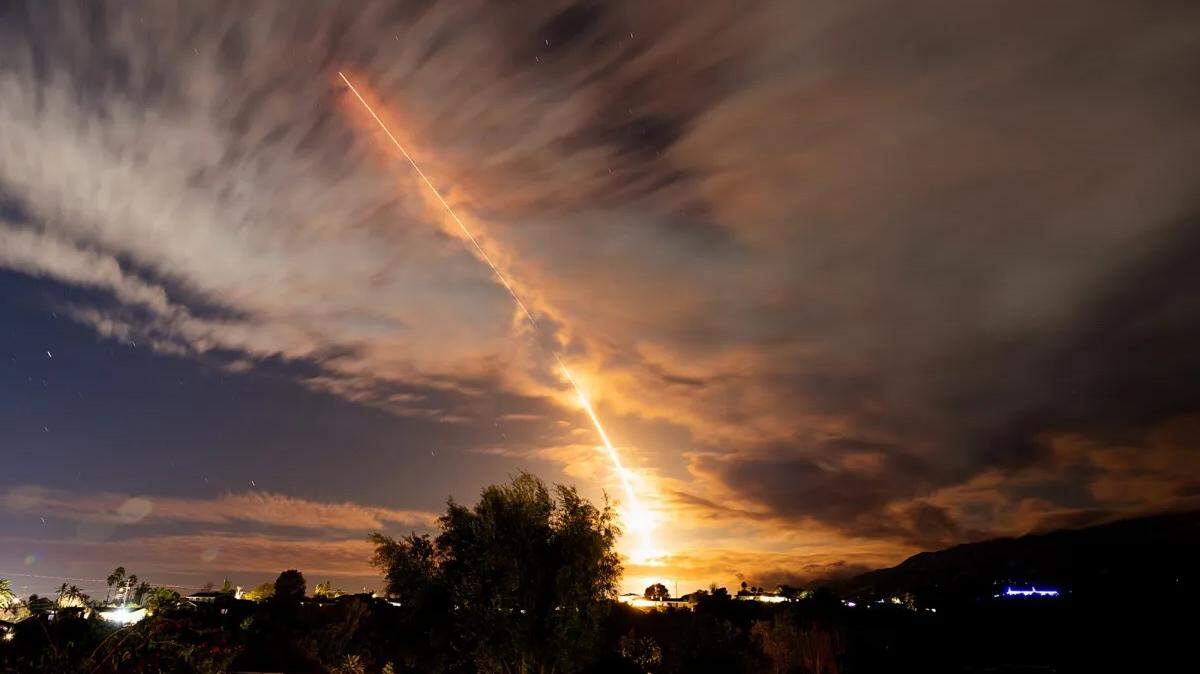
On Oct. 10, coastal commissioners voted 6-4 to deny a request to allow more of Musk’s SpaceX Falcon 9 rockets to launch from Vandenberg Space Force Base, located near Lompoc in northern Santa Barbara County.
The U.S. Air Force, which partners with SpaceX on spy satellites and other defense contracts, had petitioned the Coastal Commission to increase the number of launches from 36 to 50. And that’s just for now; at the October hearing, a Vandenberg official said the Air Force plans early next year to submit a request for 100 Falcon launches per year.
The denial was an audacious move even for the California Coastal Commission, which already had a reputation for sticking it to the rich and powerful.
The decision was right, but the reasoning was wrong.
Some commissioners went too far in expressing opposition to Musk’s politics, and now one of the most powerful people in the world has declared legal war on a California agency.
Five days after the request was denied, Musk’s attorneys filed a 45-page lawsuit in federal court, alleging that the commission had “engaged in naked political discrimination” against SpaceX.
“Rarely has a government agency made so clear that it was exceeding its authorized mandate to punish a company for the political views and statements of its largest shareholder and CEO,” the suit says.
Commissioners took the low road
Some commissioners strayed far out of their lane by making imprudent comments during the hearing, like this one from Chairperson Caryl Hart: “The concern is with SpaceX increasing its launches, not with the other companies increasing their launches . . . we’re dealing with a company . . . the head of which has aggressively injected himself into the presidential race and made it clear what his point of view is.”
There are many reasons to be concerned or even appalled by Elon Musk’s behavior. For example, The New York Times just reported that Musk and SpaceX “repeatedly failed to comply with federal reporting protocols aimed at protecting state secrets.” But it is not the Coastal Commission’s job to sit in judgment of a person’s character, or politics, or their fitness to serve as a government contractor.
Even if such comments did not ultimately factor into the commission’s final decision, they created the appearance of bias, providing legal ammo to Elon Musk.
Commissioners should have taken the high road and exclusively considered issues under their jurisdiction, including coastal access, environmental impacts and, in this case, the applicant’s history of (non) compliance with the commission’s regulations and restrictions. (SpaceX had previously exceeded its number of permitted launches. Not a good track record.)
What does Musk want?
Musk is asking the court to declare that the SpaceX program at Vandenberg is a “government agency activity,” which means the Coastal Commission would no longer have a final say on launches.
(The commission does not have direct permitting authority over federal projects or programs, though it does determine whether they are in compliance with the state’s coastal management plan.)
But there’s a problem with placing Musk’s entire program under the federal umbrella: More than 80% of SpaceX launches from Vandenberg have no military purpose. They carry Starlink satellites for Musk’s rapidly growing broadband internet service.
As such, the majority of SpaceX launches from a government installation benefit a private company and stand to make the wealthiest man in the world even richer.
Musk’s army of lawyers has a comeback to that argument embedded in the lawsuit against the Coastal Commission:
“First, SpaceX, as one of only two certified National Security Space Launch (NSSL) program providers to the U.S. Government, is contractually required to share data with the U.S. Government for every single one of its launches, whether carrying a U.S. Government payload or not...
“Second, the U.S. Government has long established that commercial launch services are critical to America’s assured access to space. Commercial space launches, with a diverse set of non-U.S. Government customers, enable affordable, routine, and regular access to space that does not depend solely on the U.S. Government as a customer.”
Based on that bogus reasoning, the military could allow umpteen private launches from multiple companies, regardless of the consequences.
Increasing complaints about launches
Back in the days of Vandenberg Air Force Base — before it was christened a spaceport in 2021 — launches were cause for excitement. They even helped put the city of Lompoc on the map as a tourist destination.
But as the frequency has increased, complaints have risen as well, mostly about the noise and rattling associated with sonic booms.
Noise isn’t the only issue. Launches sometimes force temporary closure of the popular Jalama Beach County Park and also create marine debris, such as wire and sheet metal from rockets.
Rep. Salud Carabajal, a Democrat representing Santa Barbara, is pushing for the military to “better address the impact of increased launches, including but not limited to launch noise.”
“Facilities like hospitals, daycares, schools, senior-living facilities, and private residences can all be impacted by noise disturbances,” he wrote.
Also noteworthy, the U.S. Department of Fish and Game has scheduled four public meetings on the Central Coast — three in-person and one virtual — on the impacts of the increased frequency of launches as part of an environmental assessment.
Base decision on evidence
Neither the military nor Elon Musk should have carte blanche to run roughshod over California’s coastal regulations, and the commission should not be faulted for its efforts to protect coastal resources and public access to beaches. It owes as much to all Californians.
Still, commissioners must be politically agnostic in their decision making. That means setting aside animosity toward Elon Musk. Commissioners do not owe him any favors, but they should not allow his politics or personality to cloud their judgment.
There must be a balancing of defense needs with the obligation to protect the environment and the quality of life of residents within earshot of sonic booms. And of course, launches for public purposes, such as national security, must take precedence over private launches.
Going forward, the Coastal Commission should determine the optimal number of launches per year, based not just on anecdotal evidence, but also on the best scientific research and in consultation with other regulatory agencies and the military.
Make it clear that there will be no revising the number upward every six months at the behest of SpaceX, which has been a pattern of late.
Also, mandate periodic review in case conditions change. For example, should the need for military launches increase, it may be necessary to reduce the number of private launches.
Whether the ultimate number of permitted private launches is 36 or 50 or 100, the decision must be based on defensible criteria and hard data. That will put the California Coastal Commission on solid ground — and deprive Elon Musk of a line of attack.
This story was originally published December 20, 2024 at 5:00 AM with the headline "Should the California Coastal Commission bend the knee to Elon Musk? Absolutely not | Opinion."