
Assembly bill would remove supervisors from drawing Merced County districts | Opinion
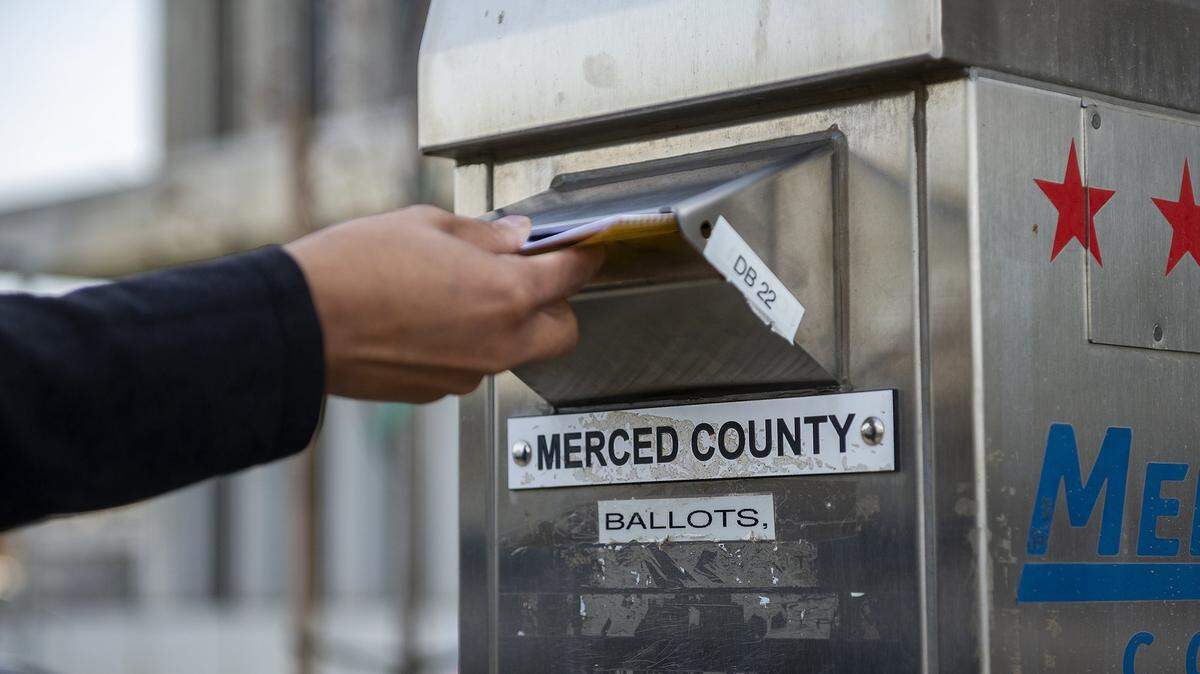
If a nonpartisan citizens commission is good enough to draw congressional districts for California, then it’s good enough for Merced County when it comes to determining boundaries for its five supervisors.
Assemblymember Esmeralda Soria, D-Merced, has introduced legislation that will have an independent commission determine the Merced County supervisorial lines starting in 2030. Her bill, AB 1441, is similar to 2022 legislation backed by Democratic colleagues Joaquin Arambula of Fresno and Rudy Salas of Bakersfield to take supervisors out of the redistricting process in Fresno and Kern counties, respectively.
“Over the last several decades, Californians have been moving redistricting away from elected officials and placing that responsibility in the hands of independent citizens to ensure a fairer process,” said Soria. “This will be a major step in ensuring that the residents of Merced County live in districts created in a fair and impartial process that promotes transparency, accountability and public trust in county government.”
An independent commission drew supervisorial districts in 2020 in Los Angeles and San Diego counties. In 2030, they will be joined by Fresno, Kern, Sacramento, San Luis Obispo, Orange and Riverside counties.
Latinos represent almost 64% of Merced County’s population, and the county has had a Latino majority since the 2010 Census. Yet, only three Latinos have been on the board since Gloria Cortez Keene was elected in 1993. District 1 Supervisor Jim Pacheco is the lone Latino on the five-member board today. He defeated two-term incumbent Rodrigo Espinoza in 2024.
The League of Women Voters of California supports the bill, which was passed 60-19 by the Assembly and now awaits state Senate hearings. The bill would give an 11-member citizens commission the task of drawing supervisorial districts.
“We believe that responsibility for redistricting should be vested in an independent commission with diverse membership that is representative of the public at large and protective of minority group interests,” the league told the Assembly.
Board wants no independent commission
Merced supervisors, just like those in Fresno and Kern counties, don’t like losing the power to draw their own districts.
“Merced County has a spotless record when it comes to meeting redistricting requirements, and the current system — which includes substantial community outreach and involvement — has served our residents well,” the board said in opposition to Soria’s bill.
The supervisors noted their 2022 redistricting process included five town halls, four community workshops, four public hearings and a way for residents to suggest their own districts.
Imposing an independent commission, they said, “seeks to usurp control from local government, while imposing a new level of bureaucracy at a significant cost to taxpayers.” Nevermind that the state will pick up the costs, according to the bill.
What the supervisors don’t like is losing their power to create their own lines. Exhibit 1: The Fresno County supervisorial districts have changed very little despite a spike in Latino population, from 38.4% in 1990 to 56.4% in 2020.
“I haven’t seen any evidence that the existing supervisors (in those counties) have any interest in giving up their ability to draw their own lines,” Lori Pesante, who led redistricting efforts for the Dolores Huerta Foundation in 2021, told The Fresno Bee. “So it will be up to the state lawmakers to deal with that.”
Crafting new districts isn’t enough
Four of the Merced County supervisorial districts have a Latino majority, ranging from 54.5% in Josh Pedrozo’s District 2 to 73% in Scott Silveira’s District 5 and Pacheco’s District 1.
The county’s problem is the same up and down Highway 99: The Latino numerical advantage gets diluted by the fact many are legal residents but don’t bother to become naturalized citizens and gain the right to vote. When considering the percentage of Latinos of voting age in Merced’s supervisorial districts, it goes from 38% in Pedrozo’s district to 62.9% in Pacheco’s district.
Factor in the low electoral participation — only 12.3% of Latino voters cast a ballot in the heavily Latino 13th Congressional District in the 2022 primary — and you get a recipe for self destruction.
We believe that an independent drawing of the Merced County supervisorial districts will lead to better voter participation.