
Our View: Justice can’t be found by trashing grocery stores
The outrage many (we know, not all) Americans feel over the death of Eric Garner for selling single cigarettes is understandable. It’s not just the ridiculously insignificant nature of the crime, but that he was begging to be allowed to breathe as he died.
The videotaped death of the unarmed black man at the hands of white police officers on Staten Island was a tragedy and a sign that something in our law enforcement culture is profoundly broken. That it follows so closely the deaths of Michael Brown in Ferguson, Mo., and 12-year-old Tamir Rice in Cleveland has fueled that outrage now spilling into the streets since Thanksgiving from New York to Berkeley.
It’s also why, in general, many protesters have had no trouble peacefully getting their point across.
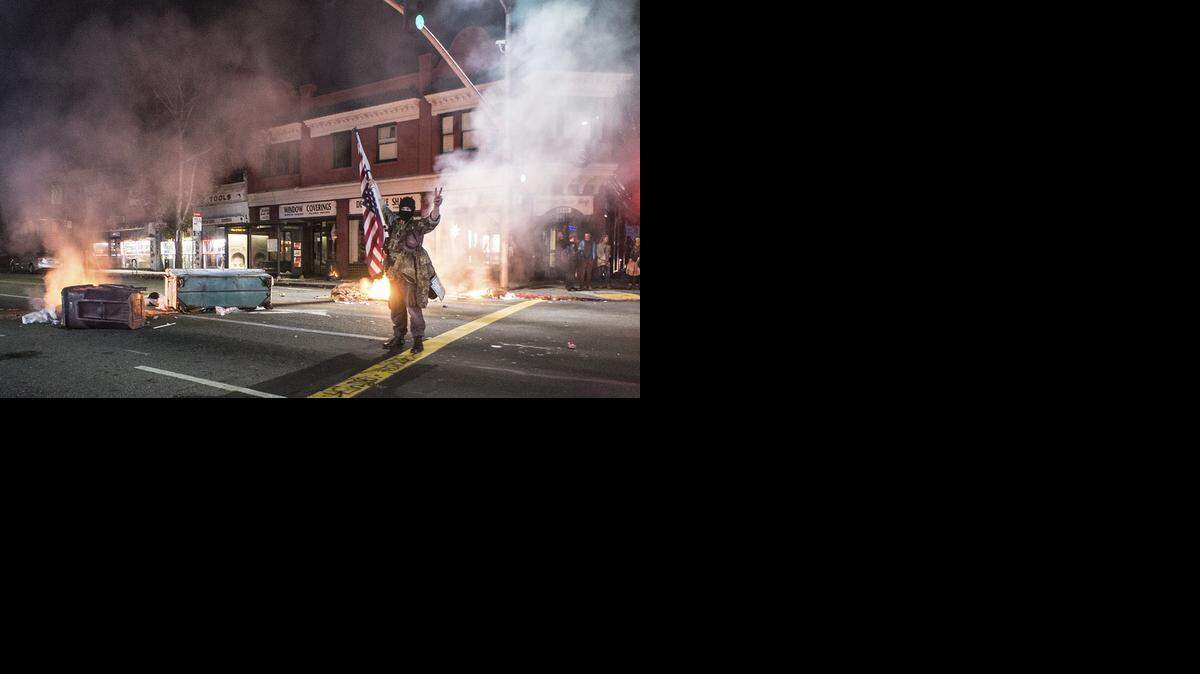
So why was Berkeley different? Instead of making a point with intelligence and poignancy, demonstrators let their protest degenerate into vandalism and looting. Protests have resulted in broken windows in downtown stores, and at least two officers and one protester were nursing minor injuries from the ruckus, which resulted in five arrests. It continued Monday night, as protesters blocked traffic and even a BART train.
Exactly what message did it send to throw a skateboard through a Trader Joe’s window? Or to break into the Telegraph Avenue Whole Foods and start passing around champagne bottles? What is to be gained by sitting on railroad tracks – other than a trip to the morgue?
One protester was beaten with a hammer when he tried to stop hooded comrades from ransacking a Radio Shack. Others scrawled anti-police slogans on, of all places, a wheelchair-supply store and a nursing home.
As with similar rampages in San Francisco and Oakland, the Berkeley mayhem did nothing but damage property and give credence to clichés about Bay Area leftists. Certainly it said nothing useful about police brutality or race or any other salient issue.
Contrast that with New York, where a “die-in” last week at Grand Central Terminal was so quietly moving that scores of bystanders fell to the floor, joining the protesters in wordless solidarity.
Maybe it’s distance, maybe it’s a criminal element, maybe it’s just sheer vandalism, but the Bay Area demonstrations have felt phony, as if the players were following a script or overcompensating or forgetting why they were out there. Or maybe they were just criminals looking for an opportunity.
Here’s a hint: When a situation genuinely calls for civil disobedience, that disobedience usually doesn’t feel wrong to the rest of us. The activities in Berkeley definitely felt wrong.
In this respect, the protesters are hardly any different from the police, who, in an era of record-low crime rates, have too frequently responded like occupying armies to situations in which their lives weren’t being threatened. Many seem to be acting with no regard to the rules they’re supposed to be following. We have a problem in this country at the intersection of law enforcement and poverty and race. That is worth protesting.
But not like this. These pointless demonstrations are distracting from the issues that we must address.
And when irresponsible fools trivialize such issues with their childish Guy Fawkes masks, some bricks and burning trash cans, well, that just makes the situation worse for everyone.
This story was originally published December 9, 2014 at 1:00 PM with the headline "Our View: Justice can’t be found by trashing grocery stores."