
Life in the Sandwich Generation
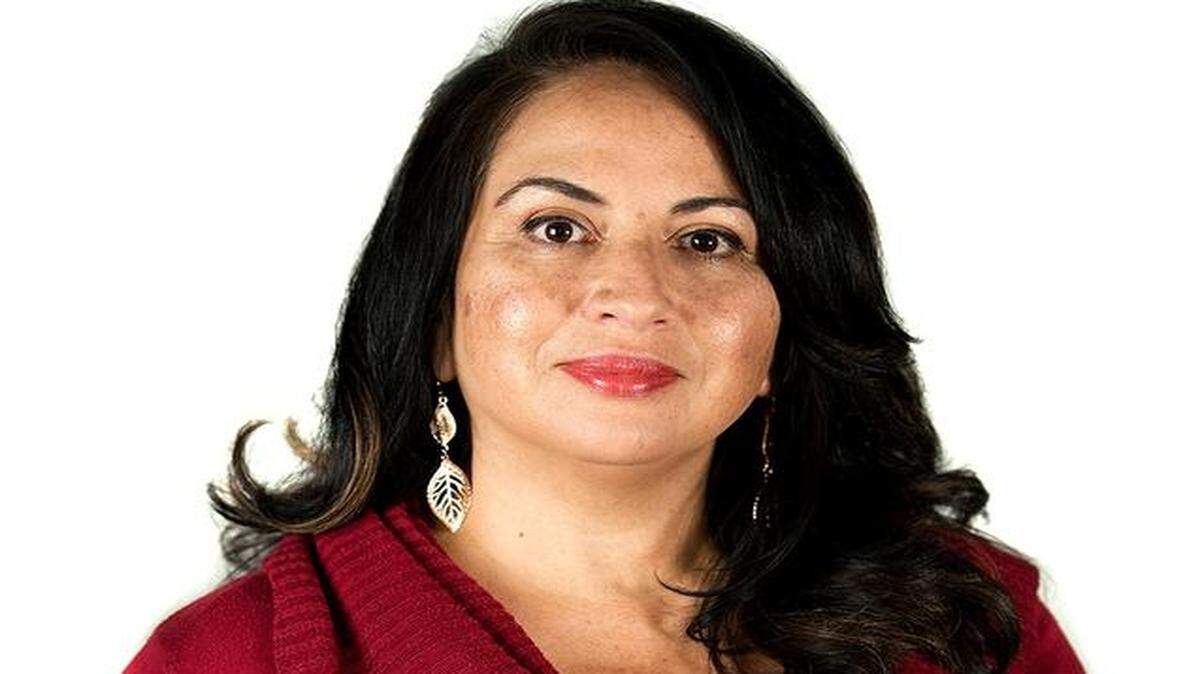
As a young girl in the 1970s, I grew up amid the women’s empowerment movement, and I aspired to charge down the trails being blazed by its heroes. From an early age, I knew I would go to college and become a professional. I knew I would make a career for myself. I was determined to push my limits and explore the possibilities. And, for the most part, I did.
All through those growing-up years, I pictured myself in the workforce. Thoughts of home and family were in the background. As time went by, however, parenthood happened, and, when it did, the words of one of my girlhood icons struck me like no other:
“If you bungle raising your children, I don’t think whatever else you do well matters very much.”
They’re the words of Jacqueline Kennedy. And ever since I became a parent, I realized that just about everything I did came in second in importance to how I felt about being a mom. Becoming a parent, I hope, also gave me greater insight into being a daughter, since I began to better understand the struggles and sacrifices my parents had experienced. (God bless them for putting up with me!)
I share this with you as a means of introducing you to a new column for Merced Sun-Star readers. I call it “Neither Here Nor There.” It’s a phrase, I’ve found, that applies to a lot of situations in life. Now, as a 40-something-year-old woman, I find it describes the situation I’m in when it comes to my family. I am a mom to three school-age children, and I am the daughter of parents in their 70s. I am neither in the “here” of childhood nor the “there” of our senior years. I am in the middle, and it’s a place where many of us find ourselves.
Folks such as me in this middle bracket often are called the “sandwich generation” – caught between raising young children while caring for our aging parents. According to the Pew Research Center, nearly half of U.S. adults who are in their 40s and 50s are a part of this group of people who are just as likely to be figuring out how to send our kids to college as we are trying to plan for retirement, or as likely to be taking our young kids to birthday parties as we are accompanying our parents to their friends’ funerals.
What is this group like? We tend to be middle-aged, with 71 percent of the so-called sandwichers between the ages of 40 and 59, according to Pew. Nearly 20 percent are younger than 40, and 10 percent are older than 60. Men and women are both equally part of the club. Hispanics are more likely than whites or blacks to be in this situation, with about a third of us having both a dependent child and a parent at least age 65. The rate compares to 24 percent for non-Hispanic whites and 21 percent for blacks.
The sandwich generation tends to earn a bit more than other segments of the population, not surprising since the era coincides with what is traditionally one’s prime earning years. But with the costs of raising children and caring for older parents bearing down, it may not feel very comfortable.
Life in the sandwich generation can also be stressful, with demands seeming to come from all sides. I know that for me, one of the happiest times of day is bedtime, when I can finally tuck my little guys into their beds and spend a few quiet moments reading before I collapse into slumber, too. Nevertheless, a Pew study from 2013 found that sandwichers tend to be just as happy with our lives as other adults. For me, I look at my three young men and remind myself every day to treasure the time I have with them. My 15-year-old is already in 10th grade, and when his youngest brother reminded me the other day – “Mama, Alex will only be here for three more years before he goes off to college” – well, it took all I had to keep myself from crying.
Being a parent is the hardest job out there, as far as I can see. And, the pay-off comes not in coins but in hugs and kisses, laughter and heartache, tears of anger and tears of joy. It’s a job that so many of us experience, so common to our daily lives that we hardly even talk about it. But it’s a cornerstone of our society, of our humanity, and it speaks to who we are as people. That’s why I chose this subject as the focus of this new column.
I know this sandwich audience is a busy one, and many of you might think “Good grief, when am I supposed to sit down to read a column?” Well, I hope it’s in that quiet moment before bed, or maybe while you enjoy your coffee in the early-morning stillness before the shouts of “Mom!” or “Dad!” begin. I hope you’ll send me your thoughts about topics you’d like to see addressed here. If there is a question you have about being a parent or being the child of an aging parent, send me an email, and I’ll do my best to look into it.
I’m reminded of scenes from the 1989 movie “Parenthood,” featuring another one of my childhood heroes, Steve Martin. There’s a moment when the grandmother in the film describes a carnival ride in a way that I feel about being a mama.
“It was just so interesting to me that a ride could make me so frightened, so scared, so sick, so excited, and so thrilled all together!” she says. “Some didn’t like it. They went on the merry-go-round. That just goes around. Nothing. ... I like the roller coaster. You get more out of it.”
Hope you’ll enjoy the ride with me.
This story was originally published February 23, 2016 at 6:22 PM with the headline "Life in the Sandwich Generation."