
Blauert on Outdoors: Plenty of trail choices to view Yosemite Valley
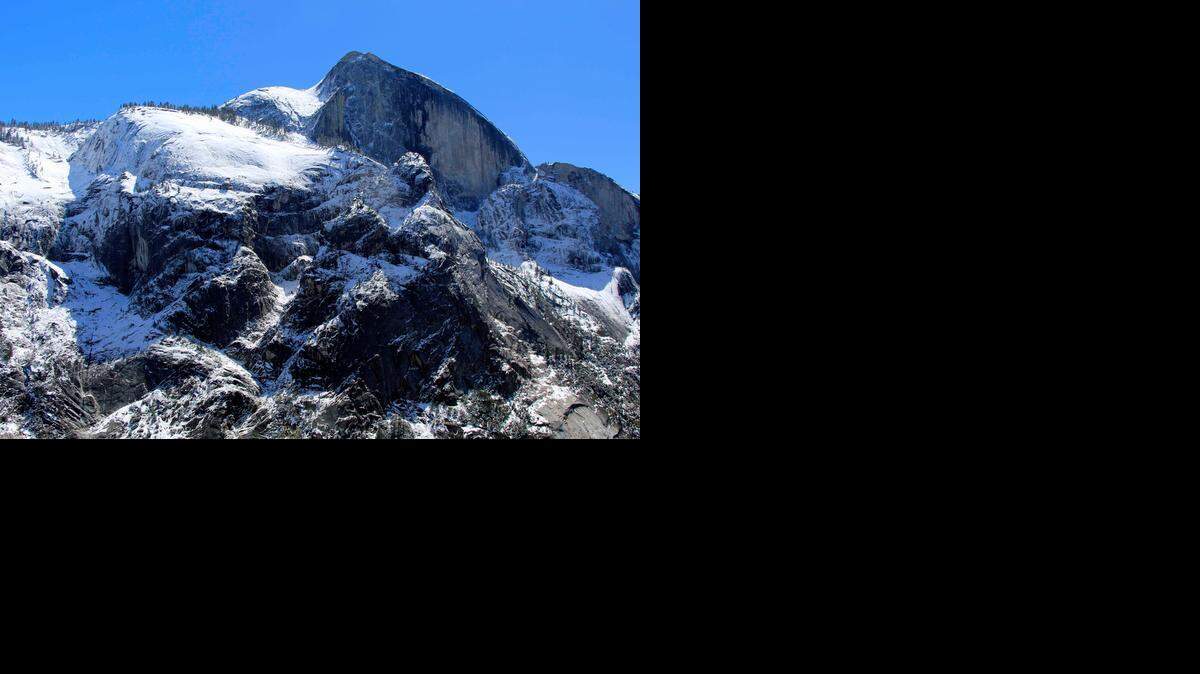
There are many ways to look down from the top of the granite walls of Yosemite Valley, and most of them are steep. The easiest is by driving to Glacier Point. The road opened March 28, and although it closed temporarily during last week’s storm, it is open again.
By foot, there are several options:
Four-Mile Trail: Actually 4.8 miles in length, this trail climbs about 3,200 feet from Southside Drive (near Swinging Bridge) to Glacier Point. The Glacier Point road also allows you to hike this trail from the top to the bottom – easier on your lungs, but you may find that your legs are actually sorer from all the “braking” as you go downhill. Views of Yosemite Valley are excellent throughout the hike.
Upper Yosemite Falls Trail: In 3.6 miles, this trail ascends about 2,700 feet to the top of the falls, where a footbridge crosses Yosemite Creek just above the plunge. For even better views, you can continue another 0.8 miles to Yosemite Point, gaining an additional 300 feet.
Mist Trail: This is one of the most exhilarating and popular hikes in Yosemite, especially in the spring and early summer, when the cool mist from Vernal Fall refreshes hot hikers as they climb the steep and narrow route beside the falls.
It’s 1.2 miles with 1,000 feet of elevation gain to the top. To continue to the top of Nevada Fall, it’s an additional 1.5 miles, gaining an additional 1,000 feet. Tucked in the far southeastern end of Yosemite Valley, this isn’t a trail for views of the Valley, but the views of the falls are incredible. The John Muir Trail parallels the Mist Trail but lacks the grand vistas.
Panorama Trail: Connecting Glacier Point with Vernal and Nevada Falls, this spectacular route follows the south rim of the Valley to the top of Nevada Fall for some of the best views in Yosemite. It also provides views of a fall that can’t be seen from the floor of the Valley – Illilouette Fall. You can hike part way and then return to Glacier Point, or follow the Mist Trail all the way down to the Valley floor at Happy Isles, for a total hike of 8.5 miles that does about 1,000 feet of climbing and descends about 4,200 feet.
North Dome Trail: The easiest way to overlook the Valley from North Dome starts above the Valley on Tioga Road at the Porcupine Creek Trailhead. The hike is 4.5 miles each way with a 1,500-foot elevation gain/loss and an optional spur trail to the unique granite arch at Indian Rock. North Dome can also be reached from Yosemite Valley via the Upper Yosemite Falls Trail and the Snow Creek Trail. The views of Yosemite Valley from North Dome are spectacular.
Pohono Trail: While the Panorama Trail follows the south rim of the Valley from Glacier Point eastward, the Pohono Trail goes 13.5 miles west to Tunnel View, dropping more than 3,000 feet in the process. There are several major viewpoints along the way, including Taft, Dewey, Crocker, Inspiration and Old Inspiration Points, and Sentinel Dome.
The Snow Creek Trail: Most challenging of them all. This trail climbs 2,700 feet in just 1.7 miles by way of more than 100 switchbacks. The total distance from the Mirror Lake Trailhead to the footbridge that crosses Snow Creek high above Yosemite Valley is 3.1 miles with an elevation gain of about 2,900 feet.
A few years ago, I started in the high country at Tenaya Lake and walked all the way down to Yosemite Valley using this trail. It was hard work, even though 99 percent of the route was downhill. It was so steep that I thought I’d probably never travel it again, but last week’s snowstorm was enough of a reason to convince me to do it.
The Snow Creek Trail has great southward views across Mirror Lake/Meadow to Half Dome, Clouds Rest and the lower parts of Tenaya Canyon.
To visualize these routes, you can download park maps at http://www.nps.gov/yose/planyourvisit/maps.htm. For more detail, the Yosemite Valley Map from Tom Harrison Maps is highly recommended: http://www.tomharrisonmaps.com/.
All of these trails are steep and challenging, with dangerously steep cliffs. The Mist Trail is especially dangerous because of the slippery effect of water on smooth granite.
To hike the Panorama, Pohono or Four-Mile Trails one direction only, you can park one car at the top of Glacier Point and one in Yosemite Valley, or you can park a single car in Yosemite Valley and take the Glacier Point Tour Bus to the top to begin your hike: http://www.yosemitepark.com/glacier-point-tour.aspx.
Trekking poles are highly recommended for all of these hikes – they help your arms share the work of steadying your body as you go downhill with the end result of having more control over your descent and less leg soreness the next day.
Adam Blauert is an avid outdoorsman who enjoys fishing, backpacking and exploring the western states. He can be reached at adamblauert@yahoo.com
This story was originally published April 14, 2015 at 11:08 PM with the headline "Blauert on Outdoors: Plenty of trail choices to view Yosemite Valley."