
Blauert on Outdoors: Winter is the best time to enjoy local wildlife refuges
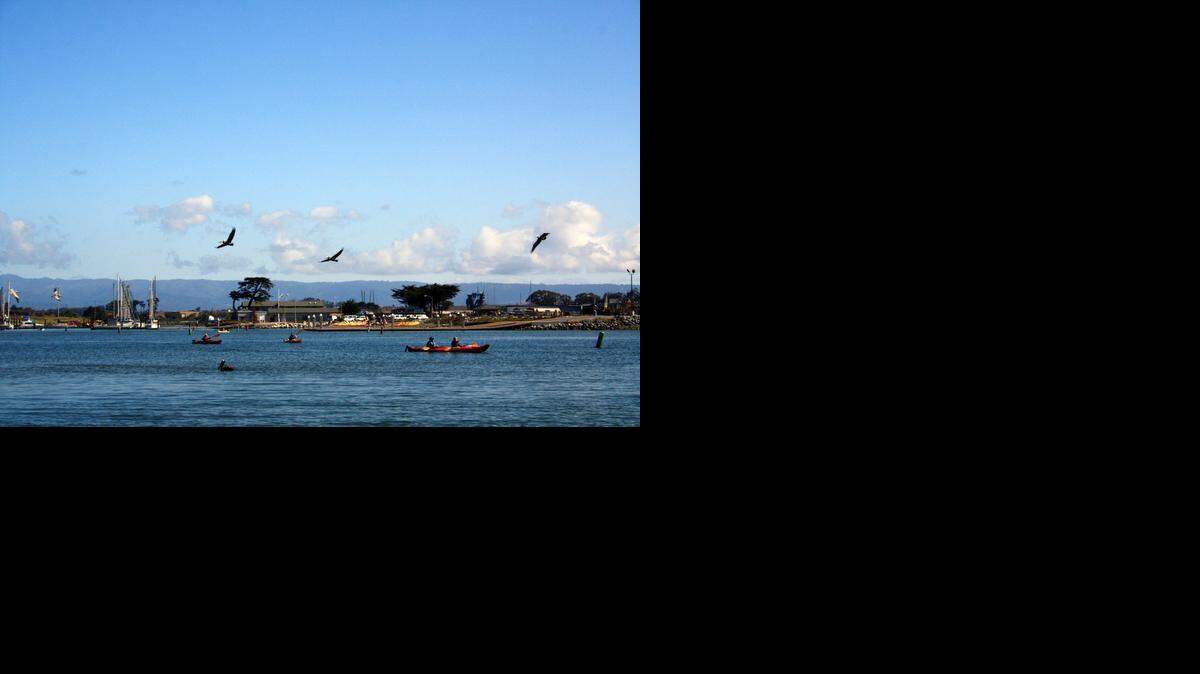
A couple of years ago, I wrote about a boat tour of the wildlife in Monterey Bay’s Elkhorn Slough. In just two hours on the water, we saw about 60 sea otters, hundreds of sea lions and harbor seals and dozens of bird species, including pelicans, herons, grebes and loons. It was a great experience I wholeheartedly recommend to anyone who enjoys watching wildlife.
I returned to the slough a couple of weekends ago to see what kinds of wildlife might have showed up already this year. Instead of a boat tour, we walked the trails at the Elkhorn Slough National Estuarine Research Reserve. It’s another great way to enjoy the area.
Located near Moss Landing, where the fresh water of Carneros Creek meets the saltwater of Monterey Bay, the 1,400-acre reserve includes a variety of habitats that are traversed by 5 miles of interconnected trails. These habitats include salt marsh, mud flat, freshwater pond, oak woodland and grasslands. Although we didn’t see many birds on the day we visited, they’ve been arriving steadily over the last few weeks and will continue to do so for several weeks.
The visitor center has interesting exhibits about the slough’s wildlife, and the people are friendly. Docent-led walks are offered at 10 a.m. and 1 p.m. Saturdays and Sundays. The only difference from the Merced and San Luis refuges is that there’s a small per-person fee for visitors ages 16 and older. If you have a current California fishing or hunting license, you get in free; otherwise, you pay $4.32 each. A third option is to explore the slough by kayak, either on your own or with a guided tour group (see information below).
Closer to home, the Merced and San Luis National Wildlife Refuges are again becoming the winter homes for numerous ducks, geese, cranes and other birds. This is by far my favorite time to explore the refuges – the sky comes alive with multitudes of wings. Going out to see the huge flocks as they take off and land on the ponds and glide through the sky silhouetted against a winter sunset is one of the treats of the season.
The birds feed during the day, returning to the refuges in the evening. They can also be seen in the morning, but I recommend the evening because you’re less likely to encounter fog and might also see a beautiful sunset. You don’t need much more than a rain- or fog-free day, warm clothes and a camera or binoculars. If you arrive by 4 p.m., you will have time to find a good viewing spot and get oriented.
If you arrive earlier, the Merced Refuge on Sandy Mush Road (16 miles southwest of Merced) and the San Luis Refuge on Wolfsen Road (7 miles north of Los Banos) offer viewing platforms and auto tour routes on well-maintained gravel roads. The San Luis Refuge also offers a visitor center with excellent displays and a herd of magnificent tule elk that can often be spotted along a designated 5-mile auto tour loop and a special viewing platform.
The visitor center is open from from 8 a.m. to 4:30 p.m. daily, except federal holidays. There is no charge for either refuge, and the auto tour routes, the viewing platforms and the visitor center are all wheelchair-accessible.
For more information:
▪ Merced and San Luis National Wildlife Refuges: http://www.fws.gov/refuge/san_luis/ or (209) 826-3508.
▪ Elkhorn Slough Foundation (slough information and trails): http://www.elkhornslough.org/ or (831) 728-5939.
▪ Elkhorn Slough Safari Boat Tours: http://www.elkhornslough.com/ or (831) 633-5555.
▪ Kayak rentals, lessons, tours: Kayak Connection: http://www.kayakconnection.com/ or (831) 724-5692.
▪ Monterey Bay Kayak: http://www.montereybaykayaks.com/ or (800) 649-5357.
Adam Blauert is a Sun-Star correspondent. He’s an avid outdoorsman who enjoys fishing, backpacking and exploring the western states. He can be reached at adamblauert@yahoo.com.
This story was originally published November 18, 2014 at 8:36 PM with the headline "Blauert on Outdoors: Winter is the best time to enjoy local wildlife refuges."