
Blauert on Outdoors: Kaweah Oaks Preserve worth the trip
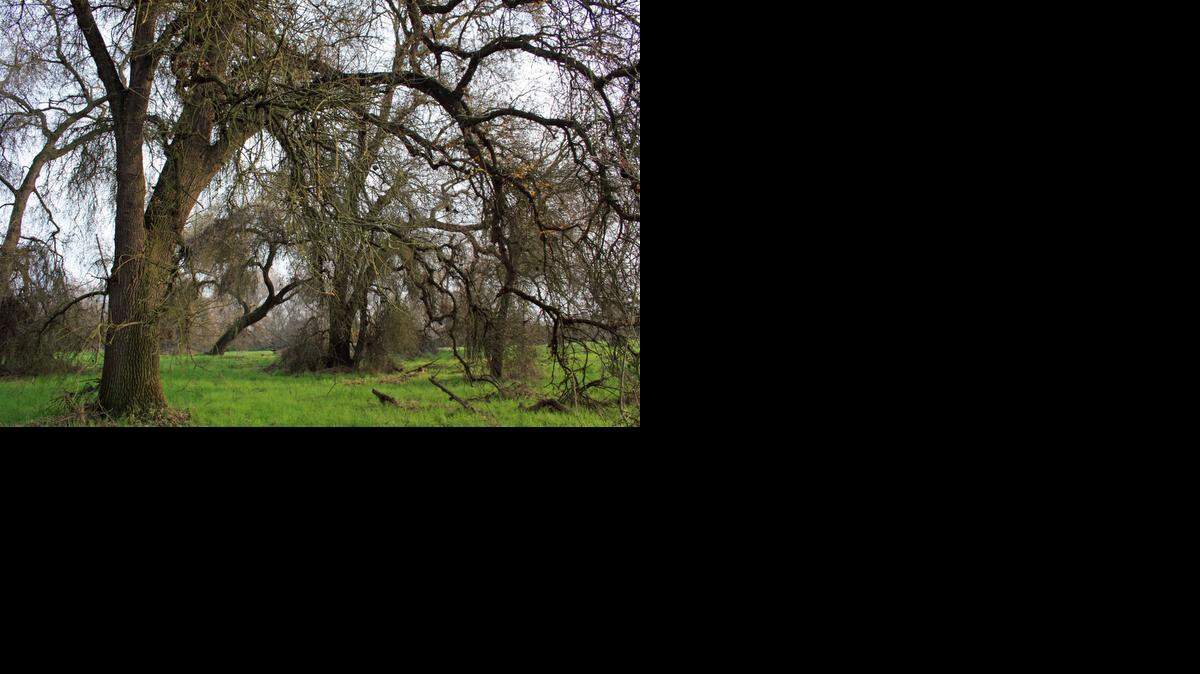
If you’re headed south on Highway 99 and looking for a nice place to stretch your legs, Tulare County’s Kaweah Oaks Preserve is a fun place to explore.
This preserve protects one of the remnants of a vast forest of valley oaks that once stretched from just west of Sequoia National Park down into the southern San Joaquin Valley. The frequent flooding of the land along the Kaweah River watered the trees and deposited rich soil. For the Yokuts Indians of the area, it was an important place to gather food.
The abundance of water, wood and prime farmland attracted some of the San Joaquin Valley’s earliest settlers. The town of Visalia began in the early 1850s, nearly two decades before the Southern Pacific Railroad laid out the majority of the Valley’s most prominent towns.
The development of towns, farms and ranches resulted in the use of many of the oaks for building materials, fencing and heat. The best-preserved grove of these mighty trees that can be easily visited is at the 322-acre Kaweah Oaks Preserve, located about 14 miles east of Highway 99.
In addition to huge, majestic oaks and sycamores, more than 300 other plant and animal species can be seen. The preserve is a great place to glimpse what the Kaweah River region of the southern San Joaquin Valley looked like before intensive human settlement. It’s a peaceful place, with four short trails that meander through the trees, offering about 2.5 miles of walking and wildlife viewing. The preserve was created through cooperation between local landowners, local donors and the Nature Conservancy in the early 1980s. Today it is operated by the Sequoia Riverlands Trust (http://www.sequoiariverlands.org/ (559) 738-0211).
The trails are almost completely level and suitable for all ages and abilities. Although the preserve is open year-round, the cooler months are the best time to visit. The green months of spring are arguably the most beautiful. Fall can also be very nice – the leaves don’t turn brilliant colors like the aspens of the Sierra, but they do have their own subdued autumn hues that can be very pretty, especially when the sun is shining. The trees are bare in winter, but their magnificent silhouettes stand out against the sky on clear days and appear mysterious on foggy or cloudy days. On warm, sunny winter days, the preserve is an ideal spot to stretch your legs and be refreshed by the outdoors.
The preserve is open daily from sunrise to sunset. In addition to the trails, there’s a picnic area and restrooms. A $3 donation is requested per adult and a $1 donation per child. Leashed dogs are welcome on the trails as long as any waste they leave is picked up. Trail guides are available at a self-serve box for a $3 donation. Keep your eyes open for rattlesnakes that may be present on warmer days, as well as ticks. Wear layered clothes and sunscreen, and bring water to stay hydrated on your walk. Cameras and binoculars are recommended for wildlife viewing and photography.
To find the preserve, exit Highway 99 at Highway 198 and head east through Visalia. Turn north (left) on Road 182, 14 miles east of Highway 99. The parking area is on the left side, a half mile north of the highway. The Sequoia Riverlands Trust offers frequent educational programs, outdoor activities and volunteer work days at Kaweah Oaks and its other preserves and conservation easements. A calendar of these events can be found at the website listed above.
Another large grove of valley oaks can be seen at nearby Mooney Grove Park in Visalia. This 100-acre park is more developed than Kaweah Oaks and is gradually undergoing some much-needed reinvestment, but it has some beautiful ancient trees, a large pond with geese, an impressive bronze casting of James Earle Fraser’s iconic statue “The End of the Trail” and the Tulare County Museum. This casting replaced the original wood and plaster version that was moved to the National Cowboy and Western Museum in Oklahoma in 1968. It can be found by driving through the park on the entrance road and then turning right over the bridge. Follow this road back toward Mooney Boulevard and park near the restrooms.
The museum has some interesting exhibits highlighting the area’s early history and the history of Valley agriculture. The large collection of Yokuts Indian baskets is one of the best of its kind. Mooney Grove is located at 27000 S. Mooney Blvd. in Visalia. The museum is open Thursday through Monday from 10 a.m. to 4 p.m. Admission is free and you can find more information at http://www.tularecountyhistoricalsociety.org/ or by calling (559) 635-4896.
Admission to the park is $6/vehicle and information about seasonal operating hours can be found at http://www.tularecounty.ca.gov. Place your cursor over “general services” in the left hand menu and then a sub menu will appear with “parks and recreation.” You can find answers to your questions about the park in a further sub menu.
Adam Blauert is a Sun-Star correspondent. He is an avid outdoorsman who enjoys fishing, backpacking and exploring the western states. He can be reached at adamblauert@yahoo.com
This story was originally published February 10, 2015 at 8:15 PM with the headline "Blauert on Outdoors: Kaweah Oaks Preserve worth the trip."