Merced County grand jury: Food sold by unpermitted vendors endangers residents
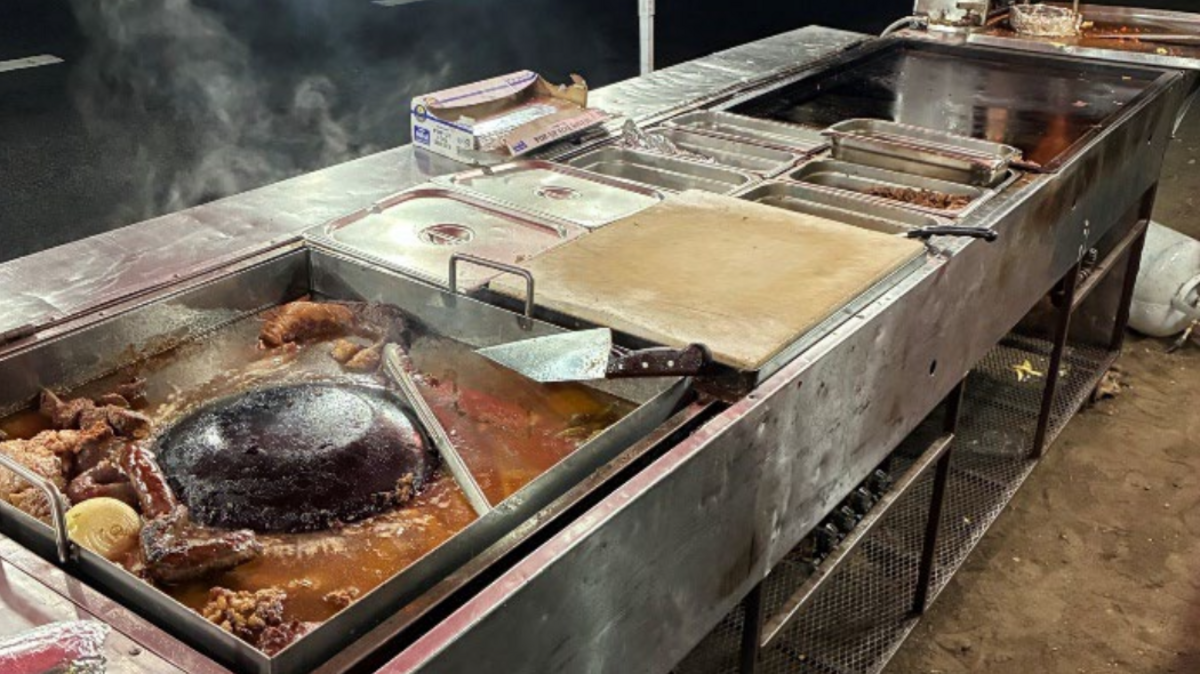
A civil grand jury report details a regional problem with unpermitted food vendors that endangers public health.
The Merced County grand jury report is relevant to Stanislaus County, coming a week after Stanislaus supervisors voted to form a task force to address pop-up food vendors who don’t have permits and sell unsanitary and unsafe food to customers, officials said.
For more than a year, officials in Merced and Monterey counties have spoken of a “kingpin,” or organized operator, in Merced County that prepares food for sale at roadside stands in Santa Clara, Stanislaus, Monterey, Santa Cruz, Merced and other counties.
The pop-up stands usually are blue and red rents over tables, grills and rotisseries. Ownership of the pop-up sites has been traced to the Merced County operator.
Merced’s grand jury report, released Tuesday, says the public health issue emerged in the last year as the pop-up vendors appeared on vacant lots, parking areas and roadsides. Customers find the businesses attractive for the inexpensive food, but businesses selling food are required to comply The with regulations.
Unpermitted vendors are considered unfair competition for legitimate mobile vendors and restaurants that comply with regulations.
The grand jury investigation concluded that local government agencies have made a good effort to respond to the problem. But the issue will demand continuous monitoring.
The Centers for Disease Control and Prevention determined that seven foodborne germs accounted for almost 10 million illnesses last year, sent 53,300 people to hospitals and caused 931 deaths.
The Stanislaus County task force aimed at unpermitted food vendors will include the county Department of Environmental Resources, Sheriff’s Office, District Attorney’s Office, two community groups and cities that agree to participate.
County Supervisor Terry Withrow said Tuesday that the unpermitted food vending is going to stop. “As a county in conjunction with other counties, we are going to go after this,” he said.
Withrow said the problem is twofold: The unsanitary food is a danger to customers and there’s evidence the workers at pop-up stands are victims of labor trafficking. It’s evident that big money is behind the pop-up stands, as vending sites that are shut down soon appear again with brand-new equipment, Withrow said.
Who owns illegal pop-up stands?
Restaurants and food truck owners in Merced have demanded action from local government agencies. More than 70 signed a petition presented to the Merced City Council in October. Some were upset that a food event in downtown Merced was disrupted by unpermitted vendors who sold food in adjacent parking areas.
Monterey County’s district attorney reported in May 2025 that investigators tracked ownership of illegal pop-up stands in that county to a “kingpin” that prepared the food in Merced County and transported it in vans to other counties. The meat and condiments were not in refrigerated units, which heightened the danger of contamination with E. coli, salmonella and listeria.
The Merced organization also allegedly has disregarded California’s labor laws. According to a report to Monterey County supervisors in February, workers at the pop-up stands are paid below minimum wage. It’s estimated the vendors take in more than $100,000 a month for the Merced organization.
As of January, Merced County environmental health personnel had conducted more than a dozen operations cracking down on unpermitted food vendors, assessed $52,000 in fines and confiscated equipment from unregulated vendors.
A Merced City Council subcommittee has been reviewing potential municipal code changes regarding unpermitted vendors.
More vigilance is recommended
The grand jury concluded the multi-county problem is ongoing and will require more vigilance. “The re-emergence of reports regarding prepared foods being transported for sale by unpermitted food vendors to sites outside Merced County highlights the ongoing threat to public health,” the report says.
The grand jury also assessed the legal landscape in California regarding street vendors. The Legislature provided some protection under Senate Bill 946 in 2018 for sidewalk vendors who sell prepackaged goods. Cities are not allowed to ban these businesses, but vendors are still required to follow food safety regulations, the grand jury report says.
State law requires food handlers to undergo food safety training and work under the supervision of a certified manager, the report says.
Regulations also require food vendors to have separate tubs for washing, rinsing and sanitizing utensils, and hot and cold temperature controls for various food items.
The report recommends broader use of postcards with information on how to spot unpermitted vendors selling risky food. The red flags include having no permit, operating on a roadside or in a parking lot, and having no handwashing station and no refrigeration of stored or transported food.
This story was originally published July 1, 2026 at 8:09 AM with the headline "Merced County grand jury: Food sold by unpermitted vendors endangers residents."