The judge issued a ‘protective order’ in the Kristin Smart case. What does that mean?
READ MORE
Read more on the Kristin Smart case
Follow latest news on the Kristin Smart case and the arrests of Paul and Ruben Flores.
Expand All
A San Luis Obispo Superior Court judge on Thursday issued a protective order against publicity — commonly known as a gag order — in the case of allegedly murdered Cal Poly student Kristin Smart barring any of the parties involved from publicly discussing proceedings outside the courtroom.
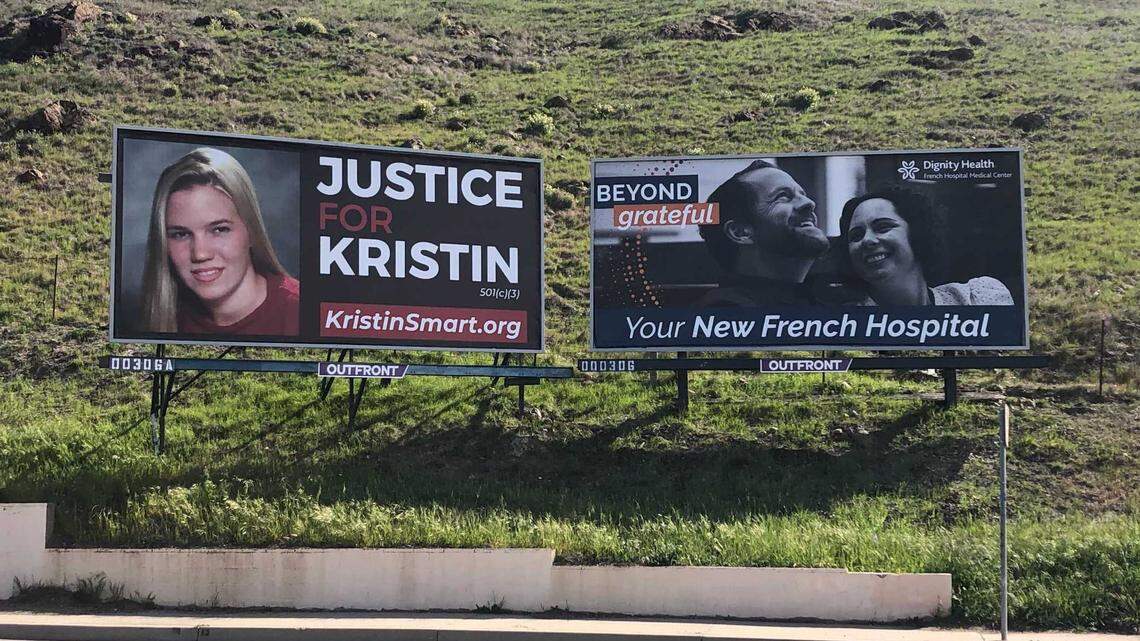
Smart went missing in May 1996 after she was last seen being walked to her dorm by Paul Flores, now 44, of San Pedro.
But what does that protective order mean for the case against Flores, who’s charged with Smart’s murder, and his 80-year-old father, Ruben Flores, who’s charged with assisting his son cover up the crime?
And how will it affect the public’s ability to follow and understand the case?
The defense’s request
The day before the Floreses were to be arraigned, Paul Flores’ defense attorney Robert Sanger filed a motion asking Superior Court Judge Craig van Rooyen for a “protective order against publicity,” which sought to bar “extrajudicial statements by any lawyer, party, witness, court official, or law enforcement officer concerning this case.”
Sanger claimed in his filing that the government has already compromised Paul Flores’ right to a fair trial by making extrajudicial statements — statements outside of court — at “self-congratulatory” news conferences held by county Sheriff Ian Parkinson and District Attorney Dan Dow.
In his motion, Sanger notes that both public officials are “facing political challenges in their forthcoming reelection efforts.” He also notes that his client was arrested in a public manner, with media alerted to the developments and photographs released of Paul Flores standing handcuffed in his pajamas.
Sanger accurately noted that while law enforcement officials have openly discussed the case, he and his firm have declined to comment on any aspect of the investigation when contacted by media.
“These (law enforcement) comments were in the context of almost 25 years of public speculation relating to the tragic but sensationalized disappearance of Kristin Smart, which escalated over the last few years with highly publicized searches and other developments,” Sanger wrote. “The case has obtained not only local, but national, attention.”
He argued that while a change of venue for the case “would be subject to a future motion,” any further public comments by law enforcement or others involved in the case “would make a fair trial impossible wherever venue was eventually established.”
The judge’s order
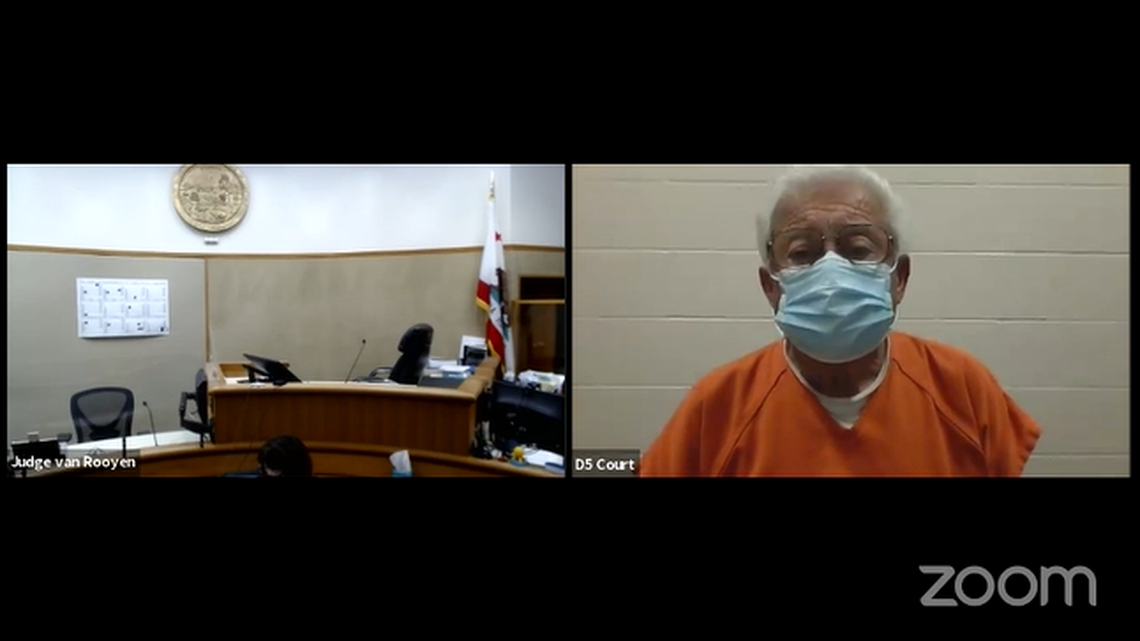
During Thursday’s arraignment, van Rooyen asked all parties present whether there were any objections to the motion. Neither Deputy District Attorney Christopher Peuvrelle, who is lead prosecutor in the case, nor attorney Harold Mesick, who is representing Ruben Flores, had any objection.
Van Rooyen noted that he had denied one part of Sanger’s motion, removing “public officials” from the list of parties restrained by the order.
He also stated that “judicial officers,” or court staff, would be exempt from the restrictions for the purposes of communicating court scheduling, broadcasting information, and other logistical info to the media so that they may continue to cover the public proceedings.
Due to the COVID-19 pandemic, the court has implemented a number of safety measures such as conducting hearings via Zoom conferencing and sometimes live-streaming proceedings in which there is high public interest.
In his order, van Rooyen prohibited the following parties from commenting publicly about the case:
- defendants
- attorneys connected to the case including prosecutors, defense counsel, and investigators
- law enforcement officers including county sheriff’s deputies
- court clerks and bailiffs
- witnesses
- judicial officers or employees
- any agent, deputy, or employee of any of the above listed persons
The order states that those parties are prohibited from:
- making or authorizing public statements “concerning the case” outside of court proceedings
- releasing any documents, exhibits, or other evidence connected to the case
- making any public statement concerning the existence of any evidence in the case
- making any public statement about the weight of any evidence as establishing guilt or innocence
- making any public statement regarding the identities of prospective witnesses or their possible testimony
- making any public statements regarding the nature, source, or effect of any evidence introduced or testimony given in the case
Van Rooyen’s order says that if any party affected by the order believes it is necessary “to issue a public statement in response to adverse publicity, that party may make an application to the court for permission to make that statement.”
The order does not apply to witnesses discussing the case with attorneys or their employees.
“Based on the motion that was filed and the high publicity in this case, I do find that it is reasonably necessary to enter the protective order,” van Rooyen said at the conclusion of Thursday’s hearing.
Any party that violates the order is subject to being held in contempt of court, and jail time and/or a fine could be imposed.
Defense attorney says sheriff, DA included in restrictions
Jeff Stein, who’s worked as a criminal defense attorney in San Luis Obispo County for more than 40 years and has served as past president of the SLO Bar Association and the state’s defense attorneys association, said Thursday that protective orders are synonymous with what’s commonly known as a “gag order.”
Stein — who disclosed that he represented Ruben Flores during a deposition some 15 years ago, but says he hasn’t spoken to him since and has no stake in the outcome of the current case — explained that it is not unusual for judges in cases of significant public interest to impose such orders.
Gag orders are one of many tools used to ensure a fair trial and prevent any issues that could be used to support an appeal down the road.
They essentially prevent the tainting of a potential jury pool and limit the amount of misinformation or distortions of facts in the case, instead limiting the disclosure of those facts or evidence to inside the courtroom, where they are presented after all parties in the case, including the judge, have had a chance to determine their value or accuracy.
“Courts manage information so that only evidence that is lawfully appropriate is put in front of the jury,” Stein said. “Advocates on either side have no other interests than in (making their argument), and if you don’t have any counterbalance, it sets up a Wild West factual claim back-and-forth where both sides are saying the opposite.”
He said that Sanger’s request for the order was appropriate given the amount of publicity it has attracted, and if he were representing Paul Flores, Stein said he “absolutely” would have requested the same order.
“I think it’s absolutely incumbent and necessary not to have participants in a case making factual claims in the public arena without limitations or guidance on the scope of information provided,” Stein said. “I think that’s what Judge van Rooyen clearly thought as well, and that’s why he issued the order.”
Asked about why van Rooyen may have removed “public officials” from the list of affected parties, he said that the judge likely did not want his ruling to be overbroad.
However, public officials such as Parkinson and Dow, Stein said, are among those who are now precluded from publicly discussing the case because they represent the investigating law enforcement agencies.
“(Parkinson’s) absolutely precluded,” Stein said.
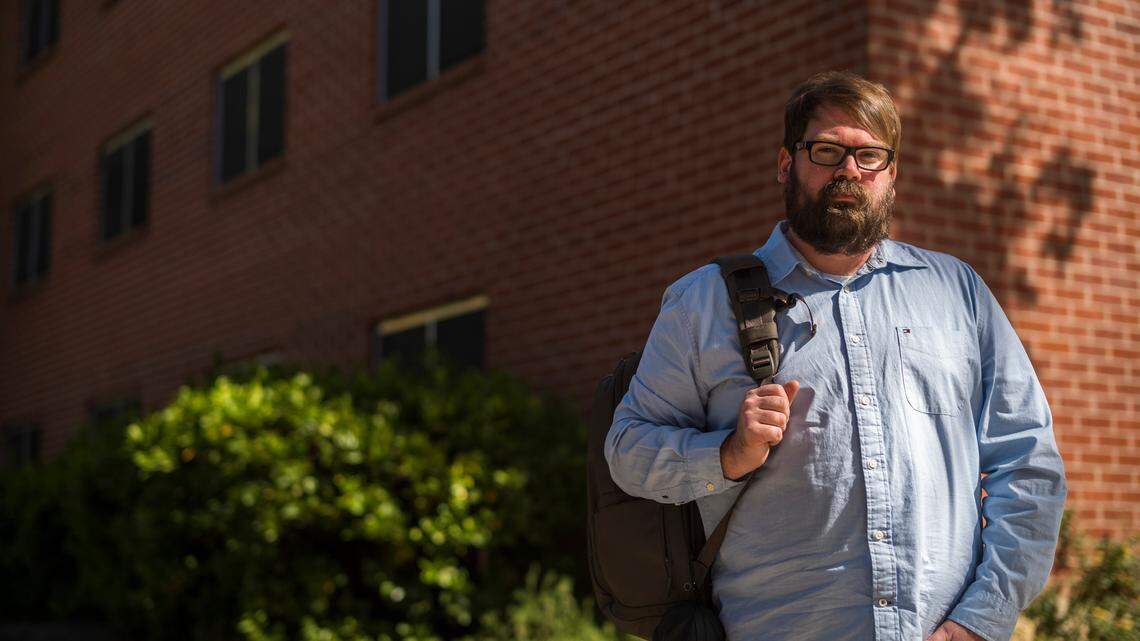
Jim Murphy, the Smart family’s longtime Arroyo Grande attorney, said Friday that he, as a civil attorney not directly involved in the criminal proceedings, is not subject to the order and will continue to be a public advocate for the family.
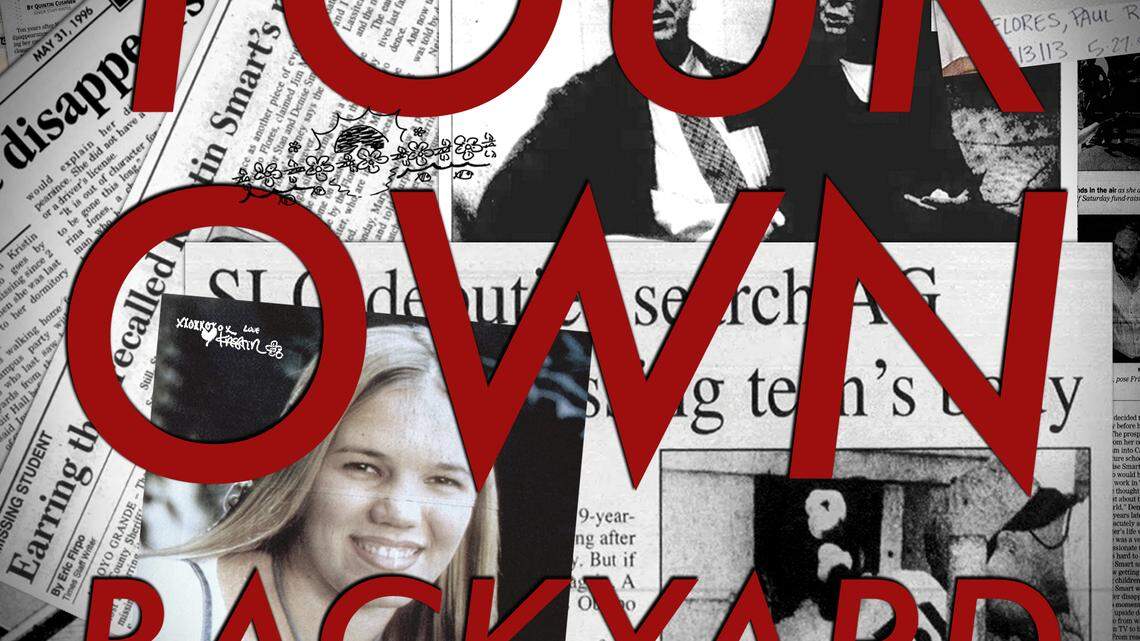
The new developments in the case follow the internationally popular true crime podcast “Your Own Backyard,” in which Orcutt musician-turned-podcaster Chris Lambert investigated Smart’s disappearance. The podcast was credited by Parkinson for bringing new witnesses to his detectives’ attention.
Lambert did not immediately respond to a request for comment for this article. Asked about the restrictions for witnesses in the case, Murphy, who said he spoke to Lambert earlier in the day, said he doubts Lambert would be called as a witness.
Being called as a witness would affect Lambert’s ability to continue to cover the case, but Murphy said he doubts that scenario because any testimony Lambert gives would likely be hearsay, he said.
This story was originally published April 17, 2021 at 11:55 AM with the headline "The judge issued a ‘protective order’ in the Kristin Smart case. What does that mean?."