Fresno’s bullet train station could be a sleek and modern marvel. See the artist renderings
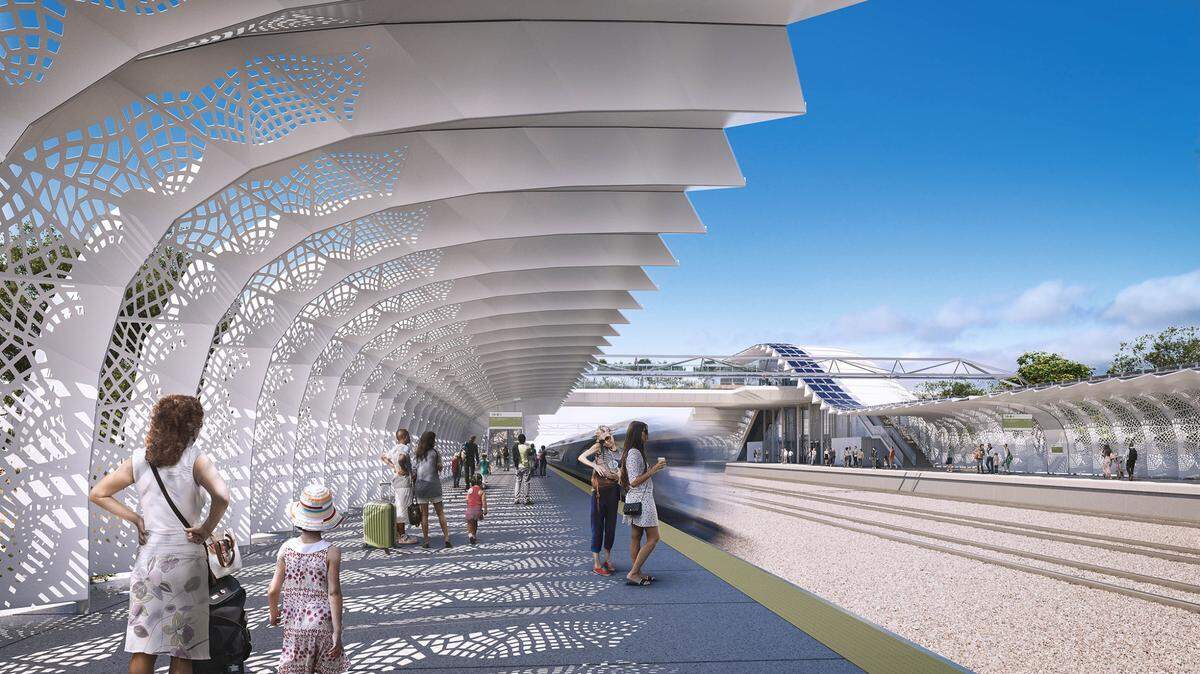
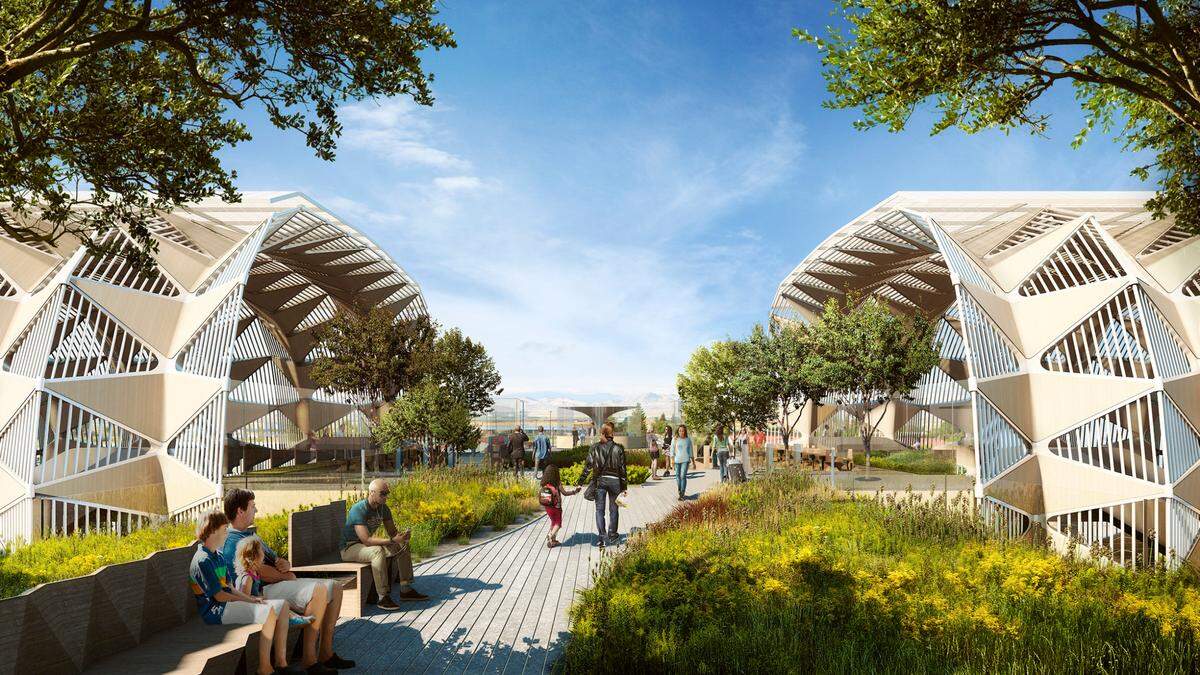
Fresno’s future high-speed rail station could be a sleek building with sweeping lines, a landscaped and elevated terrace, and a terminal with retail and restaurant offerings for passengers and visitors.
That’s the vision presented by Kilograph, a design studio working with an architectural firm hired to design passenger stations for the California High-Speed Rail Authority’s anticipated interim operating line now under construction in the central San Joaquin Valley.
Kilograph, a Los Angeles company, is working with Foster + Partners and ARUP, both headquartered in London, to design stations in Fresno, Merced, Hanford and Bakersfield — the initial four stops along what is ultimately planned to be the first operational stretch of a future statewide bullet-train system.
The two English companies were jointly awarded a $35.3 million contract by the state rail agency last fall to conduct preliminary site planning and design for the stations; Kilograph was brought on to provide a visual representation of potential station designs.
There is no specific timeline for when stations in Fresno or other Valley cities might be built. The first stage of the design contract runs into the spring of 2025. A second stage would follow for production of final designs, construction plans and construction support ahead of commissioning and opening. The trains would be expected to start running sometime between 2030 and 2033.
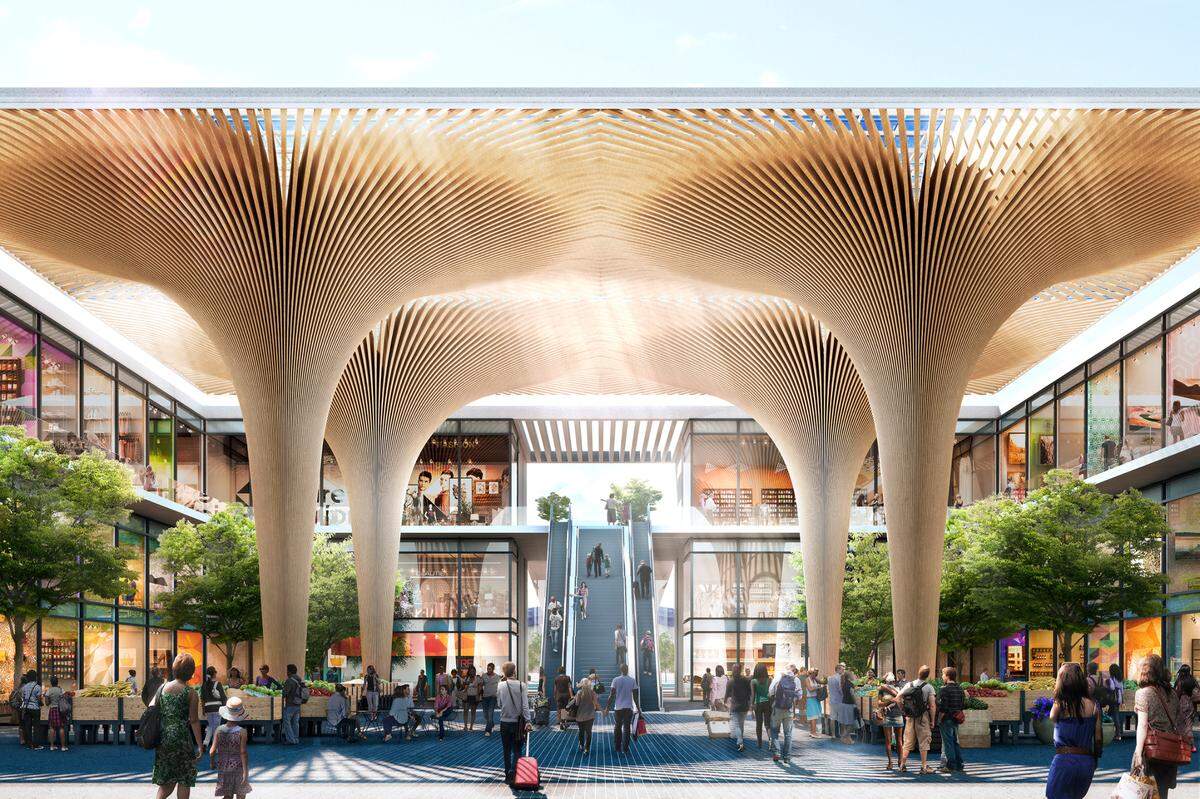
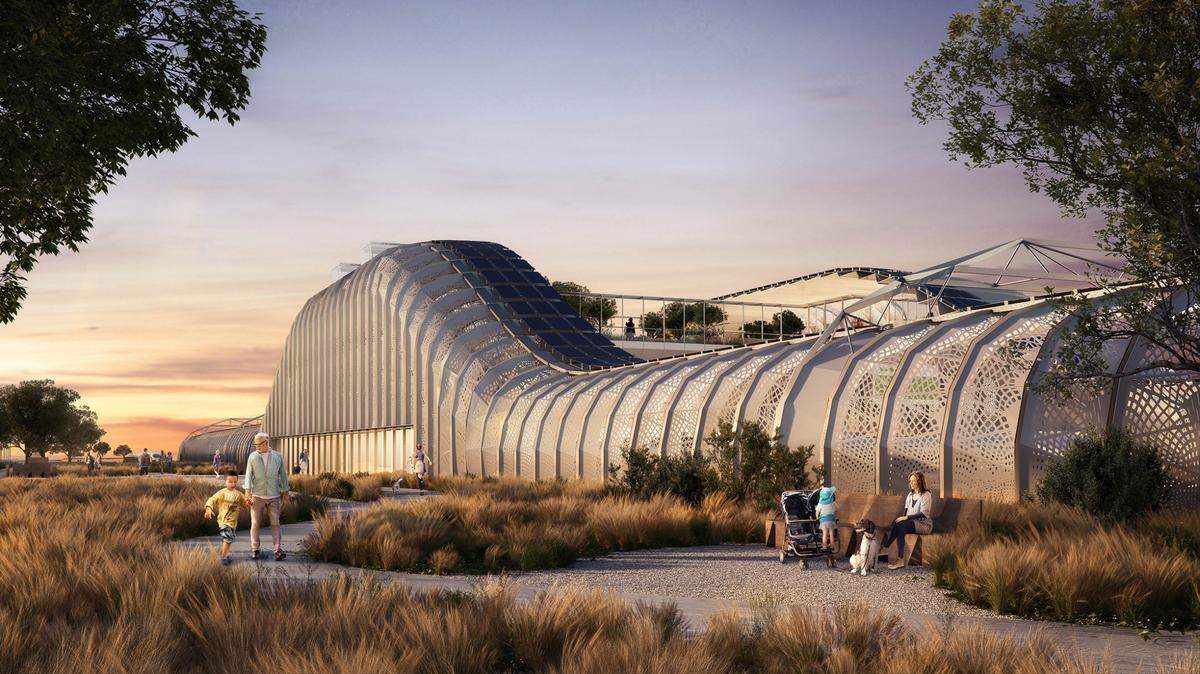
The station designs, along with preliminary concepts unveiled last year by the rail agency, suggest that the largest and most elaborate of the four stations would be in downtown Fresno, at a site bounded by Fresno, Tulare, G and H streets along the Union Pacific Railroad freight tracks. The location formerly was home to the Greyhound bus station.
The high-speed rail station would straddle both the Union Pacific Railroad tracks and historic Southern Pacific train depot as well as the future bullet-train tracks, with an elevated and landscaped terrace over the tracks for passengers to move from the G Street side of the station to the H Street side.
The designs include open-air boarding platforms on either side of a substantial terminal building that includes a high atrium and places for retail shops and restaurants — common features of high-speed rail stations in Europe.
Elsewhere in the Valley
Less elaborate stations are initially envisioned in Merced, Hanford and Bakersfield, in anticipation of passenger service along the route.
A fifth and smaller station in Madera is being planned under a separate process led by the San Joaquin Joint Powers Authority, the agency that oversees Amtrak operations in the San Joaquin Valley.
The Kilograph renderings depict options for covered or open-air boarding platforms, but without the larger indoor spaces for passengers.
In Merced, a high-speed train station would serve as a connecting hub to not only the Amtrak San Joaquin trains but also a southern extension of the Altamont Corridor Express, or ACE Rail, trains that currently connects Stockton to San Jose.
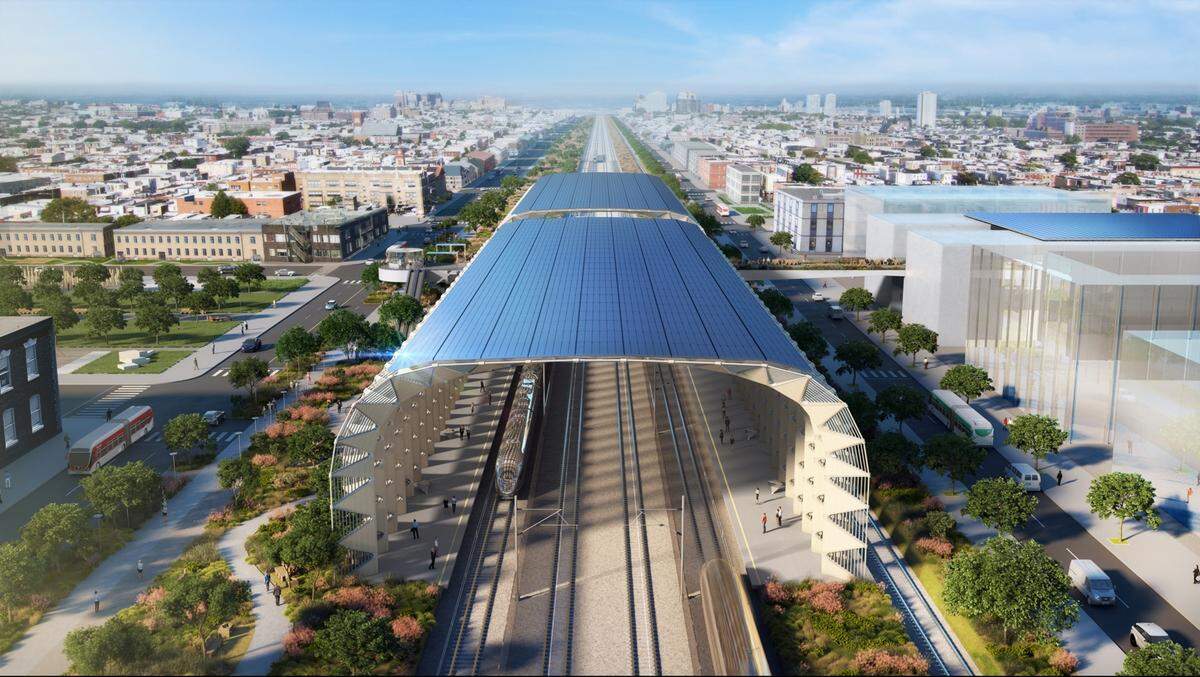
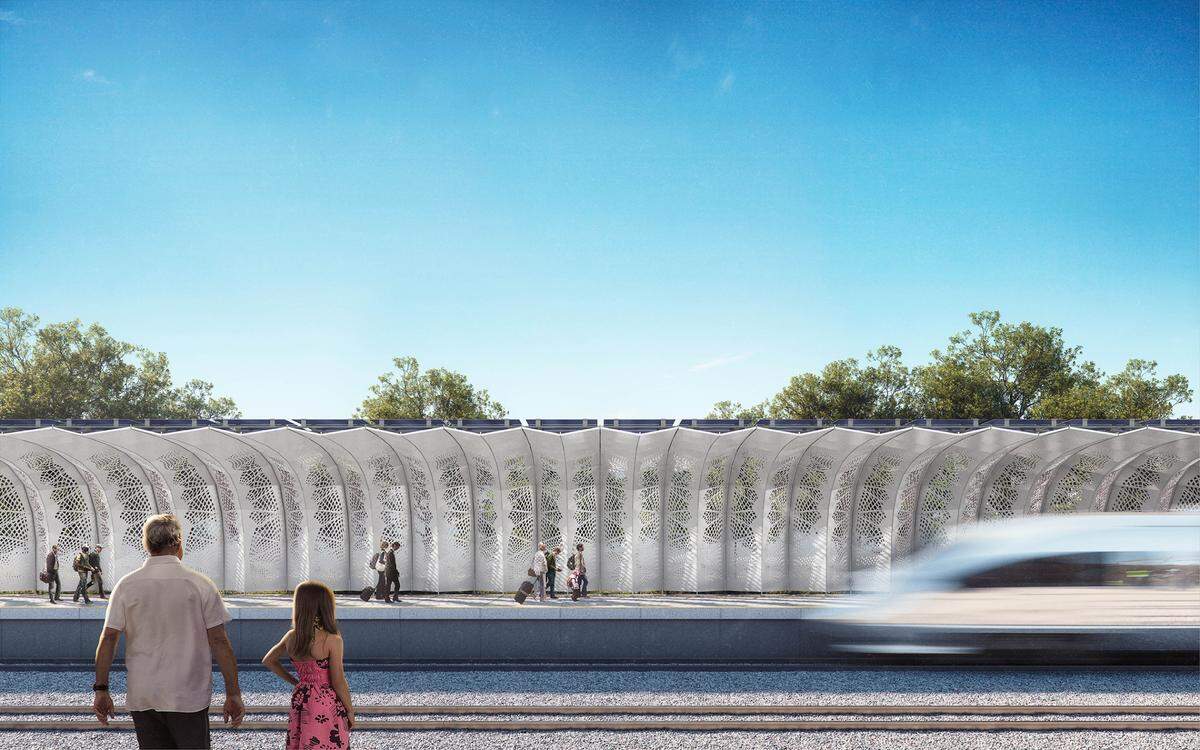
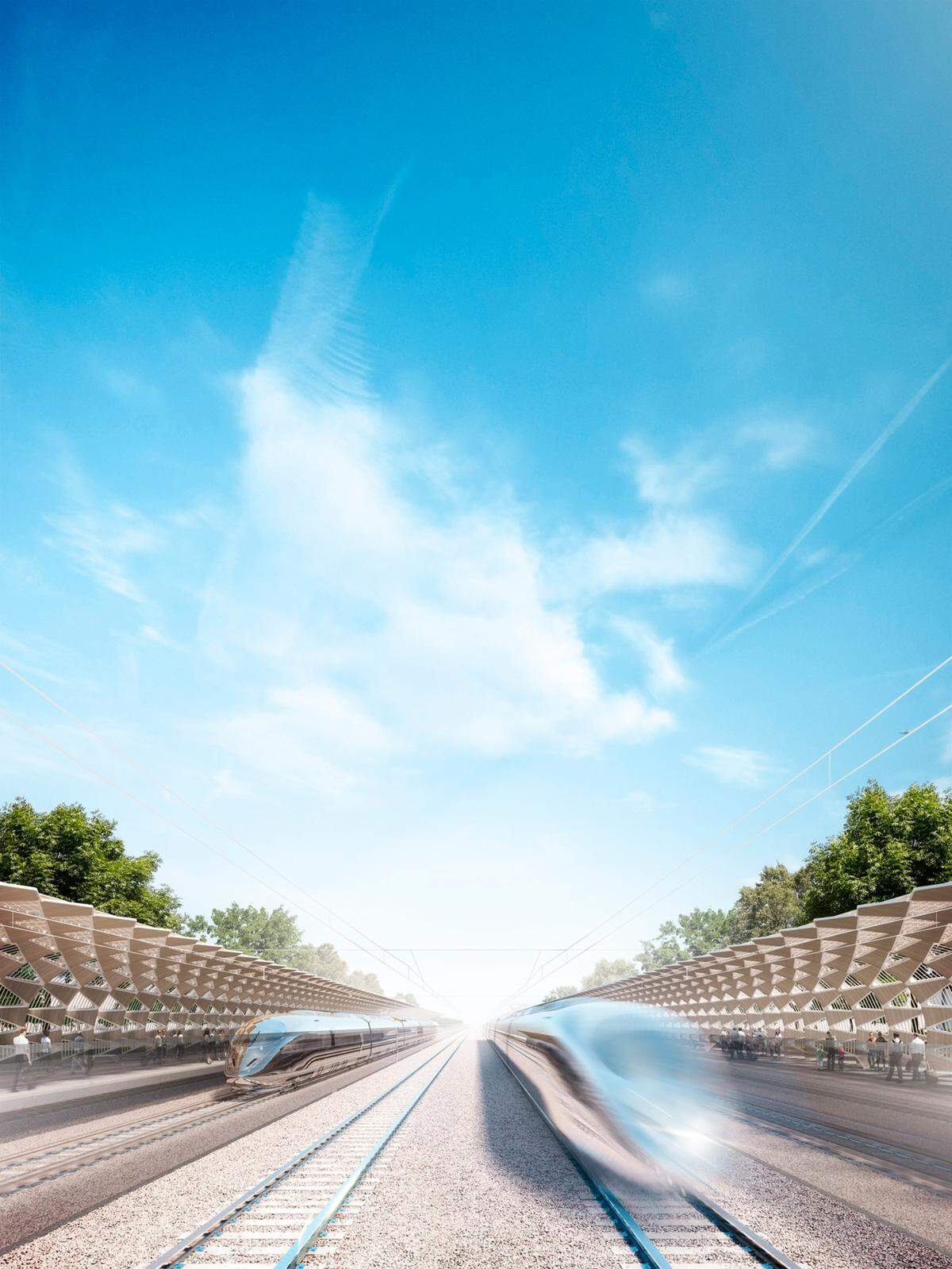
Margaret Cederoth, director of planning and sustainability for the California High-Speed Rail Authority, previously stated that the stations in the Valley would be designed as “building blocks” scaled to the size of the rail system itself: an initial block intended to serve the initial Bakersfield-Fresno-Merced route, with the expectation for scaling up when the state reaches its ultimate goal of connecting the Central Valley segment to the San Francisco Bay Area and Southern California.
“In Fresno we’ve started work on some things that we hope to have in place in 2025. We refer to it as ‘placemaking’ or ‘early site activation,’” Cederoth said in April 2022, before the rail authority put out its request for bids for station design. “We recognize how important it is for people to think about going to that spot. … There’s a portion of our station site that’s adjacent to the surrounding development that we can move into things with that, in advance of rail service.”
The initial 30-month contract term provides for Foster + Partners and ARUP to analyze the sites, acquire the needed property, and develop preliminary designs and configurations for the stations. A future contract extension would include finalizing the designs, providing construction-ready plans and support for construction and opening the stations to the public.
This story was originally published May 2, 2023 at 3:31 PM with the headline "Fresno’s bullet train station could be a sleek and modern marvel. See the artist renderings."