Merced approves expanded outdoor dining. Here’s what it will mean for local restaurants
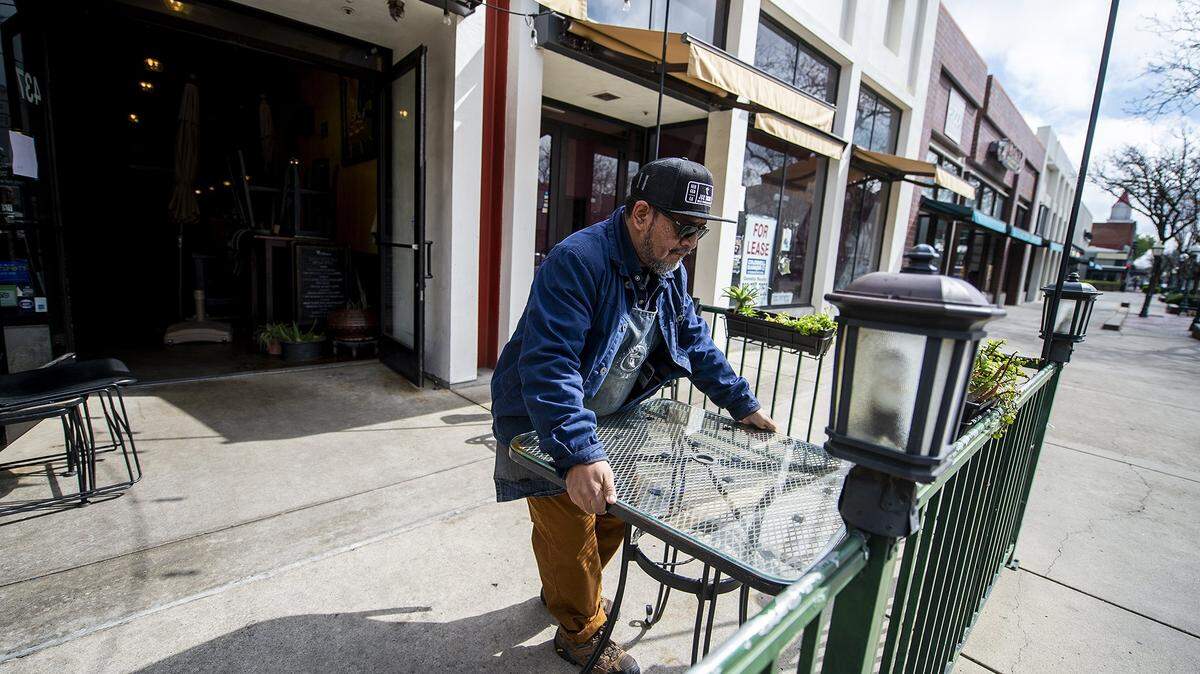
Merced City Council continued to move forward this week with crafting its effort to support economic recovery due to havoc wreaked by the coronavirus pandemic.
One tactic City Council unanimously supported is temporarily supplementing the city’s municipal code, so restaurants may expand their outdoor seating into public spaces.
Despite Merced County restaurants having been approved by the state to reopen, social distancing limitations on seating capacity are a blow to business owners who already had to close their doors for months.
“Basically, we are now at a point because of the COVID pandemic of re-imagining how downtown space is going to be used,” said Director of Economic Development Frank Quintero.
The increased outdoor seating allows restaurants, bars/brewpubs, bakeries and grocery stores serving food and beverages to expand from the property line to the curb. A path of 5 feet must be cleared for public access.
Seating must be set up with tables and chairs 6 feet apart. Businesses can serve alcohol in the outdoor areas, but smoking and vaping is not permitted.
The fee for public property use is currently $150, but has been changed to $1 to increase accessibility for businesses. Businesses can apply immediately.
The possibility of street closures on particular days and times in conjunction with the outdoor seating will come back to council at a later meeting, as will an ordinance amendment allowing for parklets (a sidewalk extension over an on-street parking space that creates a usable area).
Mayor Mike Murphy floated the idea that the city could provide one-time investment for the parklets.
“We’re trying to help restaurants that are already struggling, and they’re probably not in a position to make capital improvements,” he said.
Also moving forward is the city’s $2 million COVID-19 recovery plan aimed at aiding Merced residents and business owners who have suffered from state-mandated closures and rising unemployment. Over the last few meetings, City Council has worked to finalize the five-pronged plan.
Relief programs include grants to businesses, rent and utility assistance, direct assistance to area food banks and other initiatives. A combination of funding sources totaling $786,485 will go toward backing these endeavors.
The council Monday approved funding requests by community non-profits for project applications. They will act as partners assisting the city with facilitating its COVID-19 recovery programs.
The Merced County Food Bank is set to receive $100,000 for food bank assistance and United Way of Merced $500,000 for workplace stabilization programs. Sierra Saving Grace will get $100,000 and Salvation Army $86,485, both for rent/mortgage and utility assistance.
“These programs, they have very tight requirements in terms of who can apply and who’s eligible,” said Director of Development Services Scott McBride.
Further information will be provided on the city’s website about how to benefit from the small business, rent and utility programs. Interested applicants must go through a financial evaluation and meet certain criteria, like demonstrating that they haven’t received any other coronavirus-related funding.
Idea of eviction moratorium dies
One step council will not be taking anytime soon, however, is enacting an eviction moratorium at the city level.
“There’s no need to do anything additional, is our view, with evictions and foreclosures,” said Councilmember and Mayor Pro Tempore Matthew Serratto.
“There’s been an immense amount done already, both at the state level and with the courts as well, so we recommend no additional action when it comes to legislation to prevent evictions.”
Protections from the state and court system have effectively ended evictions through the year, Serratto said. Council recommended instead that tenants and landlords to be flexible and work together amid the pandemic.
Councilmember Fernando Echevarria said that despite his own concern and those from residents, there is no evidence that evictions have risen or that a significant amount of tenants are unable to pay rent. Conversations with the real estate community show that the market has remained relatively stable, city officials said.
Cases in Merced County
Active coronavirus cases continued to drop in Merced County Wednesday, with only 69 residents still ill compared to Tuesday’s 80. The county’s total case count rose by two to 310.
Three separate COVID-19 outbreaks were reported over the weekend at various facilities in the county. Among them is Anberry Transitional Care, a skilled nursing facility in the City of Merced where one resident tested positive.
A total of 148 individuals were tested as a result of the positive case. As of Wednesday, 100 of those tests have come back negative and 48 are pending, according to a County Public Health spokesperson.
The City of Merced continues to lead the county as the community with the most affected by COVID-19. Its tally dropped by one to 119 total cases Wednesday on account of a contaminated test, according to the spokesperson. The individual is being retested.
This story was originally published June 3, 2020 at 6:57 PM.