COVID-19 Delta variant confirmed in Merced County, as officials battle vaccine hesitancy
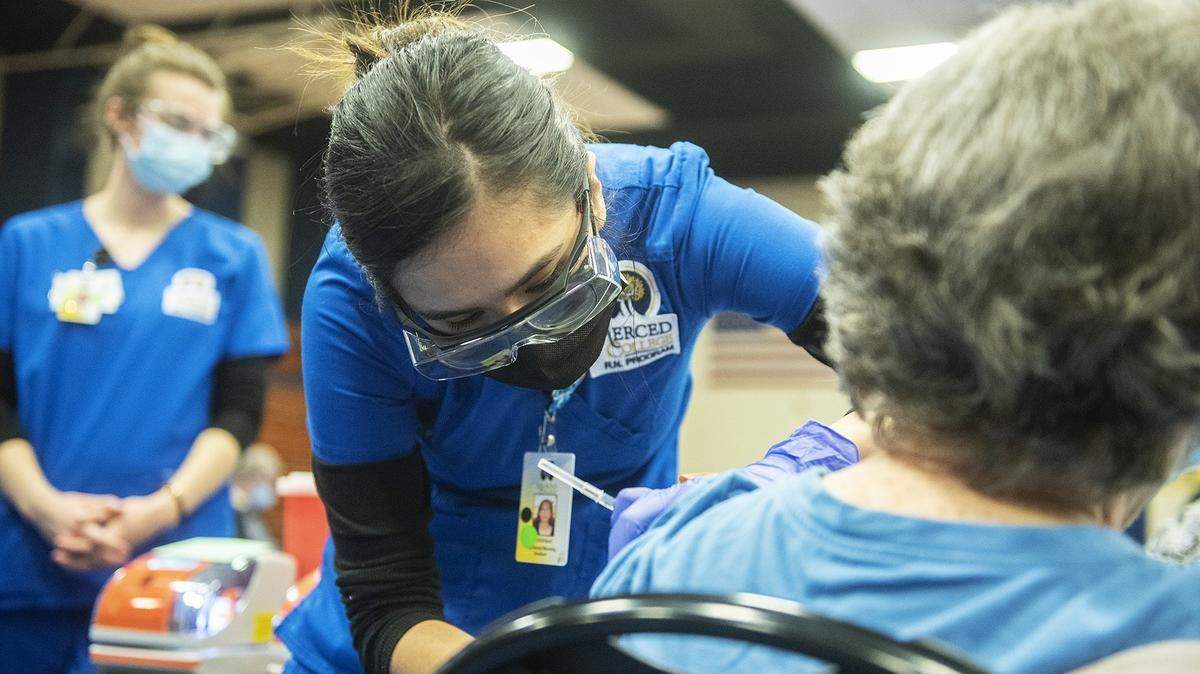
Merced County has finally reached 30% of eligible community members being fully vaccinated against COVID-19 after a slow climb up from only 25% almost six weeks ago.
While the increase is progress, that’s still only half of the more than 60% of California residents overall who are completely vaccinated. Meanwhile, the more easily transmitted Delta variant of the virus has spread to at least four county residents, according to public health officials.
Merced County leadership is pursuing ways to bolster the community against the virus as the pandemic continues to pose a threat — even amid an apparent summer lull.
“I think we’re dealing with the calm before the storm,” Merced County Health Officer Dr. Salvador Sandoval told the Sun-Star. “Many people are anticipating that we’re going to get a resurgence.”
Four known Delta variant cases have been confirmed in Merced County to date, according to Sandoval. But county doesn’t have the capacity to genome sequence for the Delta variant locally, meaning that other cases are likely being missed.
Counties neighboring Merced that have a higher ability to test for the variant have reported larger numbers, Sandoval said. “I would venture that there are many more cases that we just don’t know about,” he said.
Local COVID-19 case rates, positivity rates and hospitalizations have all dropped in Merced County. The state recently abandoned the tiered system that guided economic reopening in counties throughout months of the pandemic, but if it was still in place Merced County would be in the orange tier and ascending toward the least restrictive yellow tier.
“We’ve seen a big change from the peaks that we had in December and January and February,” Sandoval said. “Also the stress on the hospital system I think was relieved, because we had a really critical situation for a period of time . . . it’s something we definitely don’t want to have repeated.”
But the economy reopening, combined with associated changes like decreased mask wearing and social distancing, is cause for concern that the critical situation seen before could happen again, Sandoval said.
Plus, low community vaccination rates and the more contagious Delta variant, exacerbates those worries.
“The thing is, with the opening up of the economy and concerns now with what happened in India and the Delta variant, we’re again being very watchful,” he said.
The Delta variant has raised hackles throughout the U.S. after originally appearing in and ravaging India. Now the dominant strain in California, it is 40% to 50% more transmissible — meaning more easily spread from person to person — than the the previously dominant alpha variant that first manifested in the U.K.
Vaccines offer adequate protection against the Delta Variant and other COVID-19 variants of concern, but not complete immunity. The strongest defense provided by vaccines is preventing COVID-19-caused hospitalization and death.
With the Delta variant now dominant in California, and Merced County’s vaccination rates still low, local public health officials say they worry about hospitals returning to a critical point again.
How Merced County is combating COVID-19
Merced County residents in recent months have expressed a significant level of vaccine hesitancy despite now having access to an abundance of vaccine doses, local public health officials say. With several factors contributing to that hesitancy, the county is employing different methods to bring vaccination rates up.
The County Board of Supervisors on Tuesday accepted $350,000 in state funds to boost vaccinations. The state grant is allocated for communities with increased COVID-19 infection and hospitalization risk.
The county’s plan is to use the dollars for strategic marketing and advertising campaigns intended to educate residents most impacted by COVID-19 on the importance of testing and vaccination.
“The hospitalizations that we’ve been seeing are among the unvaccinated,” Sandoval said. “Getting vaccinated is important because it reduces the risk of many complications.” Those complications include lung damage, heart issues and other varying long-term symptoms that can last months or more.
Officials are coordinating with different community healthcare providers to incorporate COVID-19 vaccination into typical back-to-school shots for kids. Another aspect of vaccine hesitancy that the county is trying to ameliorate is the issue of inconvenience.
Mobile clinics at targeted sites, like popular stores and flea markets that see heavy local traffic, have been especially effective in bridging accessibility issues, Sandoval said. “People who weren’t intending to get vaccinated that day will get vaccines,” he said.
Mobile vaccine clinic schedules are posted regularly on the Merced County Department of Public Health Facebook page. Schedules change weekly. Other vaccination sites are posted on vaccinatemercedcounty.com and myturn.ca.gov.
While tactics like this don’t vaccinate mass quantities of people at once, like large clinics did when COVID-19 vaccines first became available, each shot counts toward avoiding another surge.
If a new surge does happen though, it could mean the return of diligent masking and social distancing -- even among vaccinated individuals, Sandoval said.
“What I would recommend is that people encourage their family members to get vaccinated,” he said. “Talk with your personal physician about the vaccine.”
This story was originally published July 14, 2021 at 5:00 AM.