A ‘greener’ Atwater? Some say the city is fertile ground for more cannabis shops
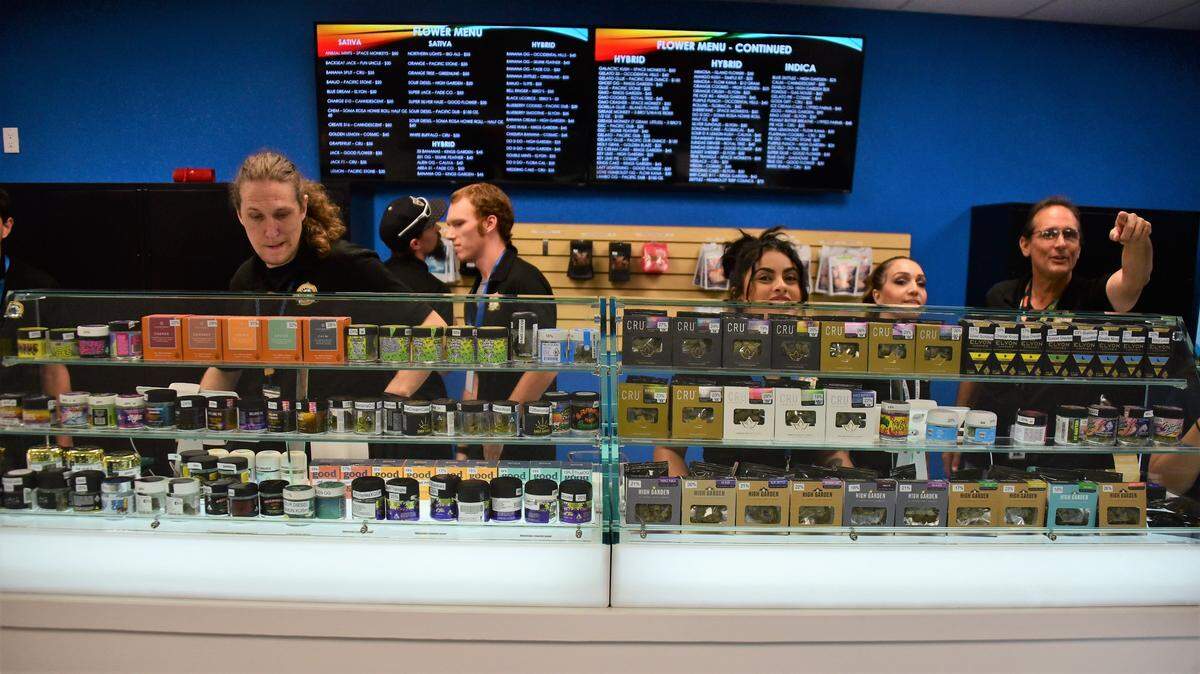
Cannabis businesses may be en route to setting up shop in more parts of Atwater — although some local officials and residents say they’re wary of permitting the industry in the city’s central regions.
Currently, the product may only be sold in Atwater’s outskirts in industrial and business park zones.
“It’s a legal business that we’ve still kind of shoved off into the shadows of the city limits,” said Atwater City Councilman Brian Raymond at Monday’s council meeting.
The council was unanimous in directing staff to write a report on possibly expanding cannabis retail into Atwater’s more commercial districts — and what the potential impacts would be.
The council agreed that other elements of the cannabis industry, like manufacturing, should stay confined to the city’s industrial zones.
But city officials and community members were less unified in their feelings toward increasing the cannabis industry’s local presence.
“This is a tough one for me,” said City Councilman John Cale, adding, “I don’t know that I really agree with putting them in the middle of the city.”
Councilman Danny Ambriz didn’t take as strong of a stance, but said conversations with residents show that few community members are keen on opening more cannabis businesses in Atwater.
Rather than adding more shops, however, Ambriz said revised zoning could better disperse the businesses throughout the city.
Richard Miller, a pastor at Victory Baptist Church in Atwater, voiced the fiercest objection.
“I don’t want Atwater looking like downtown Merced, I think that Atwater is a beautiful small town.” he said. “I don’t think we need to follow the example of Merced. I think we can follow our own example here.”
Miller said wanting to protect and preserve Atwater’s small-town feeling fueled his opposition. Regardless of any views on the drug, the city has done enough to support the industry without expanding zoning, the pastor said.
“If you want something, you’re gonna go where its sold. If you want it, you’ll go find it,” Miller said. “I think our city is being fair right now to those that are in that business.”
Cannabis business’s local benefits up for debate
At the heart of Monday’s discussion was the question of how lucrative cannabis has really been for the City of Atwater, and whether changes to the business model could make it more so.
Atwater Community Development Director Greg Thompson told the council that cannabis has “probably not created the kind of synergy or fire than what you were expecting.”
“I think there might be sufficient interest in getting (cannabis businesses) to more of a retail location,” Thompson said. “They don’t want to put a retail location in a warehouse.”
Individuals on both sides of the debate asked for more insight into the cannabis industry’s local profitability.
City staff will include revenue information in the report, which will explore whether allowing cannabis retail in more strategic commercial zones could capture potentially missed profits.
The analysis will be presented at a later meeting for City Council and the public to discuss before taking any other steps.
Proponents of opening up more of the city to cannabis retail said that existing zoning slashes potential revenue.
The lack of cannabis retailers within Atwater’s main business regions encourages residents to just as soon make the quick drive to Merced to purchase cannabis products, Raymond said.
Meanwhile, Atwater’s existing cannabis businesses haven’t brought any trouble upon the city, Raymond said. Where such shops have opened, those areas have benefited by being cleaned up and having a better security presence enforced, he said.
“The people that are going to these businesses, these are not people that are bringing in crime,” said new Atwater City Councilman Tyler Button in agreement.
Still, fledgling cannabis businesses in Atwater and across the state have in the past struggled to turn a profit and pay local public benefit amounts, which typically go toward police and fire.
Citing black market competition leading to unexpectedly low sales, Atwater’s first dispensary Medallion Wellness asked the city in 2019 to adjust its contract. New cannabis businesses’ agreements with the city since then have looked similar to Medallion Wellness’s revised contract.
Despite being deemed an essential business, the COVID-19 pandemic has exacerbated strains on the California cannabis industry to the point of near collapse, some in the industry say.
“These are businesses that are still federally illegal,” Atwater Police Chief Michael Salvador told the Sun-Star. “California still is one of the toughest places to start a business in.”
Salvador said that regardless of the philosophical debate over whether to further aid to the burgeoning industry, the existence of legal cannabis businesses in Atwater has had little-to-no impact on local crime.