‘We’ve gotta have other options’ Merced homeless camps to get more attention, services
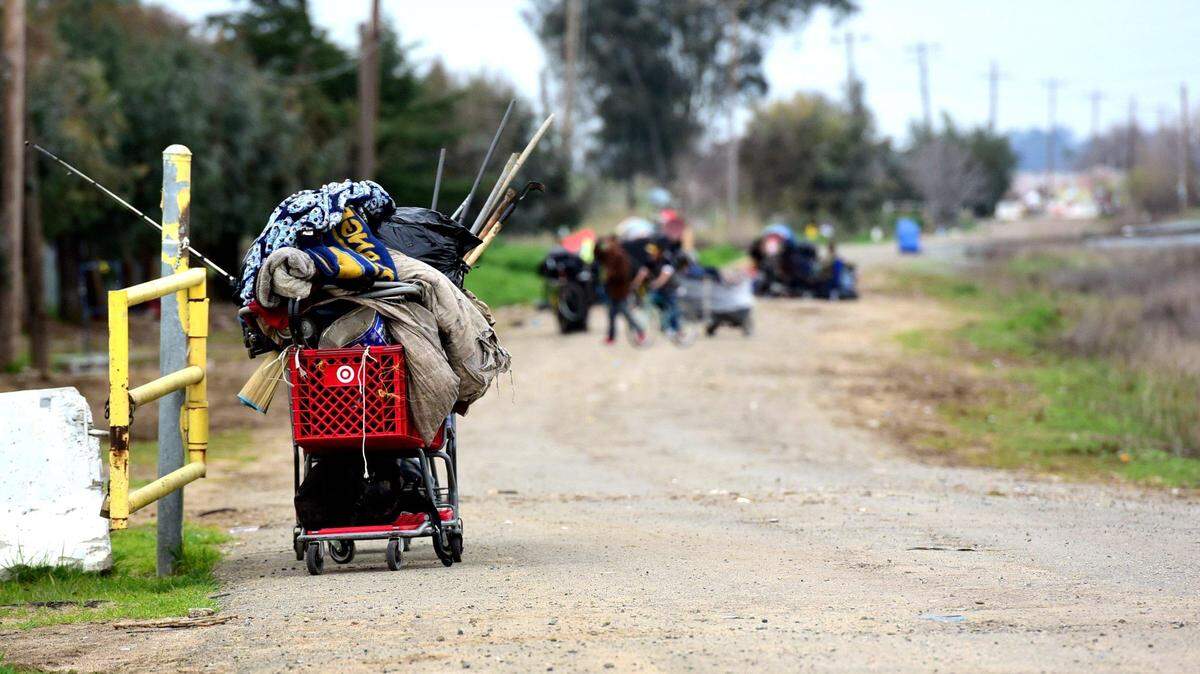
The City of Merced is hopeful that a different approach to addressing homelessness will better serve both the city’s housed and unhoused residents alike, officials say.
The city currently does not supply services like portable toilets, trash pickup or sharps containers for any of the roughly 36 encampments throughout the city (although some local nonprofits and faith-based organizations do provide those services).
Merced is now planning to begin providing those services and more at a handful of existing camps. Support will start off with four or five established encampments that are deemed safe — meaning they are away from dangerous areas like water or bridges and not impacting pedestrians, bikers, schools or businesses.
“We’re going to allow (homeless) individuals to figure out where they feel most comfortable,” Merced City Manager Stephanie Dietz said. “We are looking to encourage them to be in a place where they can be provided services.”
Merced’s current model mandates outreach to encampments ranging from three to 30 individuals, depending on the site, in order to reach each of its homeless residents. That means that some individuals go a long time in between visits because of limited staff, and the sheer number of camps to visit.
By encouraging homeless individuals to gather at select camps with enhanced amenities, Dietz said the city will be able to concentrate supportive services more directly to a greater number of people at one time.
Officials said they believe that regular support at a few encampments will strengthen trust between the city and its unhoused residents.
Several sites are possibilities, including near the on-ramp at 13th and G streets, as well as a Caltrans property near the Merced Home Depot. City Council members said the best approach is to keep the chosen sites fluid, depending on what is working best for the homeless and the city.
The hope is that the increased resources at the selected encampment sites will encourage unhoused residents to those areas, get any help that they need and ultimately transition into shelters like the new navigation center, Dietz said.
No silver bullet, but a step in the right direction
The move is a small, but coordinated step within the broader scheme of the county’s regional plan to improve homelessness, city officials say.
“I think that this is the hardest, most difficult problem in the state right now,” said Merced Mayor Matthew Serratto at Monday’s meeting.
Serratto also serves as chairman of the Merced City and County Continuum of Care to address homelessness. Local government agencies, nonprofits and faith-based organizations have collaborated to address homelessness over the past few years via a shift from enforcement to support.
An updated annual point-in-time count of the Merced region’s homeless population is delayed due to the COVID-19 pandemic, so a recent count of the city’s homeless community is not yet available. The Continuum of Care’s latest count in 2019 showed 295 unhoused residents living within the city.
Although she has no updated data, Dietz said that judging from the city’s interactions with the unhoused it seems that homeless community has remained relatively stable since the last tally.
Meeting a spectrum of needs
Merced leaders acknowledge there is no miracle solution to help unhoused residents. But if the city is successful in attracting unhoused residents to camps with enhanced comfort and cleanliness, negative impacts to downtown, businesses and the environment will decrease, they said.
“The community wants results, they want to see progress,” said Councilmember Delray Shelton at the meeting.
Council member Fernando Echevarria, whose district encompasses south Merced, has been outspoken about the benefits of the approach.
Echevarria said it provides the city with a manageable option for homeless individuals who do not wish to seek formal shelter. While resources like the navigation center are crucial, alternative avenues must be provided that appeal to unhoused residents hesitant to move into regulated, enclosed spaces, he said.
“I think we’re at the crossroads where we have to do something,” Echevarria said. “We’ve gotta have other options.”
Echevarria said he hopes consistent access to services like restrooms or showers in camps where the homeless already feel comfortable will improve health and safety for both the unhoused community and the city overall.
“I just think that this is the best thing that we can do for now,” he said.
This story was originally published April 9, 2021 at 2:15 PM.