
Atwater-Merced Expressway project faces delays due to air quality obstacles
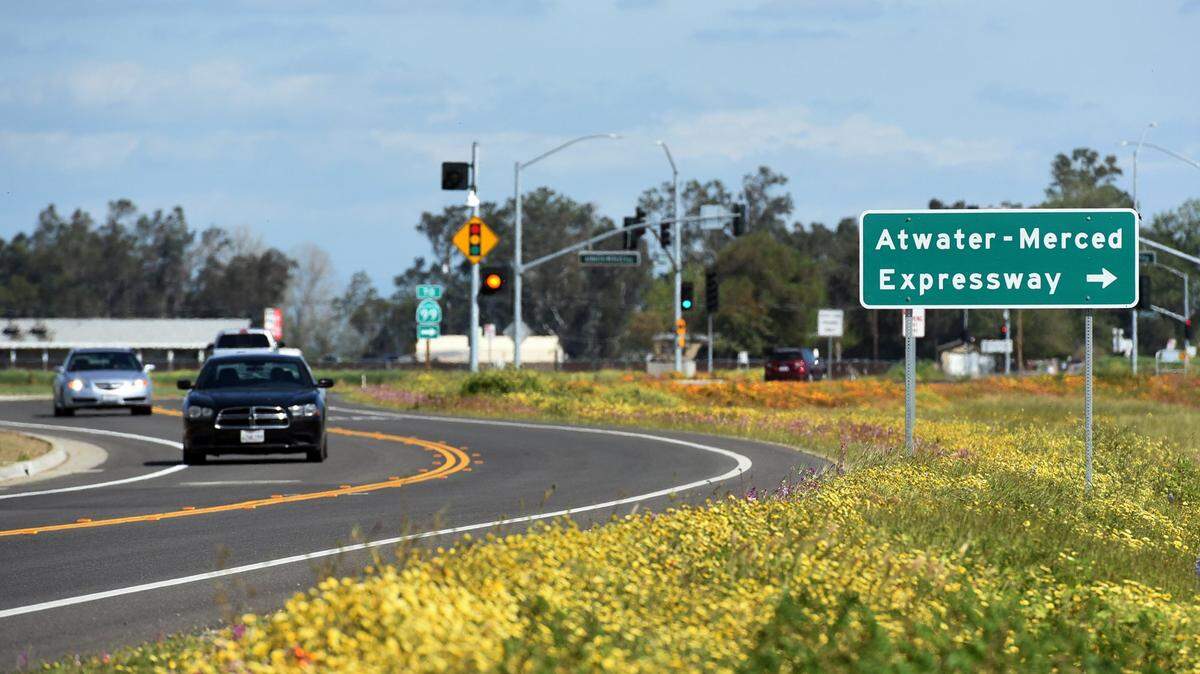
With the first phase of the Atwater-Merced Expressway complete, setbacks have impacted its next phases leaving some uncertainty to the overall timeline, according to Merced County officials.
The multi-phase project which was intended, improve access to Highway 99 from the University of California, Merced and Castle Commerce Center, has run into obstacles specifically around air quality. While the Environmental Protection Agency has not flagged any specific violations or issues, Merced County Director of Public Works and Road Commissioner Nathan Bray, said the air quality modeling itself became a significant point of contention.
The current phase of the project involves an extension of the expressway access from Green Sands Avenue in Atwater, over the Burlington-Norther Santa Fe railroad and connecting with Santa Fe Avenue and Bellevue Road.
Due to the setbacks, no physical construction has taken place on the current phase of the project. Bray said that at this time, the county has not yet hired a contractor and no work can begin until all environmental approvals are in place and the county has acquired the land.
“We’ve been in discussions with our environmental teams and EPA and CARB, and all the different regulatory agencies about environmentally clearing this next, what I’m going to call phase, this next area,” said Bray. “While simultaneously working with our design consultants on preparing the designs.”
Bray said the county has been navigating the ever changing situations with the different regulatory agencies with the biggest point of contention being the air quality modeling and analysis, part of the National Environmental Policy Act (NEPA) process.
“That’s the biggest hurdle that the county’s been trying to jump over,” Bray said. “And we have one leg over it right now.”
The county has received approval from the Environmental Protection Agency (EPA) to proceed with modeling of air quality impacts which Bray said environmental teams are currently on. The results of the modeling will then be shared with the various regulatory agencies including both the EPA and the California Air Resources Board (CARB) before moving forward.
“We’re not out of the woods yet, but I feel like we’re really close, we can see the light,” he said. “We feel fairly confident that the models are going to produce good results, but we’re still going through the actual evaluation process right now.”
Should everything work out with the results of the modeling and the county is given the green light from the EPA, Bray said he expects the county to be completing the environmental documents by the end of 2025. He added that he expects the county could begin the right of way acquisition phase in early 2026 upon full clearance from the National Environmental Policy Act (NEPA) and California Environmental Quality Act (CEQA).
Once environmental clearance is obtained and a contractor is hired, Bray said work on the project including the construction of a bridge over the railway, could begin in the fall of 2026 or sometime in early 2027. The county said it has secured roughly $82 million comprising of Measure V funds and State Transportation Improvement Program funds for the next phases of the project. Once finalizing CEQA and NEPA clearance, the county said if an additional $17 million in funding is obtained, the project will extend to Bellevue Road.
Bray said the current plan remains extending the AME to Bellevue Road and with current prices and the potential effects of tariffs, it’s unknown how it could impact the cost of materials. Because of the setbacks, Bray estimates the project has been delayed by a total of about 18-24 months.
“It’s a little too early to say if we will have enough money, but that’s what we’re shooting for,” he said.
The first phase of the project was completed in 2016, replacing the Buhach Road ramps with a modern interchange and upgraded a one mile stretch of Highway 99. The project’s first phase cost a total of $66 million including $19 million from the Merced County Association of Governments impact fees and regional transportation funds as well as $47 million for construction from California’s 2006 bond.
This story was originally published April 14, 2025 at 1:57 PM.