Red-light cameras coming to Merced to reduce reckless driving, collisions
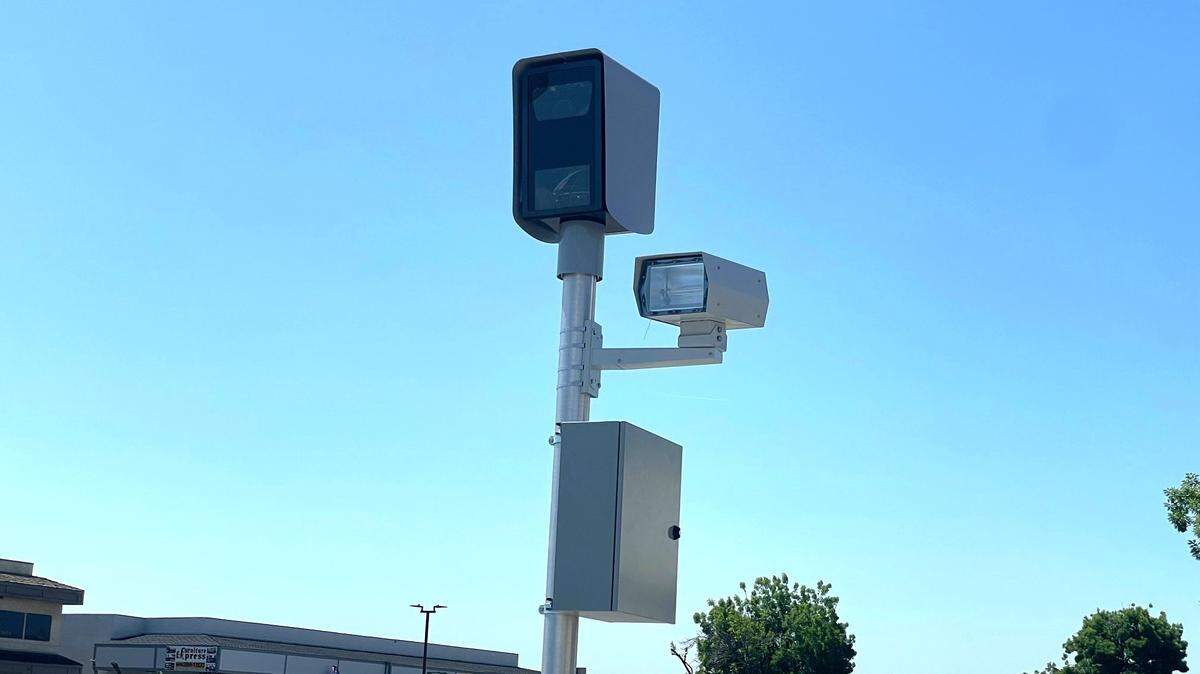
The City of Merced has installed red-light cameras at one of the busiest intersections with a goal of reducing reckless driving and traffic collisions.
Two cameras have been installed at the intersection of 16th and R streets, monitoring eastbound and westbound traffic.
“From our perspective, traffic safety is a huge concern in town,” said Merced mayor Matthew Serratto. “We want our roads to be safer. In order to do that, we need drivers to behave better. This is one step in the process, and we hope to see safe restraints in Merced as a result.”
The cameras and monitoring system is purchased through Verra Mobility, which has installed similar red-light camera systems nationwide, including in Modesto, San Francisco and Elk Grove. The cost is $6,000 for each camera, according to Merced Police Department Chief Steven Stanfield.
Stanfield says data shows that red-light violations have been reduced by 40% and side-impact collisions with injury lowered by 68% where cameras are installed. Data also shows a 21% reduction in collision fatalities and a 14% reduction in all kinds of crashes, he says.
The 16th and R streets intersection was chosen because of the high volume of collisions.
“That intersection was chosen for a reason,” Stanfield said. “It was the number one traffic intersection where the primary collision factor was people violating the red light. So I want to lower crashes in that intersection by having people pay attention to stopping at the red light.”
Stanfield says the cameras will be activated soon and then there will be a 30-day warning period before citations are issued for red-light violations. Violators during that warning period will receive a warning in the mail.
How the cameras work
Once the system is launched the cameras are always running. The cameras will capture images when vehicles enter the intersection on a red light. Synchronized cameras will also capture images of the license plate and the driver. A short video will also capture the violation.
The images along with data, which includes the date and time, are then sent through a secure network back to the dashboard, which is maintained by the Merced Police Department. An officer must validate the citation. The violation might not be validated if there’s not a clear photo of the plate or the driver can’t be identified from the photo, according to Stanfield.
Officers will be looking for clear violations and not minor infractions like a driver stopping their vehicle just past the line.
“The officer has to validate the citation, so there’s no AI that issues the ticket,” Stanfield said. “There’s no computer that just says, yes or no. All of them have to be verified by human eye. My stance is if I was an officer sitting there working traffic enforcement, would I write a ticket?”
If a violation occurs, the owner of the vehicle will get a notice from Verra Mobility that their vehicle was seen going through the intersection with the date and time and a link to the video and all the pictures. The person can then decide whether to contest the ticket in court or just pay the fine.
More red-light cameras coming?
Stanfield feels if he can see a reduction in crashes, injuries and fatalities at the intersection he’ll consider the red-light camera a good investment.
A 10% reduction in collisions and injuries would be a good start, he said.
“I’m a numbers guy,” Stanfield said. “I like watching data. The one thing that I learned is that the numbers don’t lie, right? If I can see reduction numbers in that one intersection, that makes me feel like this is an investment, then then I’m going to start asking for more and I already have other intersections lined up.”
Installing a red-light camera system at an intersection is like having a traffic officer at that intersection at all times. The camera doesn’t need a break or to clock out at the end of a shift.
“It’s always providing safety for that intersection,” Stanfield said.
Any revenue generated from the violations will be invested into traffic safety. Stanfield said traffic safety has been a huge emphasis since he came aboard as chief in October of 2023.
According to Stanfield, traffic collisions are down 27% in the first quarter of 2025, compared to the first quarter in 2024.
“All I care about is, reducing collisions and making our roadway safer here,” Stanfield said. “That’s the purpose of this whole project and the goal is to not make any money on it. If nobody’s violating the red light, that’s the goal.”
This story was originally published April 25, 2025 at 2:53 PM.