NFL technology for Merced high school football teams? Here’s what’s new for players, coaches
Merced High football coach Rob Scheidt has been coaching long enough that he went through the era where VHS tapes, VCRs and DVDs were considered new technology.
Those were upgrades from the film projectors his father Tom Scheidt used while coaching at Dos Palos High.
Each Saturday, opposing coaches for that week would meet up to exchange the game tapes so each team could prepare for the game. Usually they would find somewhere to meet in the middle between the two schools.
It was common for Scheidt to bump into other Merced County coaches in the parking lot of a McDonald’s in Livingston as they waited to exchange game tapes with opposing coaches from Modesto schools.
It was a tedious, but necessary task that made for long Saturdays for coaches.
“It was get up early the next morning, get your tape, and try to get back as soon as you can,” Scheidt said.
But those days are gone.
A lot of the technology used by NFL teams have trickled down to the high school level and helped make a coach’s life easier, especially when it comes to video.
Companies such as Hudl have changed how coaches obtain, share and analyze video. Instead of driving up and down Highway 99 on a Saturday morning, coaches can share game footage digitally with a couple of clicks of a mouse.
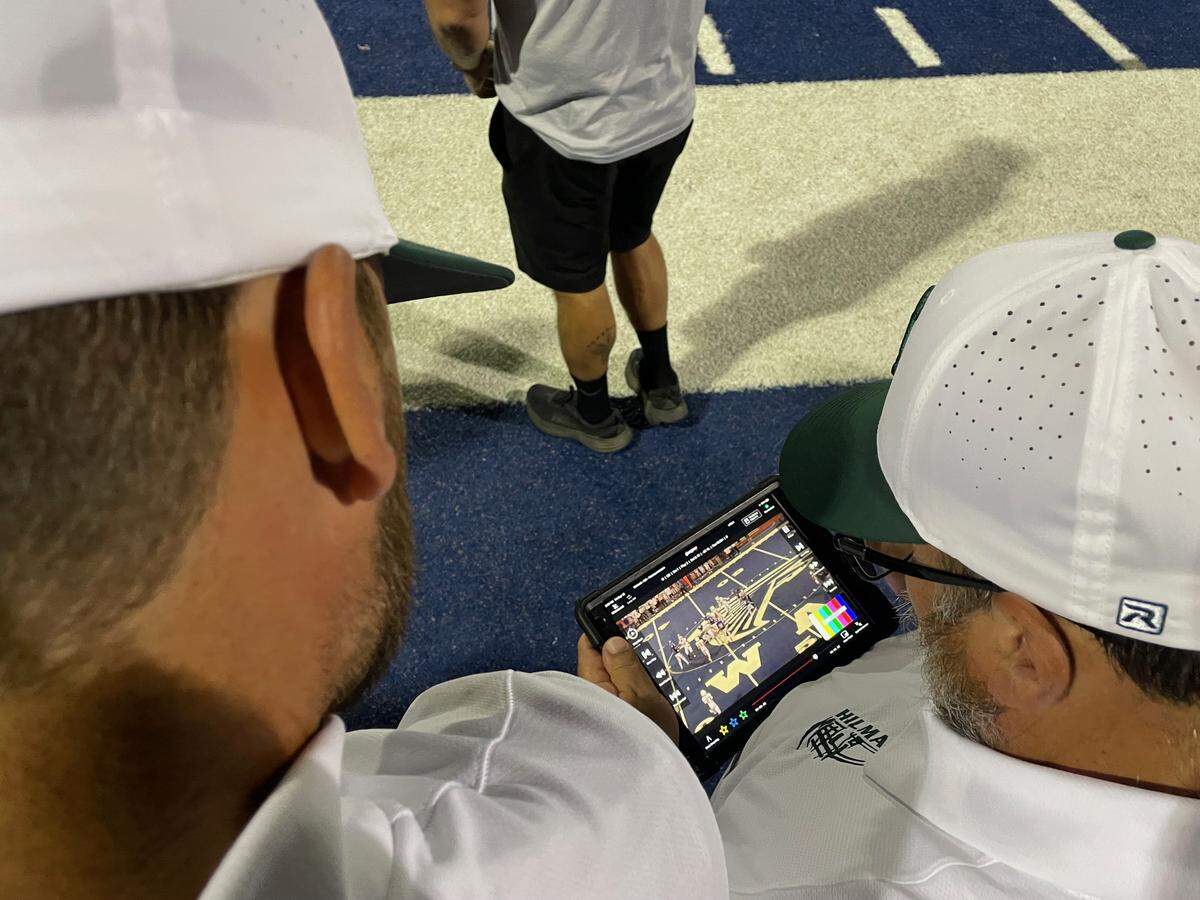
It’s now common to see coaches on the sideline carrying tablets or iPads, viewing replays from video captured by the multiple cameras set up around stadiums, which allows teams to make instant in-game adjustments.
Some of these same high school programs are utilizing drones to film practices for a birds-eye view that both coaches and players have access to on their phones, or other devices so they evaluations and adjustments can be made.
“In the early days, you would spend all day Saturday, maybe all day Sunday, probably 16 to 18 hours with five to seven coaches,” said Hilmar assistant coach Adam Komos. “We were entering data into a spreadsheet, analyzing video and now we can do it in half a day on a Saturday, and I’m pretty much the only one doing it. So it’s a lot easier to find coaches when a lot of them want to just coach football instead of worry about the clerical element or breakdown the analytic element.”
Hudl is game changer
Easily one of the biggest changes for football coaches was when Hudl came out in 2006.
Hudl is an online platform that provides teams with an extensive video library. Football programs can store their games, exchange videos with opponents and Hudl also offers other services that will provide data from the videos.
Chowchilla head coach Alex Pittz says one of his early jobs was to handle the film exchange with opponents.
“When Hudl became available, it changed everything,” Pittz said. “Being able to exchange digitally is so much more efficient and you can access the film on any hand held device. So I could be sitting at my kid’s soccer or volleyball games and watch the film when I want. It also introduced multiple film angles for us too. We can now be in the press box and control the end zone camera with an iPad.”
A school such as Merced High can pay $15,000 for a premium yearly subscription plan to Hudl, which gives all of the school’s sports teams the ability to use Hudl for video. Smaller schools like Hilmar may decide to pay for football-only subscription.
According to the Hudl website, its product is used by 230,000 teams across the country across 40-plus sports. Over 11,000 Division I college teams and professional organizations use Hudl.
Once the video footage is uploaded onto Hudl, coaches and players can access the video through the platform on any computer or smart device.
“If I’m at a Fresno State game on Saturday night, and I get a coach that says, ‘Hey, take a look at play 56 against such and such team.’ I have access to that and quite honestly, it works really, really well.”
For an extra $1,000, teams can also purchase Hudl Assist, which will help provide data from the video. The program will generate reports from the video which can help identify tendencies of other teams like how often do they run on first down? Where do they run the ball? How often do they run plays out of different formations?
Hudl Assist can also help compile stats for their players which can be a big time saver for coaches.
Komos says you input the terminology your team uses for certain plays and formations. After you receive the game film, you can send it to Hudl Assist and then when the film is sent back it comes back with data.
“I think there’s a four or five game max per week,” Komos said. “So every game we get, we send those in and they’ll send back basically a film. That film is going to have, your opponent separated when they are on offense or defense. It’s going to give you the down and distance, it’s going to give you the play direction, which hash the play went, and it’s also going to give you the formation in the backfield based on the terminology that you entered.”
In-game video
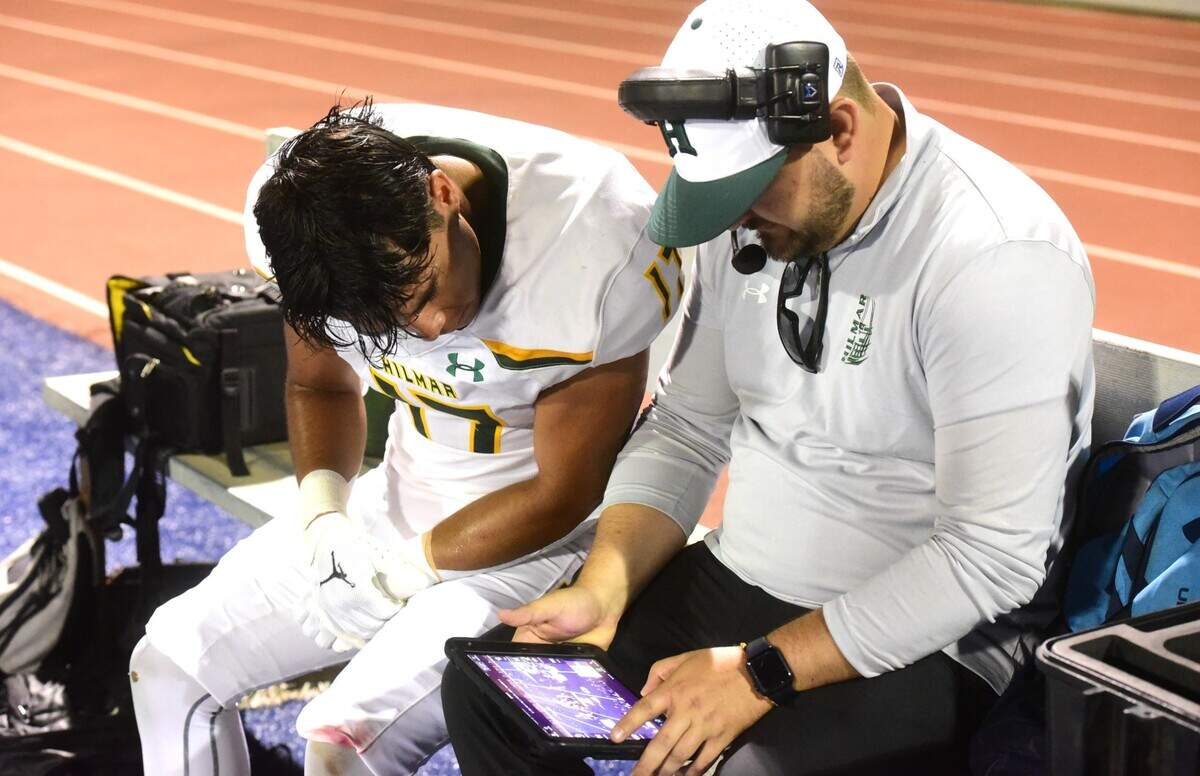
Komos has a tablet in his hand on the sideline almost throughout every Hilmar High football game. The tablet gives him access to video replays on the sideline.
“It gives us opportunities to make instant adjustments,” Komos said. “This is providing instant opportunities to fix issues, noticed efficiencies or finding areas to exploit the opponents.”
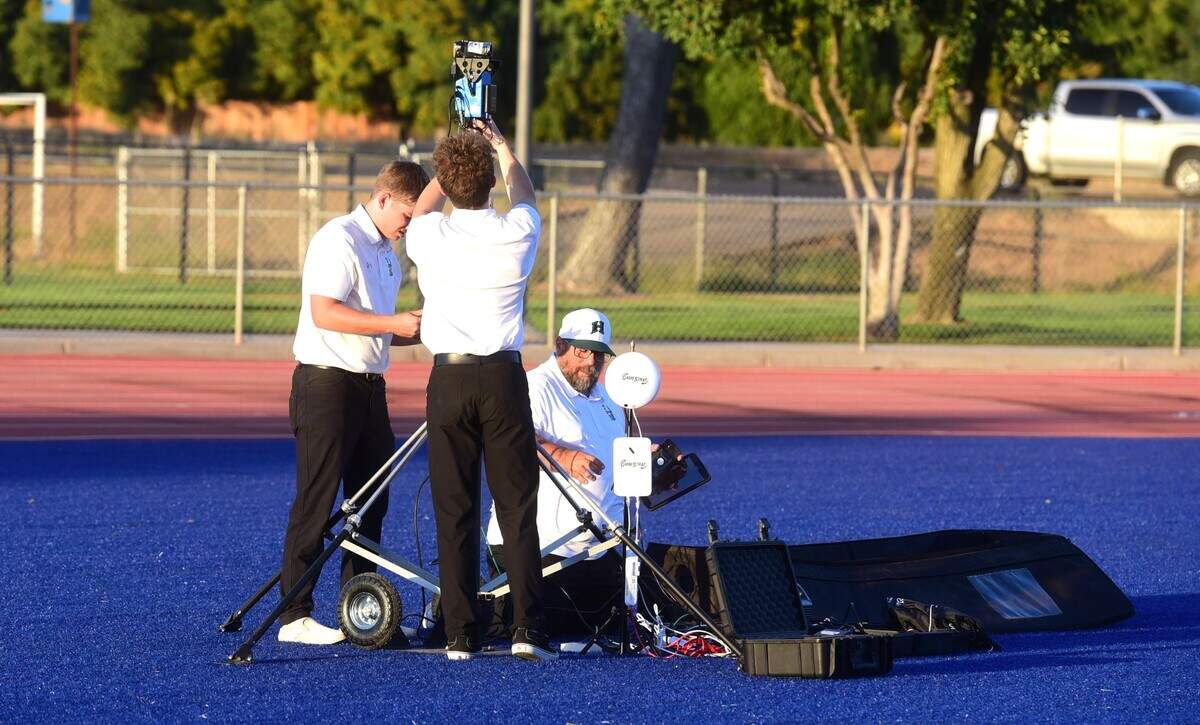
Again through subscriptions to companies like Hudl Sideline, Sportscope or GameStrat, football teams can set up cameras that will feed video to a platform that can be viewed with tablets, iPads or other smart devices during the game.
Coaches no longer have to wait to hear from another coach in the booth or talk to kids to find out what they’re seeing on the field.
“The video is basically immediately available,” said Los Banos head coach Dustin Caropreso. “When the play is done it’s sent to us. Sometimes kids will tell us one thing, and then we can say, ‘No, look, that’s not the case. This is what’s happening.’ The film doesn’t lie.” .
Most teams using the in-game video will have tablets with coaches up in the press box and a couple tables down on the sideline. Some teams even set up big screen TVs on the sideline so they can show players.
Komos says the ability to watch the video during games really helps when you are playing teams you don’t play every often.
Hilmar plays Trans-Valley League rivals like Escalon and Hughson every year and sometimes twice a year if they square off in the playoffs. According to Komos, by the time you see a formation with those teams, you kind of know what’s coming already, and it’s up to the kids to stop it.
“When we were making our state run, it was actually huge, because we had a lot of opponents who we had never seen before,” Komos said. “We only had maybe three or four films total on some of those teams. We found ourselves making a lot of adjustments, a lot more adjustments than we normally would, especially when it’s a newer opponent.”
Drones are becoming popular tools
Merced, Hilmar and Pacheco are some of the schools that have started using drones to film practice in recent years.
Scheidt sat at his desk while players watched video of practice on a smart screen in his classroom.
He was able to draw on the screen to highlight players to critique their movements during practice.
The coaches say they usually find student volunteers to operate the drones and other camera equipment. The students are awarded community service hours and given free football shirts and other clothes.
Komos sayid Hilmar uses its drone to film practices twice a week.
“The drone gives you that unique angle,” he said. “It’s right above the play, it’s specifically useful for line evaluation for splits, even defensive alignment. You get to see the full range. There’s no hiding from a drone.”
Scheidt said Merced attaches a drone to a tripod and uses that for their end zone camera during games because the cameras are so good on the drone.
Scheidt says that even though the new technology makes many of the coaching tasks easier, he doesn’t find himself spending any less time on football. The new technology can create a rabbit hole for coaches looking for more information and other ways to gain an edge on opponents.
“You’re just talking about just the layers of technology that have changed over time that has made the job that more efficient,” Scheidt said. “I think it’s made the quality of the game better.”
This story was originally published October 26, 2024 at 6:00 AM.